
A Historic Breakthrough: Black Women Redefine Executive Power in American Governance
- Kingston Bailey
- Trending News
- Black History 365
- Election Projections
- November 4, 2026
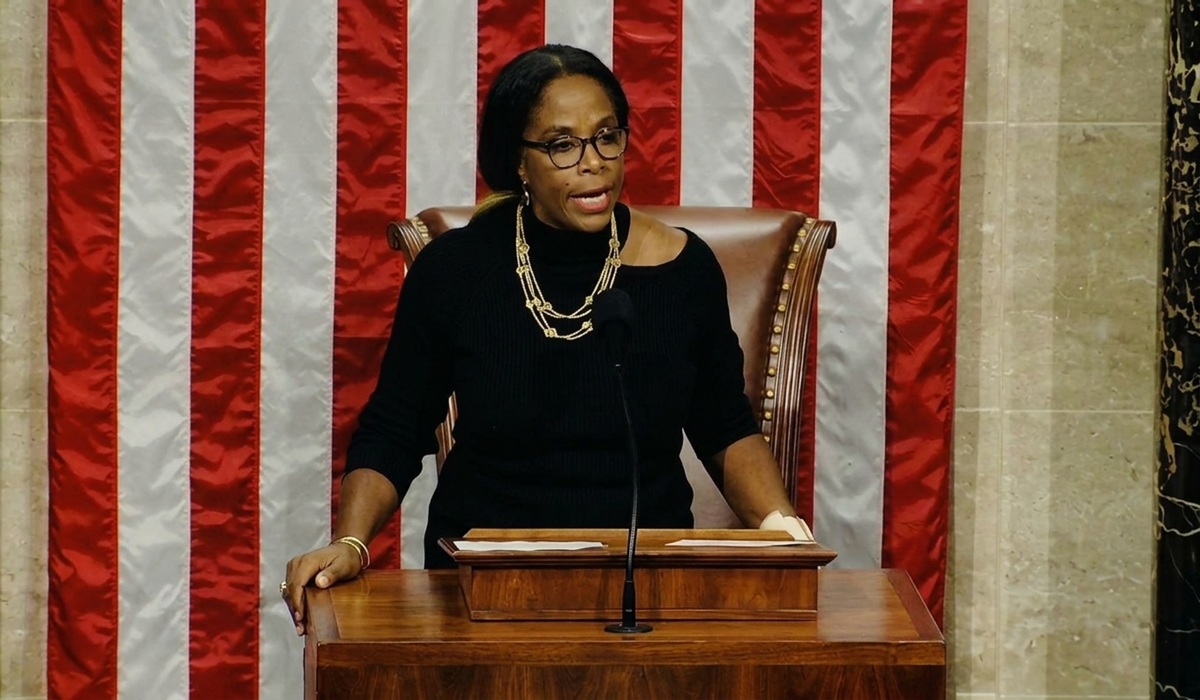
The recent midterm elections delivered a historic watershed moment in American political history as Black women achieved unprecedented breakthroughs, securing state and territorial executive leadership and shattering long-standing barriers to governance. For generations, Black women have served as the indispensable bedrock of the Democratic coalition, consistently driving record turnout, organizing grass-roots movements, and mobilizing communities across the nation. Yet despite their role as the most reliable voting demographic in the country, they historically faced systemic hurdles to executive nominations and campaign funding. Yesterday’s results fundamentally transformed that dynamic, taking center stage as a long-overdue validation of leadership, organizing power, and electoral strategy.
At the centerpiece of this historic wave was the landmark victory of former Atlanta Mayor Keisha Lance Bottoms, who made history by becoming the first Black woman ever elected governor of a U.S. state. Securing the executive office in Georgia, Bottoms defeated Republican Rick Jackson and flipped the governor’s mansion to Democrats for the first time in over two decades. Bottoms’ path to the governor’s mansion was directly paved by fellow Democrat Stacey Abrams, who in 2018 became the first Black woman in American history to earn a major party’s gubernatorial nomination. While Abrams did not win her own gubernatorial bids, her relentless field operations, voting rights advocacy, and coalition-building transformed Georgia’s electoral landscape, laying the structural groundwork that made Bottoms’ historic win possible. Parallel history was made in the U.S. Virgin Islands, where Congresswoman Stacey Plaskett won her election to become the first Black woman elected governor of a U.S. territory, reinforcing the national scale of this executive movement.
These leaders brought deep backgrounds in municipal administration, federal legislative governance, and civil rights advocacy directly to executive campaigns. Rather than relying on traditional top-down playbooks, their coalitions united urban centers, suburban communities, and historically neglected rural areas. By centering tangible policy priorities, such as public education investment, economic mobility, healthcare access, and voting protections, leaders like Keisha Lance Bottoms and Stacey Plaskett demonstrated an exceptional ability to build broad-based, winning majorities. Bottoms’ success in particular proved definitively that Black female candidates possess powerful electoral appeal capable of commanding multi-racial coalitions and turning competitive swing states blue.
For millions of organizers who have carried democratic participation on their shoulders for decades, these victories mark a profound institutional turning point. Historically, the political labor of Black women was largely relegated to field operations, get-out-the-vote drives, and community outreach, while top-of-ticket nominations overwhelmingly favored traditional candidate profiles. The election of Black women to state and territorial governorships signals that treating this vital constituency solely as an electoral engine is a thing of the past. It establishes these leaders at the apex of executive decision-making, where they will shape legislative agendas, direct budgets, and appoint judicial bodies.
The broader national impact of this breakthrough will reshape American campaign strategy for cycles to come. By winning high-stakes executive contests, these victories dismantle legacy assumptions regarding candidate electability and donor viability. National political committees and donors are now forced to recognize that early, sustained investment in diverse female leadership yields transformative returns. The legacy of organizers like Abrams, realized in the executive triumphs of Bottoms and Plaskett, creates a clear, visible pathway for a new generation of leaders of color to run for executive offices at every level of government.
Ultimately, this historic moment redefines the reality of American executive power. Taking office with clear mandates to govern, these newly elected leaders take their rightful place at the forefront of state leadership. Their historic victories establish a powerful precedent, proving that the visionaries and organizers who have long defended American democracy are fully equipped to guide its institutions into a new era of progress and representative governance.
About The Author