Beyond the Security Umbrella: The Quiet Architecture of Saudi Isolation
- TDS News
- Trending News
- Middle East
- September 22, 2026

By: Donovan Martin Sr, Editor in Chief
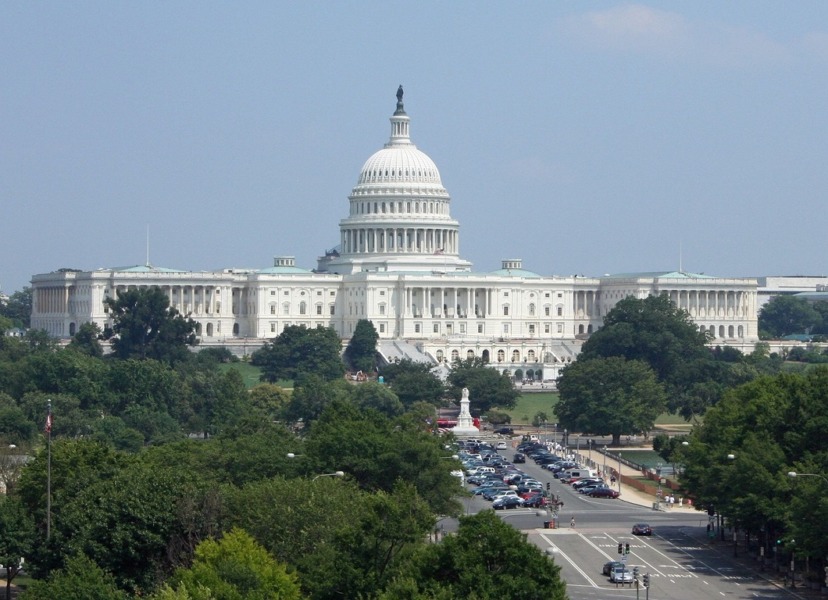
The quiet unraveling of the Arabian Peninsula will not be recorded in the annals of conventional warfare. No vast armada has landed on the shores of the Red Sea, no foreign tanks have rolled across the dunes of the Empty Quarter, and no formal declaration of war has ever been read from Washington. Yet, through a decades-long sequence of strategic shifts, geopolitical miscalculations, and altered security priorities, the United States has engineered a reality in which its oldest, most critical partner in the Middle East stands structurally exposed, geopolitically vulnerable, and economically strained. The story of how Saudi Arabia reached this precarious threshold is not a narrative of sudden military conquest, but a slow, calculated historical transformation—one in which the world’s self-appointed global policeman chose to quietly step back from its historic commitments.
To comprehend the scale of this quiet architecture of decline, one must trace the global order back to its foundational pillar: the understandings that gave birth to the petrodollar dynamic. In the wake of the 1973 oil crisis, a fundamental economic pact was forged between Washington and Riyadh. The terms were deceptively elegant in their simplicity. Saudi Arabia would price its vast crude exports exclusively in United States dollars, recycling those massive revenues back into American financial markets, sovereign debt, and treasury securities. In return, the United States offered an unwritten guarantee: comprehensive military protection. The House of Saud was assured that its external security would be backed by the weight of the American security apparatus. For half a century, this implicit bargain anchored the global financial system, underpinned the status of the dollar, and provided Saudi Arabia with an unprecedented level of regional security.
Decades later, the tectonic plates beneath this arrangement began to shift. Recognizing that the global balance of power was moving toward a multipolar reality, Riyadh gradually realized that absolute dependence on a single Western patron was a strategic vulnerability. As global markets adapted to new economic powerhouses in Asia and alternative clearing currencies, the Saudi leadership chose not to unconditionally renew the exclusive arrangements that tied their economic destiny strictly to the dollar.Riyadh began opening its crude markets to multi-currency transactions, joining multilateral blocs like BRICS, and pursuing an independent economic trajectory aimed at protecting its national interests. This calculated pivot was viewed in Washington not as a natural economic evolution, but as a deep strategic realignment. The reaction from the United States was neither loud nor immediate, but it marked the precise moment the implicit security guarantee began to erode, setting the stage for a shift in regional dynamics.
The broader destabilization was accelerated by a series of catastrophic military interventions across the region. The 2003 invasion of Iraq systematically shattered the historic balance of power that had kept regional ambitions in check for generations. By dismantling the state apparatus in Baghdad, the United States created a massive political vacuum, effectively opening the door for unprecedented Iranian influence right on Saudi Arabia’s northern frontier.
As direct military confrontations escalated across the Middle East, Tehran moved aggressively to fill this vacuum, building a sophisticated, multi-front architecture of proxy forces designed to pin down regional rivals and make conventional military superiority irrelevant. For years, Iran cultivated this network with precision: Hezbollah anchoring its northern perimeter in Lebanon, Shia armed groups embedded across Iraq and Syria, Palestinian factions maintaining friction in the Levant, and the Houthi movement commanding the strategic high ground of southern Arabia. When tensions reached a boiling point and retaliatory waves flared across the region, sovereign territory across Iraq, Syria, Jordan, Kuwait, Bahrain, Qatar, and the United Arab Emirates faced missile and drone threats simply for housing American military infrastructure. The Arab nations that had aligned their defense architecture with Washington found themselves serving as primary targets for a conflict they did not design, absorbing physical and economic strain while their ultimate security guarantor prioritized its own grand strategy.
Simultaneously, the global economic arteries that fuel civilization began to close. For decades, maritime passages like the Strait of Hormuz remained open, guaranteeing the free flow of energy that sustained the global economy. But as regional warfare intensified, those vital waters were subjected to constant interdiction. Further south, the Bab-el-Mandeb Strait and the Red Sea were virtually sealed off by Houthi forces using low-cost, mass-produced drone and missile technologies to hold global logistics hostage. The Houthi movement effectively weaponized the world’s most critical maritime chokepoints, crippling commercial shipping, targeting energy hubs along the Yemeni coast and Saudi border, and tying down multibillion-dollar international naval task forces without Tehran ever having to engage directly.
The crisis reached its peak when critical energy infrastructure at the heart of the Kingdom—facilities owned and operated by state giant Aramco—came under sophisticated attack. Key processing units and export facilities burned, sending shockwaves through international financial markets. In its hour of acute vulnerability, Riyadh looked to Washington for direct offensive support, immediate integrated air defenses, and decisive retaliatory strikes to neutralize the threats across its borders. The response from the United States was a posture of deep restraint. Washington made it clear that no American fighter jets would be deployed to launch direct offensive operations against Iran or the Houthis on behalf of the Kingdom, nor would the United States enter into a broader war to shield Saudi industrial assets. Having concluded that the strategic price of full-scale regional involvement was far too high, the United States limited its footprint, leaving its long-standing partner to navigate a multi-front security nightmare largely on its own.
This strategic retreat marked the definitive end of the post-war Middle Eastern security model. The superpower that had encouraged the Gulf nations to outsource their defense for half a century simply opted out when the costs escalated. The real-time consequences of this decentralized proxy warfare have effectively rewritten the rules of Middle Eastern deterrence, leaving Saudi Arabia geographically sandwiched between active, heavily armed non-state vectors. The proxy system is explicitly built to deny clear accountability, forcing victim states into an impossible choice: absorb devastating infrastructure hits in silence, or risk launching an all-out regional war against a decentralized network that cannot be defeated through standard, conventional air campaigns.
The consequences for Saudi Arabia are structural, diplomatic, and profound. From the outside, the Kingdom appears strategically isolated, surrounded by hostile, heavily armed non-state actors and a triumphant regional rival that now operates as a dominant geopolitical force in the area. From the inside, the diplomatic reality is even more stark. The grand, transformative national initiatives designed to transition the country into a post-oil technological hub—symbolized by mega-projects like NEOM—are directly threatened. Foreign direct investment hesitates when security cannot be guaranteed, and global supply chains through the Red Sea remain severely compromised.
Without firing a single shot at its ally, the United States achieved a comprehensive dismantling of the Kingdom’s historic standing. By encouraging absolute reliance on American military power and then withdrawing that umbrella when it was most urgently required, Washington systematically gutted Saudi Arabia’s strategic leverage. The regional balance of power has been completely reconfigured, elevating Tehran as an indisputable power center while forcing traditional Gulf monarchies to scramble for alternative defense arrangements with regional partners simply to maintain stability. Deprived of the historic security bargain that sustained it, the region faces an uncertain future where traditional structures may undergo profound shifts, leaving the monarchy to navigate a volatile landscape surrounded by external forces.
This unfolding tragedy exposes the underlying vulnerability of modern global geopolitics: total dependence on a single, self-interested superpower acting as the world’s sole policeman. Nations around the globe built their defense strategies, economic systems, and maritime transit routes on the assumption that American protection was a permanent reality. Yet, as domestic pressures mount and strategic priorities shift, Washington has shown that its commitments are strictly conditional. The world can no longer afford to outsource its stability to a nation that redefines its global obligations at will. In the end, the transformation of the Middle East was not achieved through foreign bombardment, but through the quiet, calculated departure of a patron that left its most loyal allies standing alone in the storm.
About The Author