By Li Tianfu CGTN Digital Chief Editor
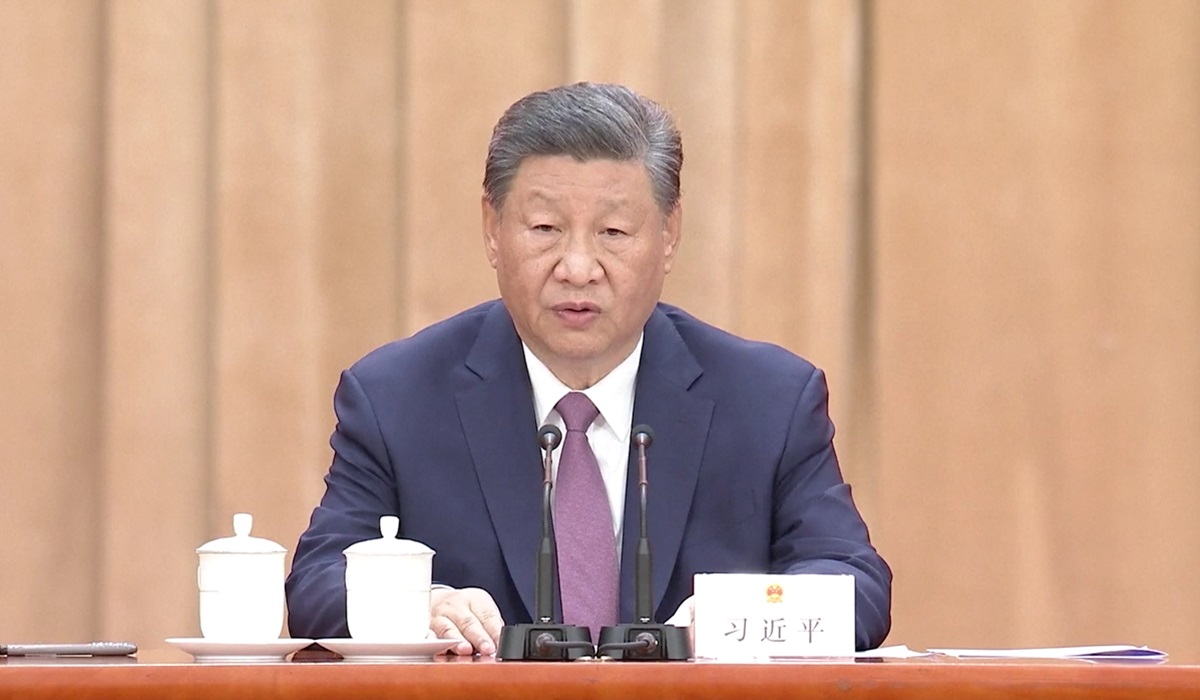
With Chinese President Xi Jinping set to pay a state visit to the United States, global attention is once again turning to the future of China-US relations.
The visit comes at a consequential moment. The world’s two largest economies are seeking to manage differences over trade, technology and geopolitical issues while confronting challenges that neither can effectively address alone. Recent reports of consultations between the two sides on trade, artificial intelligence and other economic issues, point to an important reality: despite years of tensions, the interests of China and the United States remain deeply intertwined.
How Beijing and Washington manage their relationship therefore matters far beyond the two countries themselves. It has implications for global markets, supply chains, technological development and international security.
From China’s perspective, the way forward rests on two closely related principles: China and the United States should seek partnership rather than allow competition to define their relationship, and major countries should uphold true multilateralism rather than divide the world into rival blocs.
Moving Beyond Zero-Sum Competition
China-US relations have often been viewed through the lens of the so-called “Thucydides Trap,” which assumes that rivalry and even conflict may become increasingly likely when a rising power encounters an established one. From China’s perspective, however, history is not destiny, and major countries are not bound to repeat the patterns of great-power confrontation seen in the past. Applying such a deterministic framework to China-US relations risks exaggerating differences, reinforcing mutual suspicion and ultimately turning confrontation into a self-fulfilling prophecy.
China has consistently argued for a different approach. Its stated principles for managing relations with the United States are mutual respect, peaceful coexistence and win-win cooperation. More recently, China has called on the two countries to build a constructive relationship of strategic stability.
This approach is grounded not only in diplomatic principle but also in economic reality.
Economic Ties Still Matter
Years of trade frictions, tariff disputes and technology restrictions have reshaped China-US economic relations, but they have not severed the extensive commercial ties between the world’s two largest economies.
The scale of bilateral trade remains substantial. According to China’s General Administration of Customs, trade in goods between China and the United States totaled about $560 billion in 2025, with Chinese exports to the United States reaching about $420 billion and imports from the United States nearly $140 billion. These figures are particularly notable given the trade tensions and efforts in recent years to restructure supply chains.
Investment flows also point to the continued importance of commercial ties. Data from China’s Ministry of Commerce show that actual US investment in China rose 17.3 percent year on year in the first five months of 2026. While investment patterns can fluctuate and should not be judged by a single period, the increase suggests that commercial interest in the Chinese market remains significant despite persistent bilateral tensions.
The structure of trade further illustrates how the two economies remain connected. Chinese exports to the United States span electronics, machinery, batteries, auto parts, consumer goods and other manufactured products, while China imports from the United States products ranging from soybeans and energy to integrated circuits, aircraft-related products and semiconductor manufacturing equipment.
Economic interdependence does not mean that disagreements over trade, technology or economic security will disappear. Nor does it mean that supply chains will remain unchanged. But the sheer scale and breadth of bilateral commerce make a complete economic rupture costly for both sides. Policies aimed at indiscriminate decoupling could disrupt supply chains, raise costs for businesses and consumers, and inject further uncertainty into the global economy.
The more practical question, therefore, is not whether China and the United States will compete economically. Competition between two major economies is inevitable. The question is whether that competition can be managed without allowing it to overwhelm a commercial relationship that continues to matter to businesses, consumers and the wider global economy.
A New Framework for Strategic Stability
Over the years, Xi and Trump have maintained communication through face-to-face meetings, phone calls and other exchanges, providing strategic guidance for the development of China-US relations.
Their meeting in May marked an important step forward. The two presidents agreed on a new vision of building a constructive China-US relationship of strategic stability over the next three years and beyond. Xi further elaborated on what such stability should entail: positive stability with cooperation as the mainstay, sound stability with moderate competition, constant stability with manageable differences, and enduring stability underpinned by a commitment to peace.
This formulation goes beyond diplomatic terminology. It offers a framework for managing a relationship in which cooperation, competition and differences will inevitably coexist. The emphasis on cooperation does not deny the reality of competition, just as the call for manageable differences does not assume that disagreements can simply be eliminated. Rather, it reflects the view that competition should remain within reasonable bounds, differences should not be allowed to escalate into confrontation, and neither side should seek conflict as an outcome.
At a time of growing global uncertainty and profound changes in the international landscape, such a framework carries significance beyond the bilateral relationship. It points to a basic choice facing China and the United States: whether to allow differences to drive the two countries further apart, or to manage them through dialogue while expanding areas of cooperation. From China’s perspective, strategic stability means choosing dialogue over confrontation, cooperation over conflict, and long-term stability over recurring turbulence.
The upcoming meeting will provide an important test of whether that vision can be translated into sustained engagement. Its significance should not be measured only by the agreements reached or the immediate outcomes announced. More consequential will be whether the two sides can strengthen communication, manage differences and give greater substance to the framework of constructive strategic stability.
China and the United States will not agree on every issue, nor will competition between them disappear. But rivalry does not have to become the defining feature of their relationship, still less a path to confrontation. If Beijing and Washington can keep competition within bounds, expand cooperation where their interests converge and prevent differences from spiraling out of control, they can demonstrate that the “Thucydides Trap” is not an inevitable fate. For two countries whose choices have consequences far beyond their borders, that would be a meaningful step toward greater certainty in an increasingly uncertain world.
About The Author