Image credit: Yamu_Jay
The ongoing national debate over federal election integrity has brought the Safeguard American Voter Eligibility Act, widely known as the SAVE Act or the SAVE America Act, to the center of American politics.Championed heavily by Donald Trump and his congressional allies, the proposed legislation fundamentally alters how citizens register to vote and cast their ballots in federal elections. As the political landscape gears up for the midterm elections, the push to enact these stricter measures has intensified deep partisan divisions over access to the ballot box and trust in democratic institutions.
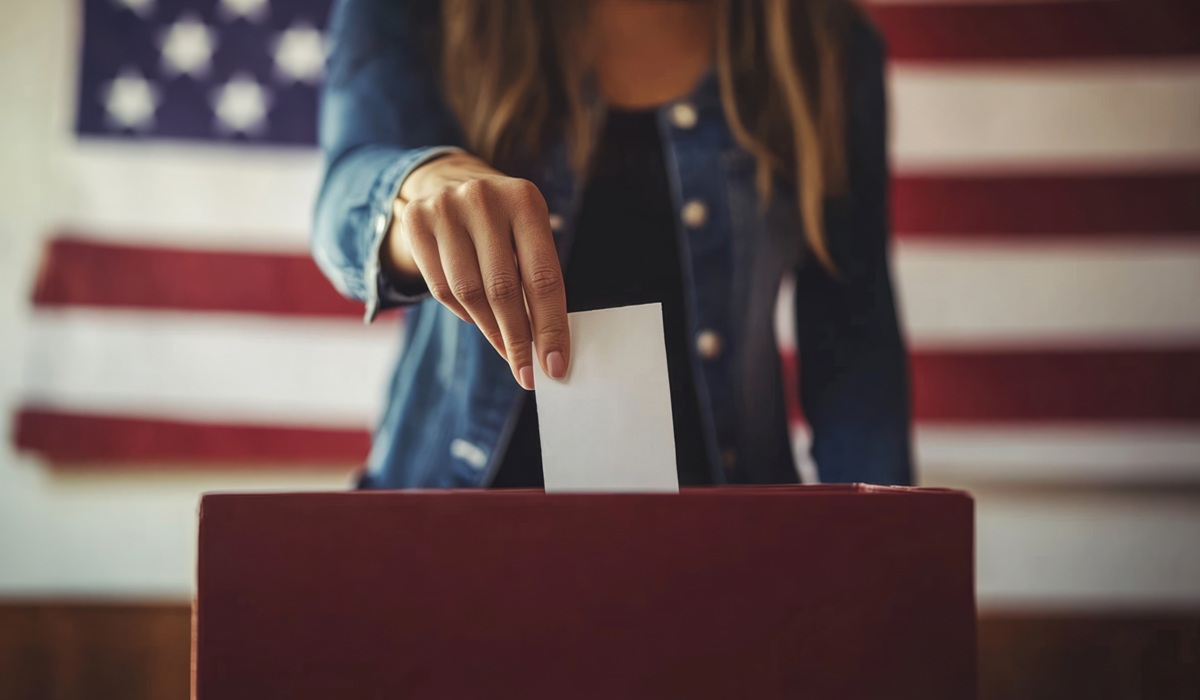
At its core, the Trump-backed legislation mandates that individuals provide explicit documentary proof of United States citizenship when registering to vote, such as a valid U.S. passport, a certified birth certificate, or a naturalization certificate.Furthermore, the updated version of the proposal requires voters to present specific forms of government-issued photo identification at the polling place.Current federal law already prohibits noncitizens from voting in federal elections, a rule that has been on the books for decades, and states currently utilize various verification processes during registration.However, the proposed framework shifts the burden entirely onto the individual voter to proactively prove citizenship through rigid physical documents, effectively curtailing standard online and mail-in registration methods that millions of Americans rely on.
The political urgency behind pushing this legislation before the midterms stems from a broader strategic effort by conservative leaders to address perceived vulnerabilities in election administration. Proponents argue that tightening security measures is an absolute necessity to restore public confidence and prevent noncitizens from casting ballots, pointing to widespread illegal immigration as a critical security threat that could theoretically compromise election outcomes. By enacting strict federal mandates prior to the midterms, Trump and his supporters hope to establish a uniform standard across all states, believing that secure voting mechanisms favor conservative candidates who make border security and national sovereignty central themes of their platforms.
The legislative status of the bill remains fiercely contested in Washington. While the measure successfully cleared the House of Representatives, it has faced substantial legislative roadblocks and failed to clear the Senate ahead of congressional recesses.Senate debates have seen intense gridlock, with Republican leaders struggling to overcome procedural hurdles and Democratic opposition. Because the legislation lacks the broad consensus required to bypass the filibuster, the administration’s allies have continued to pressure lawmakers, signaling that the debate will remain a dominant campaign issue regardless of whether the bill successfully passes before voters head to the polls.
Advocates of the Trump-backed requirements highlight several pros, emphasizing the absolute need for robust election security. They argue that public trust is fragile and that requiring concrete proof of citizenship ensures the integrity of the democratic process. From this perspective, implementing clear, unyielding identification standards removes any lingering doubt about the legitimacy of election results, creating a standardized system that protects the franchise for legal citizens while safeguarding against potential administrative errors or fraudulent registrations.
Conversely, opponents outline significant cons, warning that the legislation would lead to widespread voter suppression. Nonpartisan studies and voting rights organizations point out that millions of eligible American citizens do not readily possess documents like a passport or a certified birth certificate, and obtaining replacements can be expensive and time-consuming.Critics argue that the rules disproportionately impact low-income individuals, students, rural residents, the elderly, and married women whose birth certificates do not match their current legal names due to name changes.Furthermore, opponents maintain that instances of noncitizen voting are statistically rare, meaning the severe administrative burden and potential disenfranchisement of eligible voters outweigh any preventative benefits.
A frequent point of comparison in these debates involves why the United States does not adopt a streamlined, centralized voting system similar to Canada or other first-world democracies. In nations like Canada, the government takes an active, positive role in identifying and registering eligible citizens through comprehensive national databases, tax information, and universal healthcare registries, automatically placing citizens on the voter rolls without placing the entire logistical burden on the individual.
The United States operates under a deeply decentralized federal constitutional system where elections are administered locally by thousands of individual counties and states, rather than through a single national registry. Culturally and historically, Americans have harbored a deep skepticism toward federal registries and national identification cards, viewing them as potential government overreach into personal privacy. Additionally, the American political landscape is intensely partisan regarding voting access, where expanding or restricting the electorate is often viewed by the opposing parties as a mechanism for gaining electoral advantage. Consequently, attempts to import a centralized, government-managed registry model face unique constitutional, structural, and political hurdles that have historically prevented the United States from mirroring the electoral machinery of other developed nations.
About The Author