Renewed Violence Shatters Fragile Lebanon Truce
- Hami Aziz
- Tiger's Eye Advisory Group - Trending News
- Middle East
- September 9, 2026
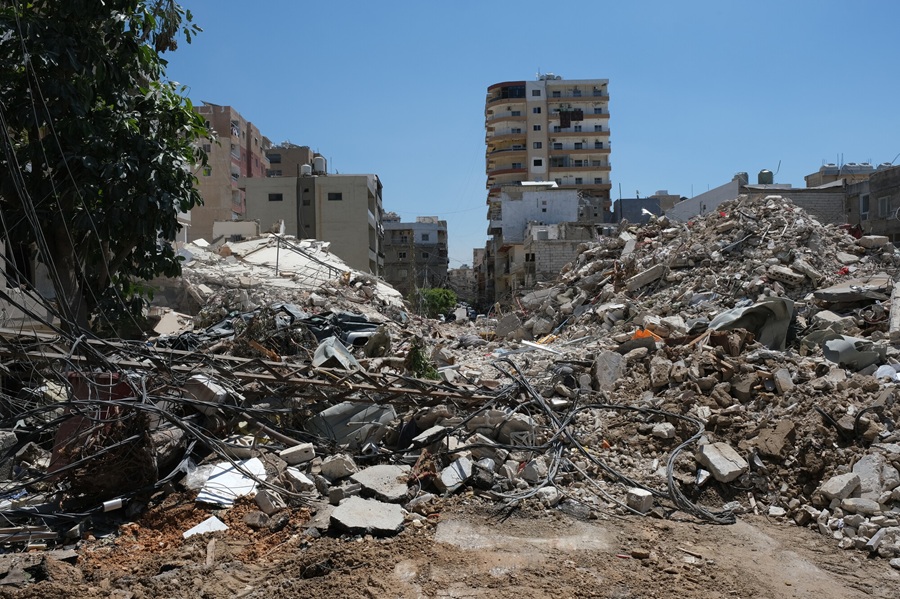
Hostilities across southern Lebanon have escalated sharply in recent days, shattering a delicate de-escalation framework agreed upon in June and leaving dozens of civilians dead amid intensifying airstrikes, artillery shelling, and military demolition operations. According to Lebanon’s Ministry of Public Health, a violent escalation between Hezbollah and Israeli forces triggered some of the heaviest casualties seen since the summer agreement was brokered, resulting in 27 fatalities and 69 injuries over a single 48-hour window.
Maureen Philippon, the country director for the Norwegian Refugee Council in Lebanon, emphasized that a temporary decrease in large-scale combat does not equate to genuine security for ordinary citizens. Families who cautiously returned to their hometowns following the June accord now face renewed displacement, shattered infrastructure, and the continuous threat of structural demolitions carried out by Israeli forces in frontier areas. For many residents, returning home remains an impossibility, while those who managed to make it back are once again packing their belongings to flee further north.
The human toll of the renewed violence has severely impacted residential neighborhoods and critical medical infrastructure alike. Recent airstrikes in Kfar Roumane within the Nabatieh governorate killed 12 people, including multiple women and children, while injuring several others. Separate bombardments completely destroyed the already-vacated Ghandour Hospital in Nabatieh al-Fawqa, compounding the destruction of local medical facilities. Humanitarian organizations point out that these ongoing attacks prevent communities from stabilizing or rebuilding their lives, deepening the cumulative trauma experienced by thousands of families over months of persistent conflict.
The breakdown of the framework agreement highlights the fragility of diplomatic pacts that rely on superficial lulls in fighting rather than a complete cessation of hostilities. Israeli forces have continued conducting military operations, airspace violations, and the controlled demolition of villages in areas under their tactical control, effectively preventing sustainable returns. Casualties have mounted significantly since early March, with thousands of people killed and wounded across the country as civilian areas bear the brunt of ongoing military exchanges.
Humanitarian agencies are urgently calling for an immediate end to attacks that put civilian lives at extreme risk, reminding all parties of their binding obligations under international humanitarian law. Advocates stress that the principles of distinction, proportionality, and necessity must be strictly upheld, and that international diplomatic efforts must translate into real, enforceable safety on the ground so that families can finally live and return without the constant threat of aerial bombardment.
About The Author