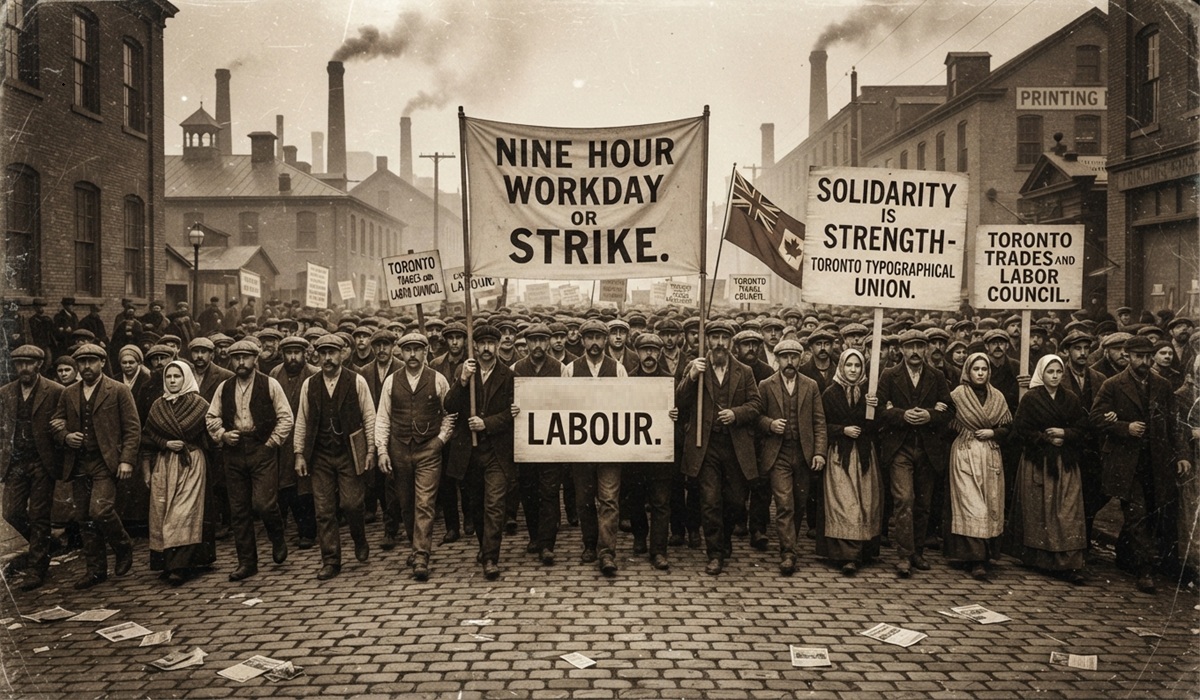
Labour Day in Canada is a statutory holiday that arrives each September, offering millions of citizens a final long weekend to enjoy the waning warmth of summer before autumn settles across the landscape. Yet beneath the popular veneer of backyard barbecues, community parades, and retail sales events lies a profound historical narrative rooted in fierce social struggle, courageous collective action, and an unyielding quest for fundamental human dignity. To understand what Labour Day truly means is to journey back to a tumultuous era of industrial transformation when the modern Canadian identity was being forged in the heat of workshops, factories, and print shops, and when ordinary working people first dared to demand a voice in shaping their own destinies.
The genesis of this significant national observance can be traced directly to the vibrant labor movement of the late nineteenth century, specifically within the bustling industrial hub of Toronto. During the early eighteen-eighties, the Toronto Trades and Labor Council served as a crucible for radical ideas about workers’ rights, fairness, and social justice. At the center of this burgeoning movement was the typographical union, a group of skilled printers whose literacy, organization, and intellectual rigor made them natural leaders in the broader crusade for labor reform. In the spring of eighteen eighty-two, these printers found themselves locked in an escalating dispute with their employers over standard working hours. At the time, working days routinely stretched to twelve or even fourteen hours, six days a week, leaving workers exhausted, impoverished, and vulnerable to occupational hazards.
The Toronto printers demanded a reduction to a nine-hour workday, arguing that human beings required adequate time for rest, family life, education, and civic participation. When publishers and employers flatly refused to negotiate or even entertain the proposal, the printers took the momentous step of walking off the job on March twenty-fifth, eighteen eighty-two. This strike was not merely an isolated workplace dispute; it was a watershed moment that ignited the imagination of the entire working class. Other trades quickly rallied to the cause, recognizing that a victory for the printers would establish a vital precedent for every working person in the country. To demonstrate solidarity and mobilize public support, the Toronto Trades and Labor Council organized a massive public demonstration and parade on April fourteenth of that same year, bringing thousands of workers into the streets in an unprecedented display of collective power and unity.
The success of the April demonstration was staggering, drawing thousands of sympathetic onlookers and unnerving the city’s political and economic elite. Among the most prominent supporters of the movement was a dedicated labor activist named John Armstrong, who later became a key figure in the Trades and Labor Congress. Emboldened by the energy of the Toronto mobilization, similar labor organizations across the province and the country began holding annual parades and rallies to celebrate worker solidarity and press for legislative reforms. The movement gathered such profound momentum that it caught the attention of federal politicians, including Prime Minister Sir John A. Macdonald, who recognized the growing political force of the urban working class. Easing political tensions and seeking to appease the burgeoning labor constituency, the federal government officially recognized Labour Day as a legal national holiday in eighteen ninety-four, cementing its place in the Canadian calendar.
Over the decades that followed, the meaning of Labour Day evolved far beyond its immediate origins in the nine-hour movement, transforming into a comprehensive reflection of the ongoing struggle for social and economic equity. It stands as an annual commemoration of the countless sacrifices made by generations of working people who fought for safer factories, fairer wages, the abolition of child labor, health benefits, and the establishment of the weekend itself. Every weekend enjoyed by modern workers is a direct legacy of the battles waged by early unionists who insisted that human life and well-being must take precedence over corporate profit. The holiday serves as a powerful reminder that progress is never granted by benevolence from above, but is invariably won through collective organization, solidarity, and the courage to challenge unjust power structures.
In contemporary society, Labour Day also functions as a vital space for reflection on the future of work in an increasingly interconnected and automated world. While traditional industrial factories have largely given way to digital offices, gig economies, and service sectors, the core challenges of labor remain remarkably enduring. Issues surrounding wage stagnation, precarious employment contracts, workplace equity, and the right to collective bargaining continue to define the modern labor landscape. Thus, Labour Day is not merely a nostalgic backward glance at nineteenth-century printers and union halls, but a living tradition that challenges each new generation to defend democratic rights in the workplace and to envision an economy that honors the dignity, worth, and well-being of every working person.
About The Author