Giants of the Nile, Rhythms of the Prairie: Inside Winnipeg’s South Sudan Pavilion
- TDS News
- Tiger's Eye Advisory Group - Trending News
- Entertainment
- August 7, 2026
By: Donovan Martin Sr, Editor in Chief
Digital Photo and Video Credit: Don Woodstock
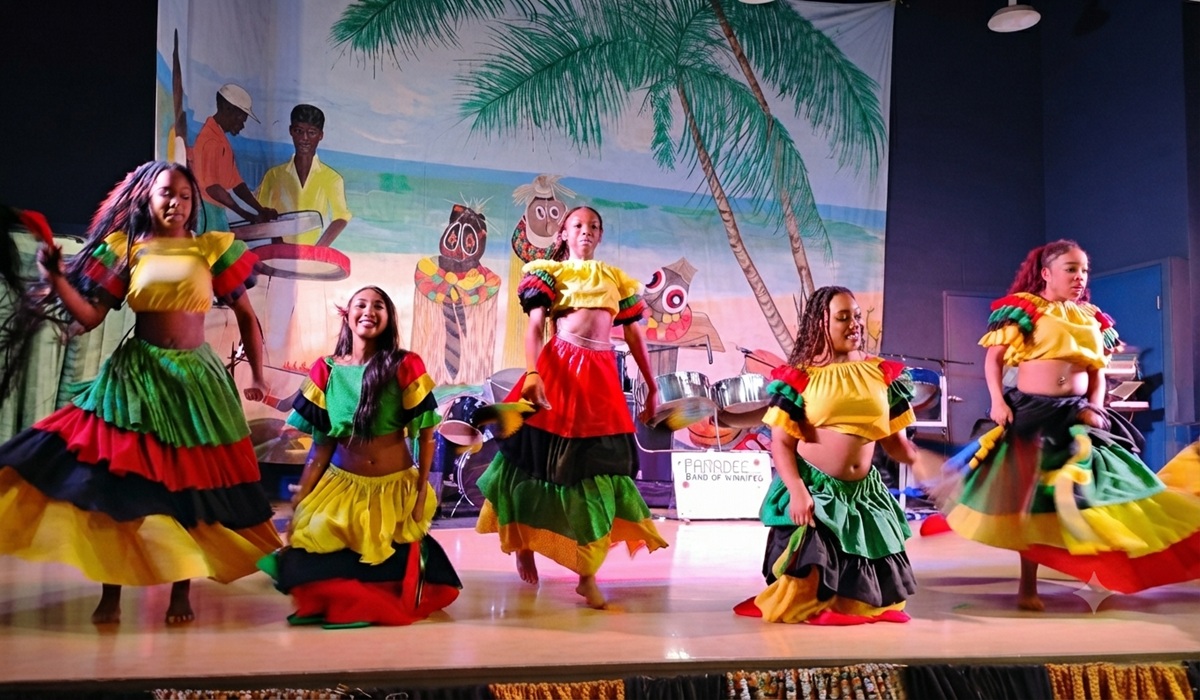
Step through the doors of the South Sudan Pavilion during Folklorama, and the atmosphere hits you instantly. It is an electric pulse of rhythmic drumming, the earthy aroma of spiced East African cuisine, and an overwhelming wave of joy radiating directly from the faces of children who dance with a pure, infectious enthusiasm. For many festival-goers, this pavilion offers a breathtaking portal into a culture rooted in ancient Nilotic traditions, spanning thousands of miles from the banks of the White Nile to the heart of the Canadian prairies. Yet, for the community members who bring it to life, it is much more than a showcase—it is a living, breathing testament to survival, identity, and profound community pride.
One of the most striking characteristics of South Sudan’s people is their physical stature. Home predominantly to Nilotic ethnic groups such as the Dinka, Shilluk, and Nuer, South Sudan boasts some of the tallest populations in the entire world. This characteristic slenderness and height are deeply woven into their cultural folklore and identity. In traditional marriage customs, this stature translates directly into cultural value. Marriage dowries are traditionally calculated and paid in cattle, which serve as the ultimate currency of wealth and status in pastoralist communities. Interestingly, in many of these communities, a bride’s height is historically factored into the negotiation, meaning the taller she is, the higher her esteemed status, commanding a greater number of cows in the dowry. This practice underlines how deeply interconnected physical traits, livestock, and social prestige remain in South Sudanese heritage.
Culture is also reflected in how families are structured and named. In several South Sudanese communities, a person’s name or secondary moniker is not merely chosen at random by parents; rather, it is systematically dictated by birth order. Specific traditional names are reserved exclusively for twins, children born immediately after twins, or those who hold specific sibling ranks, such as the firstborn or lastborn of a family. This naming convention serves as an instant genealogical marker within the community. When you meet someone, their name often tells you precisely where they fit into the generational puzzle of their family, reinforcing a deep sense of communal lineage and shared history.
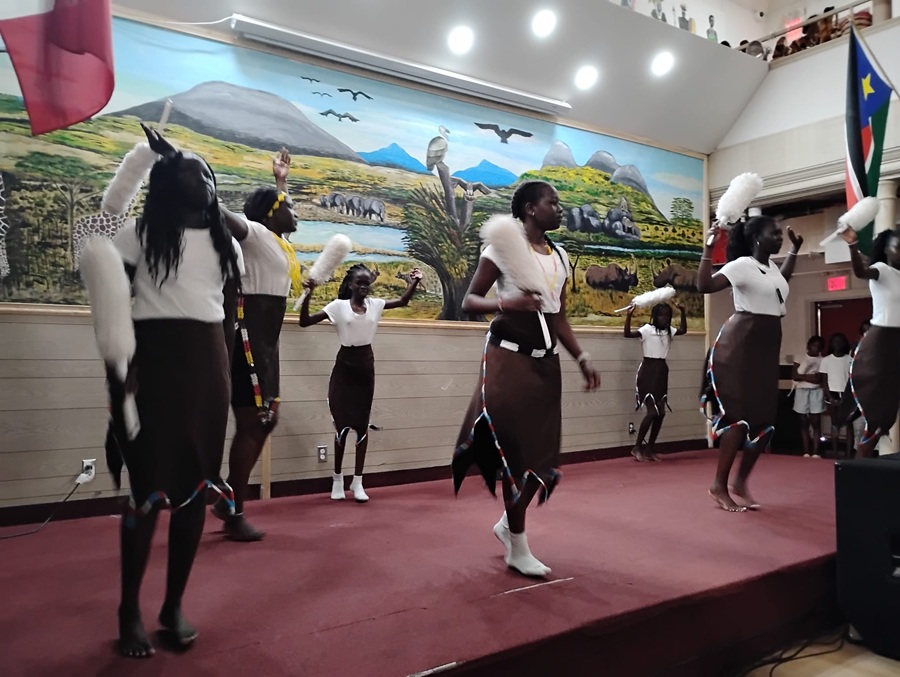
Visual storytelling is everywhere you look in the pavilion, particularly in the traditional garments worn by the women. The fabrics are not just decorative; they serve as a visual language communicating social and marital status. Through intricate wrapping styles, draping, and a system of deliberate knots tied into the fabric, observers can immediately read a woman’s life stage. A specific knot or arrangement might signify that a woman is single, newly engaged, or a married mother. It is a brilliant, portable form of communication that preserves ancient tribal etiquette in a modern diaspora setting.
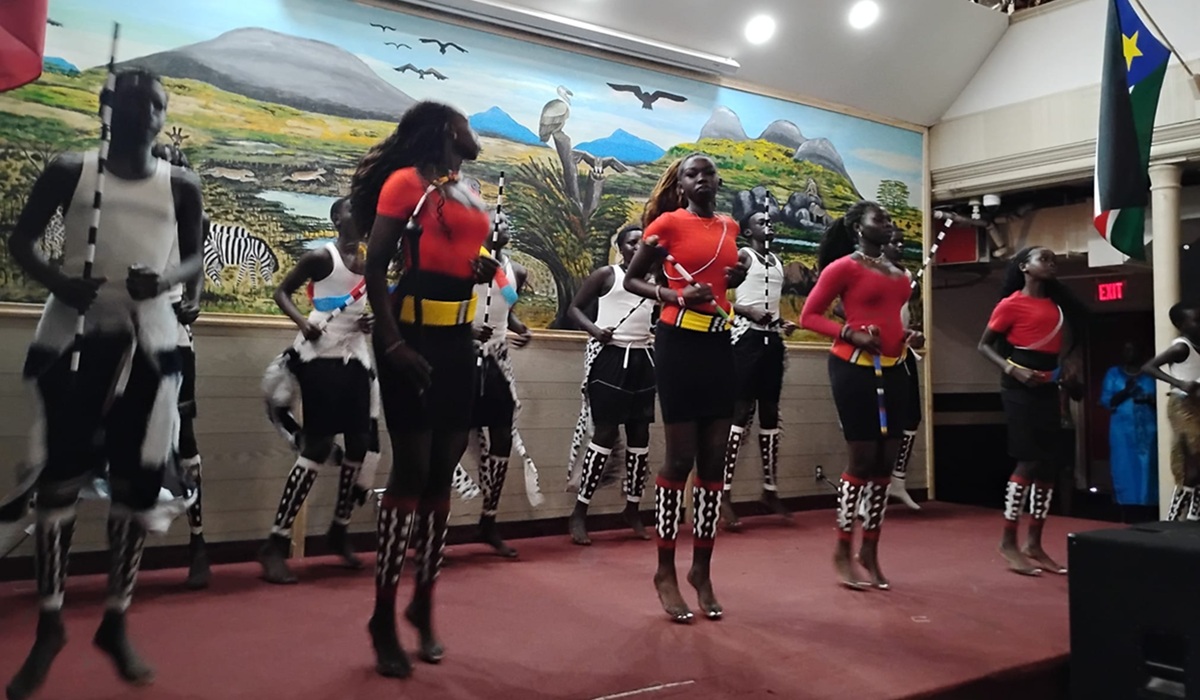
No South Sudanese celebration is complete without movement, and the dances performed at the pavilion demand staggering physical stamina. The choreography is characterized by explosive, high-altitude jumping that requires incredible core strength and endurance, accompanied by dynamic footwork that shakes the floor. Equally fascinating is how these dances capture the natural world. Dancers actively mimic their favorite local wildlife and savannah animals, emulating the majestic leap of an antelope, the proud posture of a crane, or the fierce grace of cattle. Through these movements, the dancers bridge the gap between human expression and the rich fauna of the East African landscape they or their ancestors call home.
After taking in the thunderous rhythms of the dance floor, visitors are invited to indulge in authentic East African cuisine. Chief among the crowd favorites are sambusas, which are crispy, golden-brown triangular pastries packed with savory spiced meat or lentils, capturing the warm, aromatic flavors of South Sudanese hospitality. While the core of the community thrives right here in Winnipeg, the pavilion’s reach extends far across Western Canada. Performers and cultural enthusiasts routinely travel from as far away as Saskatchewan and Alberta to join local Winnipeg dance studios, uniting the broader diaspora in a powerful display of cultural solidarity.
At the administrative center of this massive cultural undertaking stands Beronica Adam, the pavilion coordinator experiencing her first year in the leadership role. Despite the immense logistical challenge of organizing such a multifaceted event, her passion for her community shines through every detail. Reflecting on what it means to lead the pavilion during this milestone year, Beronica shares a moving perspective, welcoming everyone to the pavilion, noting that while it is a lot of work to coordinate everything, seeing it all come together makes her love her community so much more. Giving people a window into who they are, where they come from, and seeing the joy on everyone’s faces makes every single moment worth it. In that sentiment lies the true magic of the South Sudan Pavilion, proving that no matter how far the journey from the Nile to the prairies may be, the heart, rhythm, and pride of South Sudan beat stronger than ever.
About The Author