Remembering Hiroshima and Nagasaki at 81: Winnipeg Gathers for Annual Lanterns for Peace Ceremony
- TDS News
- Tiger's Eye Advisory Group - Trending News
- August 7, 2026
By: Donovan Martin, Editor in Chief
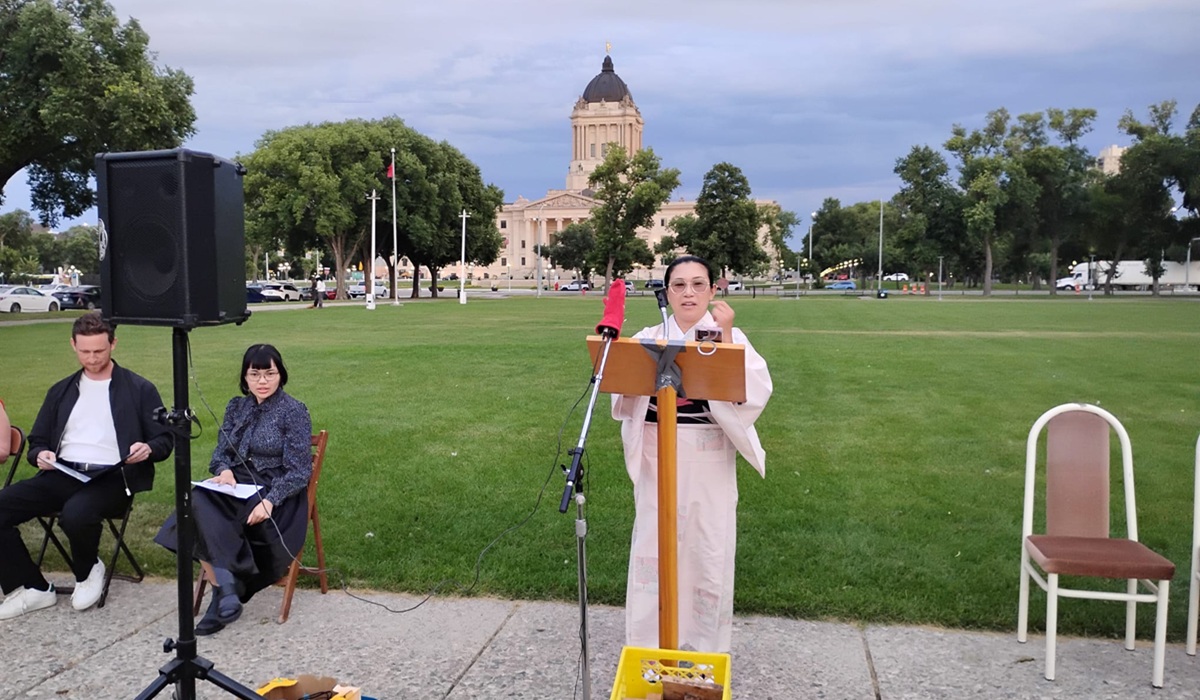
Eighty-one years have passed since the dark days of August 1945, when humanity witnessed the devastating power of nuclear warfare. Gathered at Memorial Park in Winnipeg on August 6, 2026, community members, activists, and leaders converged for the annual Lanterns for Peace ceremony. Organized to reflect upon the tragic anniversaries of the atomic bombings of Hiroshima and Nagasaki, the solemn evening served as both a poignant memorial for the lives lost and a resolute call for a nuclear-free future.
To understand the weight of the gathering, one must look back to the cataclysmic events of August 1945. On Monday, August 6, at 8:15 a.m., an American B-29 bomber named the Enola Gay dropped the uranium atomic bomb nicknamed “Little Boy” on Hiroshima, instantly killing an estimated 70,000 people. Three days later, on August 9, Nagasaki became the target of the second atomic attack when a plutonium bomb nicknamed “Fat Man” was dropped at 11:02 a.m., instantly claiming an estimated 40,000 lives, with total fatalities reaching roughly 130,000. In the years and decades that followed, thousands more succumbed to radiation-induced diseases, including leukemia, A-bomb cataracts, cancers, and severe birth defects. The psychological trauma and generational wounds inflicted by this destruction remain an indelible scar on human history.
The evening’s proceedings commenced with community elements, including lantern making and origami paper crane folding from 7:30 to 8:30 p.m., followed by a welcome from Master of Ceremonies Junko Bailey and a land acknowledgment by Candice Bodnaruk. As the program unfolded, the space filled with powerful reflections, including the reading of the Mayor of Hiroshima’s Peace Message by Tanya Cheal, and greetings from provincial and municipal representatives, including MLA David Pankratz, Acting Deputy Mayor Janice Lukes, Terumi Kuwada of the Japanese Cultural Association of Manitoba, and Karen Mackintosh of No Nukes MB.
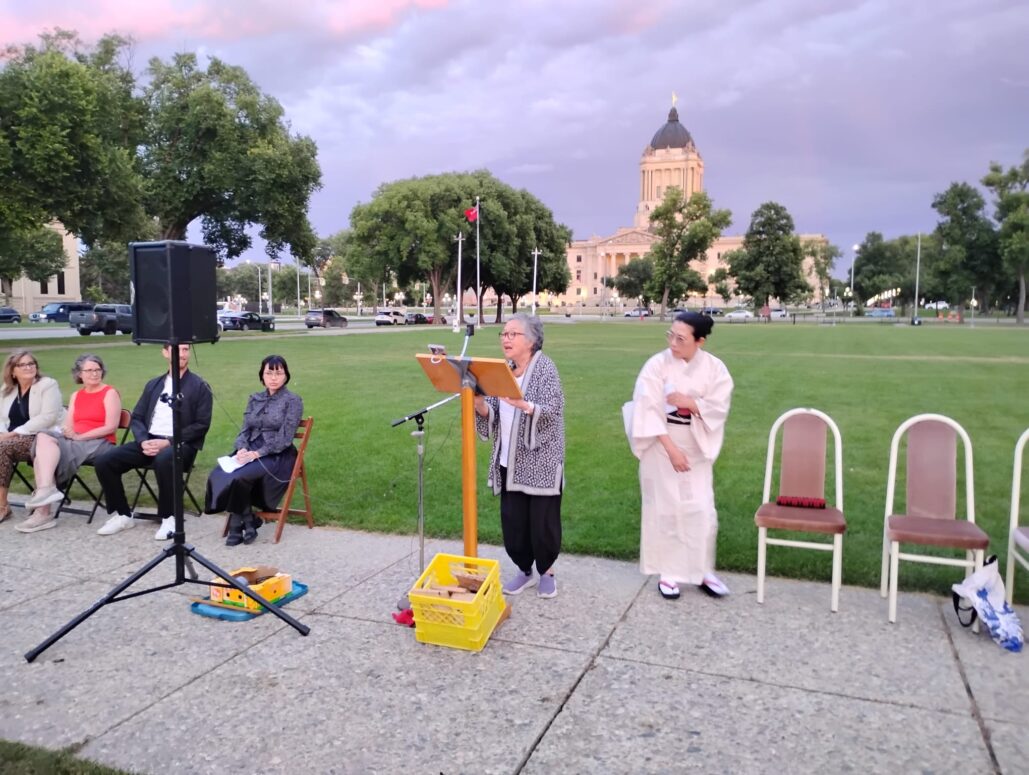
Among the most moving moments of the night was the address delivered by Junko Bailey. Speaking with deep emotion and unwavering passion, Bailey invoked the history of her family, specifically sharing the tragic experiences of her grandfather. Her words captured the profound grief and displacement born out of that era, illustrating how historical trauma is not confined to the past but reverberates powerfully through subsequent generations. The raw sincerity and intensity of her voice struck a chord with everyone present, serving as a visceral reminder of how global atrocities fracture individual family lines and why the imperative for peace remains an urgent, living duty today.
The program also featured a keynote address by Kristine-Claire Bolisay, alongside greetings and contributions from various community advocates. The audience was further transfixed by the reading of the poem “The Skies of Hiroshima” by Sachiko Hayashi, presented by Candice Bodnaruk, followed by the moving story of Sadako Sasaki delivered by Saya Faolan Duplassie. Sadako’s story remains an eternal symbol of hope and peace: a young girl who became sick with leukemia from the effects of the atomic bomb and bravely folded over a thousand paper cranes in the hope of being granted health. Today, those thousand paper cranes stand as an international emblem of healing and resistance against nuclear destruction.
A notable presence at the gathering was mayoral candidate Don Woodstock, who attended to stand in solidarity with the community. Woodstock pledged that when elected mayor, he will work directly with the Japanese community to establish a permanent monument within the city. This dedicated space would properly honor the community and serve as a sanctuary where thousands of paper cranes can one day be placed to honor Sadako and all victims of nuclear violence, reinforcing that nuclear weapons have no place on this earth.
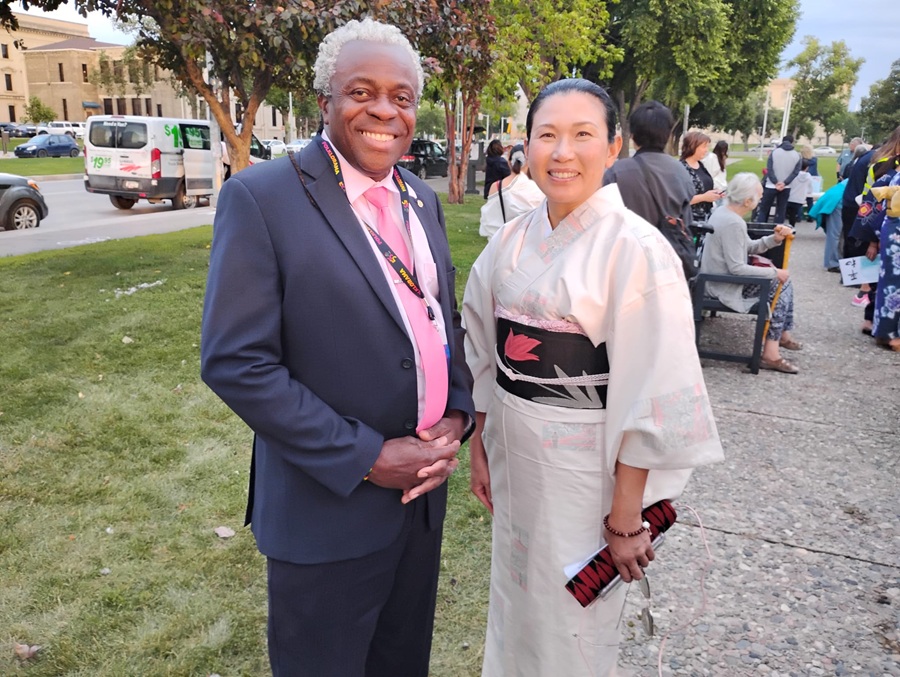
The presence of elected officials and government members, such as MLA David Pankratz, underscored the broad-based civic support for the cause. Standing shoulder to shoulder with organizers and attendees, these leaders demonstrated that the defense of peace transcends partisan lines. Their attendance highlighted the vital role that local governance plays in amplifying grassroots advocacy, ensuring that the lessons of history are translated into concrete legislative and community actions for disarmament.
As dusk settled over Memorial Park, the event moved toward its powerful climax with the launch of lanterns. This breathtaking illumination echoed the ancient Buddhist O-Bon tradition of commemorating deceased loved ones and guiding souls. Supported by sponsoring organizations like the Japanese Cultural Association of Manitoba, Mennonite Central Committee Manitoba, No Nukes MB, Peace Alliance Winnipeg, and the Winnipeg Monthly Meeting of the Religious Society of Friends (Quakers), the glowing lights drifting forward symbolized a shared, unbroken commitment to peace.
Reflecting on the evening as the final lanterns floated away, MC Junko Bailey shared profound concluding thoughts on what it meant to listen to the diverse speakers echo the same fundamental truth: that nuclear weapons have absolute zero place in our world. She expressed a deep sense of honor on behalf of herself and the entire community, noting how humbling it was to see so many people come out in true solidarity and support. In her closing remarks, Bailey emphasized that humanity is inherently better off together, finding strength, healing, and shared purpose only when we choose the path of peace.
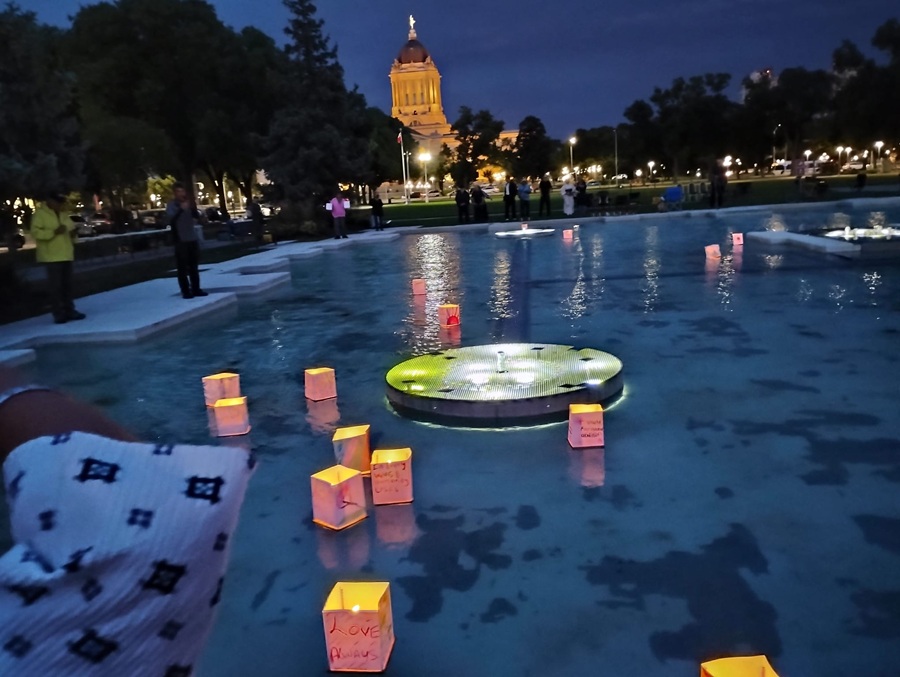
The resonance of these gathered voices extended far beyond the park benches, casting a luminous reminder across the city streets that collective memory is a powerful tool for safeguarding the future. Each participant who carried a lantern or folded a crane added a stitch to the fabric of a resilient community determined never to let the horrors of the past fade into indifference. Through art, poetry, and shared mourning, Winnipeg demonstrated that the pursuit of a nuclear-free world is a continuous, everyday obligation that binds neighbors together across all cultural divides.
Looking toward the horizon, the momentum generated by this year’s commemoration signals a growing urgency within civil society to demand systemic change from political leaders. As local advocates, organizers, and citizens look forward to future milestones, the enduring legacy of Hiroshima and Nagasaki remains a moral compass guiding humanity away from self-destruction. The collective commitment witnessed at Memorial Park proves that as long as people continue to gather, remember, and speak truth to power, the fragile promise of peace will continue to find new life and enduring strength.
About The Author