The Engineered Epidemic: How the Modern Food Industry Is Consuming Us
- TDS News
- Tiger's Eye Advisory Group - Trending News
- Food
- August 6, 2026
By: Donovan Martin Sr, Editor in Chief
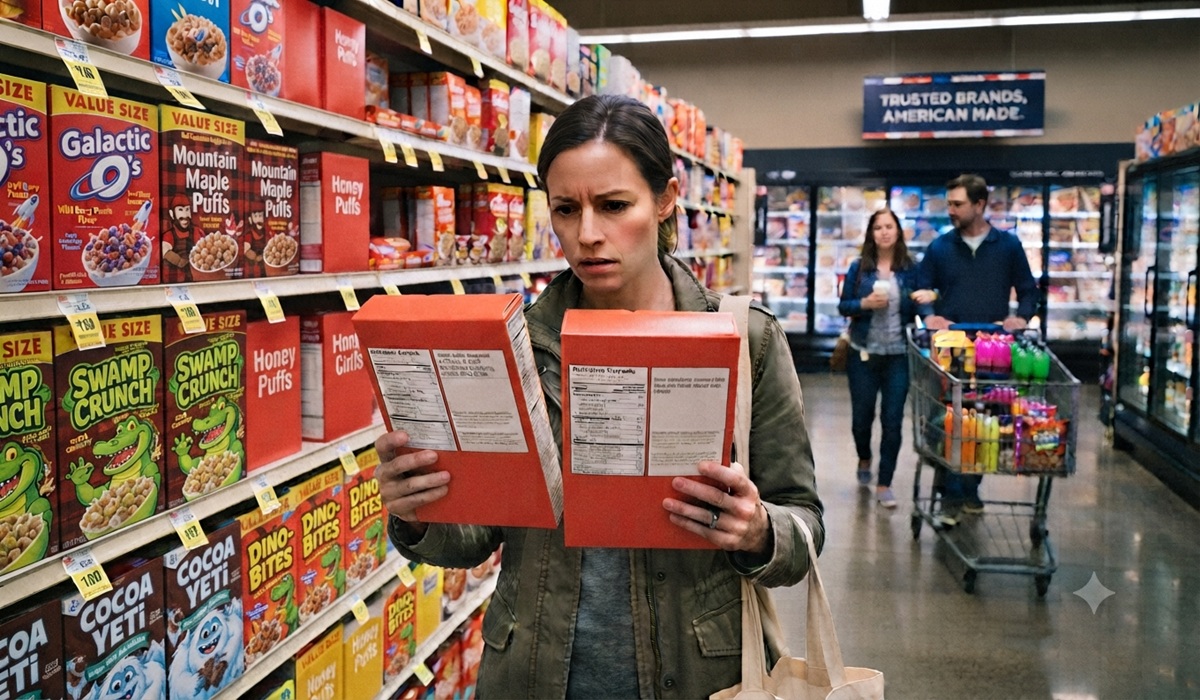
Look closely at what is sitting on supermarket shelves, and you are looking at one of the greatest silent tragedies of the modern world where the food supply in North America has quietly transformed into a chemical experiment engineered not for human health, but for corporate balance sheets. Behind the bright packaging and cheerful mascots lies an institutionalized crisis where the American food industry is effectively killing its people, and the political establishment is letting it happen.
To understand how deep this systemic rot goes, we must look back to September 6, 1958, when the United States Food Additives Amendment was signed into law, codifying a baseline list of roughly 700 food substances deemed Generally Recognized as Safe, or GRAS. These substances were exempted from rigorous pre-market safety testing because they had a long, established history of human consumption like basic salt, vinegar, and simple spices.
Juxtapose that historical benchmark with today, where modern estimates and regulatory analyses reveal that the number of chemicals, additives, packaging residues, and processing aids allowed to touch or enter the American food supply has skyrocketed to over 10,000. Most of these are unpronounceable synthetic compounds, petrochemical dyes, texturizers, and endocrine disruptors while the European Union has maintained a far more rigorous, precautionary approach by keeping its regulatory baseline tightly anchored near those historical thresholds and outsourcing zero safety evaluations to the very corporations manufacturing the products.
The transatlantic divide becomes glaringly obvious when comparing the exact same global brands sold in different countries, as a walk down grocery aisles in Toronto, Canada, or Paris, France, reveals formulas that frequently omit artificial dyes like Red Dye 40, Yellow 5, and Yellow 6 alongside chemical preservatives like BHA and BHT which are heavily linked to behavioral issues in children and carcinogenic risks yet remain legal or loosely regulated in the United States. Even iconic fast-food items feature radically different profiles, such as McDonald’s french fries containing hydrolyzed wheat, hydrolyzed milk, and chemical defoamers in the U.S. while cleaner, simpler formulas are mandated overseas, leaving Canadian citizens caught uncomfortably in the middle of a geographic and economic tether to American ultra-processed manufacturing standards.
What it ultimately comes down to is a simple, cynical equation of money, money, and money where corporations exist to maximize quarterly profits and politicians rely on campaign contributions from powerful lobbies to stay elected, transforming the regulatory apparatus into a revolving door of captured interests. The societal cost of this corporate capture is etched directly onto the bodies of the population through staggering rates of obesity, metabolic syndrome, type 2 diabetes, and autoimmune disorders that make the American public visibly and chemically sick, especially when compared to traditional diets in parts of Asia where whole foods dominate.
This is not a failure of individual willpower but a structural design flaw where people react biologically to an industrialized matrix engineered to override human satiety signals, and the tragic irony is deepened by the fact that many lawmakers debating public health policies in Washington are themselves captive to this lifestyle while accepting donations from the very conglomerates driving the epidemic.
Nothing illustrates this institutional absurdity more vividly than the infamous lobbying battle years ago when the United States Department of Agriculture attempted to raise nutritional standards for school lunches, only for frozen food industry and agricultural lobbies to launch an aggressive counter-offensive that successfully pressured Congress to block regulations. Through intensive corporate lobbying, companies secured a rule where pizza was officially allowed to count as a vegetable in school cafeterias because of a mere two tablespoons of heavily salted, industrial tomato paste.
The reality of that school lunch pizza is a dystopian nightmare featuring a dough made of refined flours and dough conditioners like azodicarbonamide, a sauce stripped of natural nutrients, a synthetic cheese substitute made of oil-and-casein analogues engineered to melt uniformly, and dehydrated vegetables stripped of vitality. Feeding this processed matrix to developing children under the legal fiction that it constitutes a vegetable serving is a profound moral indictment of a system where the 10,000 chemical additives will stay on the shelves because money is king, political campaigns rely on corporate war chests, and the silent, systemic poisoning of an unsuspecting public continues unabated.
About The Author