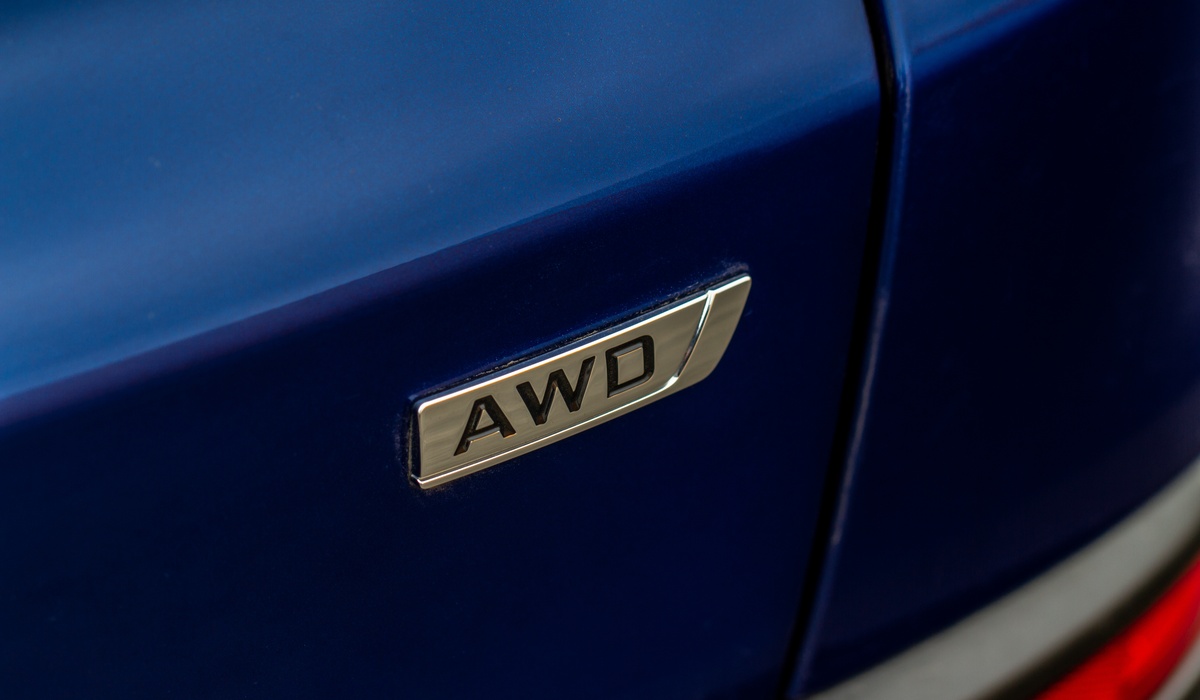
Americans have become increasingly comfortable buying vehicles that promise more control, more confidence, and more capability. In a country where drivers may face lake-effect snow in Michigan, mountain roads in Colorado, heavy rain in the South, or long highway commutes anywhere in between, all-wheel drive has become a popular selling point. But does all-wheel drive make a substantive difference for drivers? We discuss whether all-wheel drive vehicles are worth it below.
All-wheel drive can offer real advantages, especially in poor weather and on loose surfaces. They can also cost more to buy, maintain, fuel, and repair. For some households, those tradeoffs make sense. For others, all-wheel drive adds expense without changing much about daily driving. Whether it is worth it depends less on the badge on the tailgate and more on climate, roads, driving habits, tire care, and expectations.
All-wheel drive works by sending power to both the front and rear wheels, either all the time or when the system detects a need for extra traction. That can help a vehicle move from a stop on snow, climb a slick driveway, or maintain its composure when road conditions change quickly.
The benefit becomes most noticeable when tires struggle to grip the surface. On a dry, well-maintained road, many drivers may never feel the difference. On a slushy intersection or gravel road, they may feel it immediately.
This distinction matters because all-wheel drive does not make a vehicle immune to physics. It helps with acceleration and traction, but it does not shorten stopping distances by itself. A driver who can pull away confidently in snow still needs enough tire grip to brake, steer, and avoid a hazard.
Some drivers treat all-wheel drive as a substitute for caution, better tires, or slower speeds in bad weather. It is not. A two-wheel-drive car with high-quality winter tires can outperform an all-wheel-drive vehicle with worn or unsuitable tires in many cold-weather situations.
For drivers in snowy climates, all-wheel drive can still feel like a practical form of insurance. Michigan drivers understand how quickly road conditions can change between counties, and rural residents may not see plows as quickly as those on major commuter routes. In those cases, all-wheel drive can reduce the chance of getting stuck, especially when paired with tires suited to the season. It can also make a difference for people who must report to work regardless of weather, including medical workers, first responders, utility crews, and others whose schedules cannot bend around a storm.
The case for whether all-wheel drive vehicles are worth it becomes less clear in milder regions. A driver who spends nearly all their time on paved roads in a temperate climate may gain little from all-wheel drive. Rain alone does not automatically justify the added cost. Modern front-wheel-drive vehicles can handle wet pavement well when their tires remain in good condition, and the driver adjusts to conditions. In that setting, the money spent on all-wheel drive might deliver more value toward advanced safety features, better tires, regular maintenance, or a vehicle with stronger crash-test performance.
Cost remains one of the most important factors. All-wheel drive usually raises the purchase price of a new vehicle and may affect the used-vehicle market as well. It can also reduce fuel economy because the system adds weight and mechanical complexity. Even small differences at the pump can add up over years of ownership, especially for commuters and families who put significant mileage on a vehicle.
Maintenance also deserves attention. All-wheel-drive systems rely on components that two-wheel-drive vehicles may not have in the same form, including transfer cases, driveshafts, center differentials, and additional axle components. These parts can perform reliably for years, but they introduce more potential points of service. When repairs do arise, they can carry higher labor and parts costs.
Tires sit at the center of that responsibility. Because all-wheel-drive systems depend on the relationship between all four wheels, matching tires are important for AWD vehicles. Drivers may assume that replacing one damaged tire is the cheapest fix, but AWD vehicles can be more demanding. Tire circumference, tread depth, and wear patterns can affect how the drivetrain behaves.
There is also a psychological side to the decision. All-wheel drive can make drivers feel more secure, and that feeling has value when it reduces anxiety during winter travel. But confidence can become dangerous when it turns into overconfidence.
A vehicle that accelerates smoothly on a snowy road may still slide if the driver enters a turn too quickly. It may still need more room to stop. It may still hydroplane in standing water. Technology can assist judgment, but it cannot replace it.
This is especially important as larger crossovers and SUVs dominate American roads. Many come with all-wheel drive or offer it as a common upgrade. These vehicles can weigh more than sedans and may carry families, pets, groceries, work equipment, or vacation gear. Extra traction helps them move, but weight affects braking and handling. Drivers should think about the entire vehicle, not just the drivetrain. Tires, brakes, suspension, visibility, electronic stability control, and driver behavior all shape real-world safety.
For families, the decision can come down to routine. A household with one vehicle, a steep driveway, school drop-offs before dawn, and winter storms may find all-wheel drive worth every dollar. A family with flexible schedules, urban roads, and quick snow removal may not need the extra capability.
Used-car buyers should approach the question with additional care. An older all-wheel-drive vehicle can offer strong value, but only if previous owners maintained it correctly. Service records and tire history matter. Strange vibrations, drivetrain noises, mismatched tires, or neglected fluid changes should prompt caution.
Environmental considerations also play a role. A modest fuel-economy penalty may look small on paper, but multiplied across millions of vehicles, it affects fuel consumption and emissions. Automakers continue to improve AWD efficiency, and hybrid or electric systems can change the calculation. Some electric vehicles use separate motors to drive different axles, which can deliver all-wheel traction without the same mechanical layout as traditional systems.
The rise of advanced driver-assistance technology also complicates the value question. Features such as automatic emergency braking, lane-keeping assistance, blind-spot monitoring, and stability control can do more to prevent certain crashes than all-wheel drive alone. A buyer choosing between trims should consider whether the AWD upgrade crowds out safety features that would prove more useful every day.
For many buyers, the smartest approach begins with an honest look at the worst driving conditions they face, not the most dramatic conditions they can imagine. They should ask how frequently they drive on unkempt roads, whether they travel through rural or hilly areas, whether they can stay home during severe weather, and whether they will maintain the tires and drivetrain properly.
AWD vehicles make the strongest case when drivers pair them with realistic expectations. They can help a car get moving, improve control in low-traction conditions, and add confidence in difficult weather. They cannot cancel out poor tires, excessive speed, delayed maintenance, or the need for defensive driving.
For the right driver, all-wheel drive is worth it. For the wrong driver, it is an expensive answer to a question their daily life may not ask.
About The Author