Young Adults Are Exchanging the Grit of Independence for the Illusion of Wealth
- Nick Kossovan
- Culture
- June 27, 2026
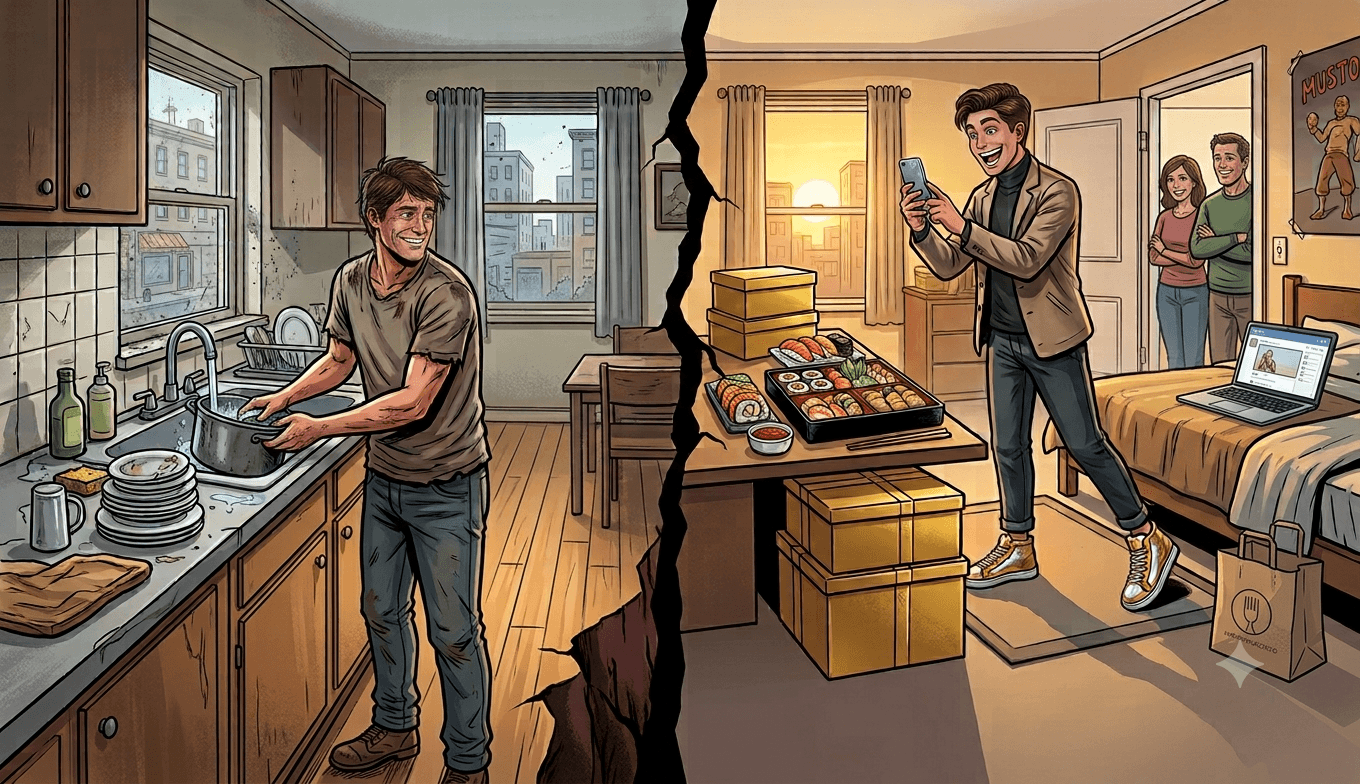
Young adults fearing growing up has evolved into a curated series of performances. Walk into any trendy coffee shop or downtown restaurant on a Friday night, and you’ll witness a masterclass in the illusion of success. You’ll see twenty-something professionals brandishing the latest smartphones, meticulously photographing eight-dollar lattes, and ordering overpriced small plates—their wardrobes expertly tailored to signal that they’re triumphantly conquering the corporate ladder. It’s a flawless staging of a luxurious, self-made life. Yet, when the bill arrives, many of these same individuals will pay up and drive straight back to their childhood bedrooms, sleeping rent-free under a roof funded entirely by their parents.
Previous generations didn’t wait for a perfect economy to grow up, largely because they knew no such luxury existed. Economic hardship wasn’t an excuse; it was the grindstone on which character was sharpened. It wasn’t that long ago that you kept your head down, worked long hours, honoured your commitments, and didn’t expect to inherit the kingdom before you’d even swept the floors. There was a baseline understanding of how life works. Paying your dues was simply the price of admission to adulthood—a destination young people aspired to, rather than resisted.
Previous generations possessed something I find glaringly absent among today’s curated youth: self-respect.
… being able to look at myself in the mirror.
Self-respect isn’t a feeling you conjure with positive affirmations; it’s a tangible asset earned solely through the friction of working towards self-reliance and the many obstacles life places in your path. It’s the quiet, unshakeable confidence—notably absent in most young adults—that comes from looking at a stack of your monthly bills, a difficult career path, and a small apartment furnished with thrift-store buys and curbside finds, and knowing: I’m funding this, I’m steering this, and if it breaks, I have the grit to move forward.
Today, the mindset of honouring “the grind” and simply doing what you have to do is dismissed, even laughed at. That’s an easy viewpoint to have when you’re content to let your parents bankroll your lifestyle. Yet despite the endless excuses and false narratives young adults fabricate to explain their dependency, an unbending universal law remains: nothing of value is ever achieved without stepping outside your comfort zone and doing the necessary work.
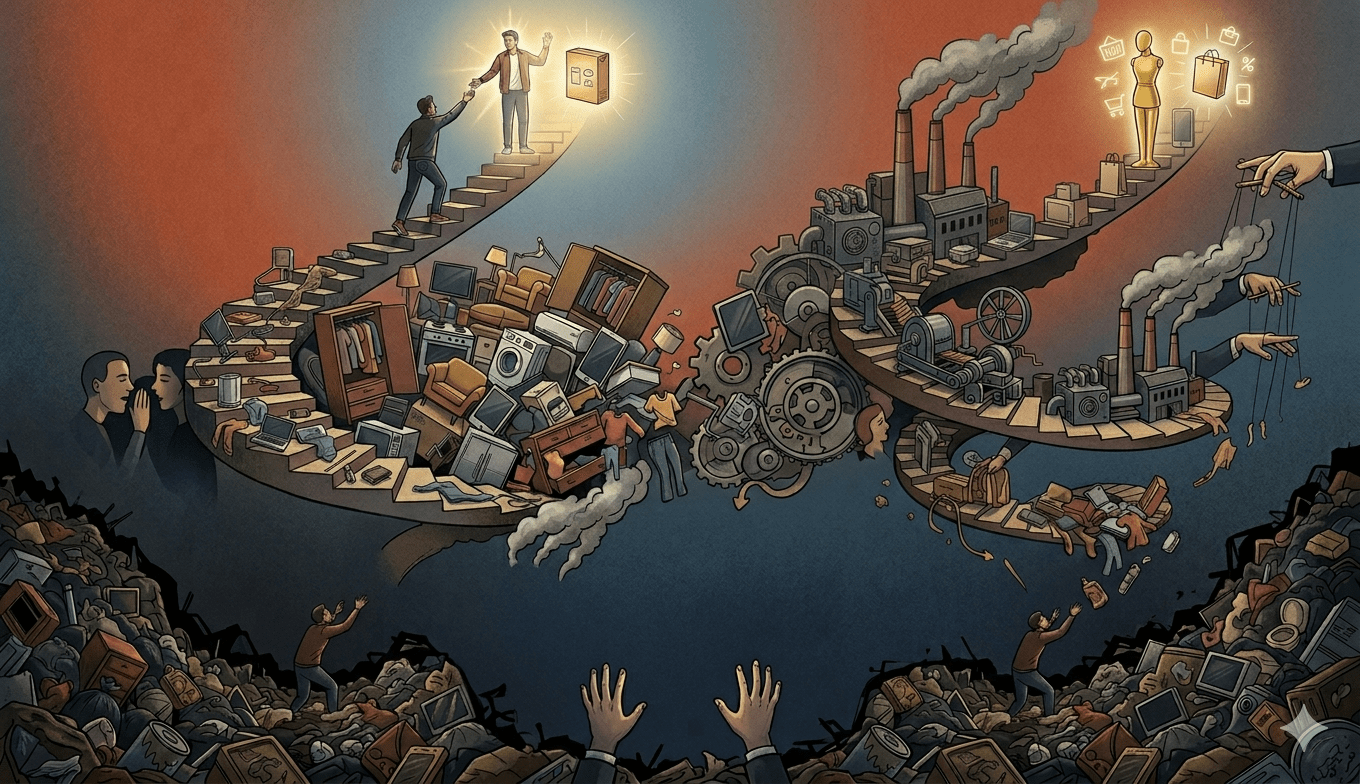
We’ve morphed into a culture where superficial status symbols have replaced genuine maturity, thanks to marketing propaganda that triggers human insecurities with military precision. Over the past two decades, a systematic rebranding of fear as “wellness” or “astute financial strategy” has taken hold. Today’s youth are equipped with a sophisticated arsenal of excuses to avoid independent living, masterfully conditioned by influencers who evangelize the idea that being sheltered by their parents, while projecting a lifestyle they couldn’t afford on their own, is “success.” Nevertheless, a comfortable cage is still a cage. The widespread refusal to leave the nest isn’t merely a byproduct of macroeconomic forces; it’s a profound psychological rejection of the sacrifices required to become an adult, at the expense of personal accountability, social functioning, and self-worth.
Young adults sidestep adulthood because they dread what independence requires—a direct result of helicopter parenting that has produced an intrinsically risk-averse generation. Previous generations stepped out into an indifferent world with nothing but a mattress on the floor—or, in my case, a futon—a second-hand couch, and a strict, unyielding budget. It was understood that independence is built from the ground up, not imported ready-made from a luxury lifestyle blog. Today, there’s an outright refusal to compromise on luxury. If a young adult can’t start at the top of the lifestyle ladder immediately, they choose to stay at home and project pseudo-success on their parents’ dime.
Parents often convince themselves that letting a young adult child live at home is an act of love and protection. It’s structural sabotage. Parents who let their young adult children linger in their childhood bedrooms, or “live in their basement,” to avoid economic and life frictions aren’t parenting; they’re enabling them to live like greenhouse plants. Greenhouses are safe and perfectly controlled, but they produce delicate vegetation that rots the moment it’s exposed to a real, unscripted storm. True adult character is like timber; it requires the friction of the wind, heavy downpours, and the chill of frost to develop structural integrity. Parents who eliminate the struggle for survival aren’t helping their children get ahead; they’re ensuring their children remain too fragile to ever stand on their own.
Young adults who rely on their parents for support while spending their income, assuming they have a job, on unnecessary luxury items and services, are like a car being towed behind a moving truck. You might look like you’re driving at highway speeds, and you can certainly enjoy the view through the windshield, but your foot isn’t on the gas, and you aren’t steering. The moment the hitch disconnects, as it inevitably will, you’ll realize you have no idea how to operate the car, steer away from the ditch, or avoid road hazards. Becoming an independent adult can’t be bought at a high-end retailer; it’s earned by navigating the obstacles on life’s journey.
When we look closely at this delayed maturity, the toll becomes evident: it impairs psychological development and harms the surrounding community. In the article, What It Means to Be an Adult Today, psychologist Dr. Megan Wright stresses the vital societal stakes of this transition: “Adulthood is a key phase of psychological development, as our identities are formed through experiences, choices and responsibilities. In turn, adults shape the world future generations will inhabit—communities, countries, cultures—driving innovation, creating economies, running governments and nurturing the next generation.” Becoming a functioning adult isn’t an isolated milestone; it’s a foundational requirement for a healthy society. When a young adult opts out, the entire community suffers a deficit.
The clock ticking in a childhood bedroom eventually grows louder than any lifestyle soundtrack, prompting those who are independent adults to chuckle and say to themselves, “Who do they think they’re kidding?” Time is a non-renewable resource. You can’t buy back the years spent hiding from the world, no matter how stylishly you dress them up. Filling a childhood bedroom with high-end tech doesn’t mask the hollow core of dependency.
To the parents reading this who have young adults still living at home: trading your child’s milestones for their excuses is a fundamental failure to raise an independent adult who contributes to society. For the 20-something reading this who is still living under their parents’ roof, the truth remains unvarnished: as much as you like to think you’re “strategizing” or that you simply “can’t,” you’re hiding. Sovereign adulthood isn’t a hazard to be avoided; it’s the arena where self-reliance, confidence, and, most of all, self-respect are cultivated. Muster up the grit and pride to own your life. Unplug from your parents’ safety net, stop spending your money trying to “look rich”—you’re only fooling yourself—and experience the exhilaration of standing entirely on your own two feet.
About The Author