World Environment Day 2026: Inspired by Nature, Responsible for the Future
- Don Woodstock
- World News
- Tiger's Eye Advisory Group - Trending News
- June 5, 2026
Every year on June 5, people around the world pause to recognize World Environment Day. While it is easy to think of it as just another date on the calendar, the reality is that it has become one of the most important global movements dedicated to protecting the only home we have ever known. World Environment Day was established by the United Nations in 1972 and first celebrated in 1973. Over the decades, it has grown into the largest international platform for environmental awareness and action, bringing together governments, organizations, businesses, and everyday citizens who understand that the future of our planet depends on the choices we make today.
The theme for World Environment Day 2026 focuses on climate change and the urgent signals our planet is sending us. This year’s campaign encourages people to take meaningful action and reminds us that nature itself provides many of the solutions we need. Under the message “Inspired by Nature. For Climate. For Our Future,” the focus is not simply on protecting forests, rivers, and wildlife. It is about recognizing that healthy ecosystems are directly connected to healthy communities, strong economies, and a better quality of life for future generations.
As someone who has spent decades working in our community, I have always believed environmental stewardship should not be treated as a political issue. Clean air, clean water, responsible waste management, and sustainable growth are not left-wing or right-wing ideas. They are common-sense responsibilities. We all share this city, and we all share this planet.
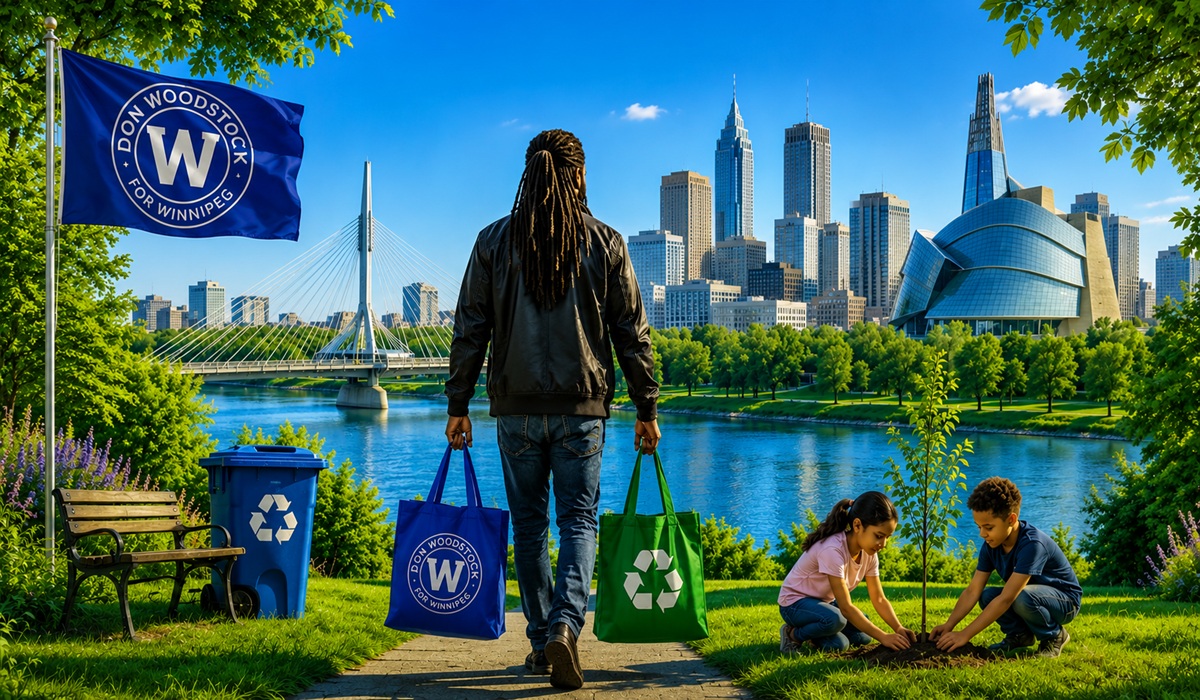
Long before environmental responsibility became a popular topic in municipal politics, I was involved in practical initiatives that encouraged residents to think differently about waste and recycling. Many Winnipeggers may remember the community plastic bag recycling events and public awareness efforts that encouraged residents to keep plastic waste out of landfills and waterways. Those projects were never about headlines or recognition. They were about demonstrating that small actions, when multiplied across an entire city, can create meaningful change.
The same philosophy applied to the introduction and promotion of large-scale recycling initiatives, including the expansion of Winnipeg’s blue bin programs. Recycling is not a perfect solution, and it never will be. However, every tonne of material diverted from a landfill represents resources that can be reused rather than discarded. Every household that participates contributes to a cleaner city and a more sustainable future.
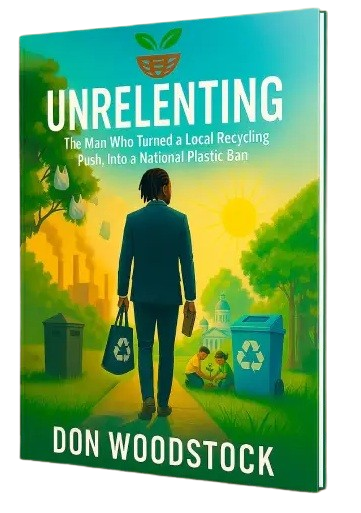
These experiences were important enough that I documented many of them in my book, Unrelenting. The lessons were simple but powerful. Communities succeed when people stop waiting for someone else to solve problems. Progress happens when ordinary citizens take ownership of the places they live. Environmental responsibility begins at the individual level, but its impact can be felt throughout an entire city.
Today, the environmental challenges facing the world are larger than they were fifty years ago. Climate change is affecting weather patterns, agriculture, infrastructure, and public health. Forest fires have become more severe. Droughts and flooding events are becoming more common in many parts of the world. Pollution continues to threaten ecosystems and wildlife. Scientists, governments, and environmental organizations increasingly agree that action cannot be delayed indefinitely. The longer solutions are postponed, the more difficult and expensive they become. At the same time, there is reason for optimism.
Around the world, communities are investing in cleaner technologies, renewable energy, conservation efforts, and sustainable development. Businesses are finding ways to reduce waste and improve efficiency. Cities are exploring greener infrastructure, better public transportation systems, and more environmentally responsible planning practices. Innovation continues to provide opportunities that previous generations could not have imagined.
Here in Winnipeg, we have our own opportunities. Protecting green spaces, improving waste diversion, encouraging responsible development, supporting urban forestry initiatives, and ensuring our rivers remain healthy should remain priorities for generations to come. Environmental protection does not mean stopping growth. It means growing responsibly and understanding that economic development and environmental stewardship must work together.
One of the most important lessons I have learned is that environmental responsibility is not measured by a single day of action. It is measured by habits that continue throughout the year. It is found in the family that recycles consistently. It is found in the volunteer who helps clean a neighbourhood park. It is found in the business owner who reduces waste. It is found in the student planting a tree and in the senior passing down knowledge about conservation and stewardship.
The future of environmental protection will not be determined by one government, one organization, or one generation. It will be determined by millions of decisions made every single day by ordinary people who understand that the choices they make matter. World Environment Day serves as a reminder that the environment is not something separate from us. It is the air we breathe, the water we drink, the food we grow, the parks where our children play, and the natural beauty that surrounds our communities. When we protect the environment, we are ultimately protecting ourselves.
As we mark World Environment Day 2026, my message is simple. We do not inherit the Earth from our parents. We borrow it from our children. The responsibility we carry today is not simply to enjoy the resources we have been given, but to ensure those same opportunities exist for future generations. Nature has always shown remarkable resilience. The question is whether we are willing to do our part. If we are, then the future remains bright. If we are not, future generations will inherit the consequences of our inaction.
The choice, as it has always been, belongs to us.
About The Author