When Diplomacy Becomes Theatre: The Collapse of Trust in U.S. Iran Negotiations
- Hami Aziz
- Tiger's Eye Advisory Group - Trending News
- April 25, 2026
There is a point in any geopolitical standoff where the polite language of diplomacy begins to feel less like strategy and more like theatre. That point, many would argue, has long since passed in the ongoing cycle of U.S. posturing toward Iran. What is unfolding now is not a complicated chess match between equals. It is a pattern, repeated often enough that even the most casual observer can trace it without needing access to classified briefings.
Negotiations are announced. Envoys are dispatched. Statements are issued about progress, dialogue, and stability. Then, almost on cue, escalation follows. Airstrikes, threats, or sudden reversals that undermine whatever fragile framework was being discussed just days earlier. This has not happened once. It has not happened twice. It has become a rhythm. And with each repetition, the credibility of the process erodes further.
The uncomfortable question, the one that rarely gets asked directly in official settings, is simple. At what point does the administration acknowledge what much of the world already believes? That these negotiations are not being conducted in good faith, and that the individuals leading them are not delivering results that resemble diplomacy in any meaningful sense.
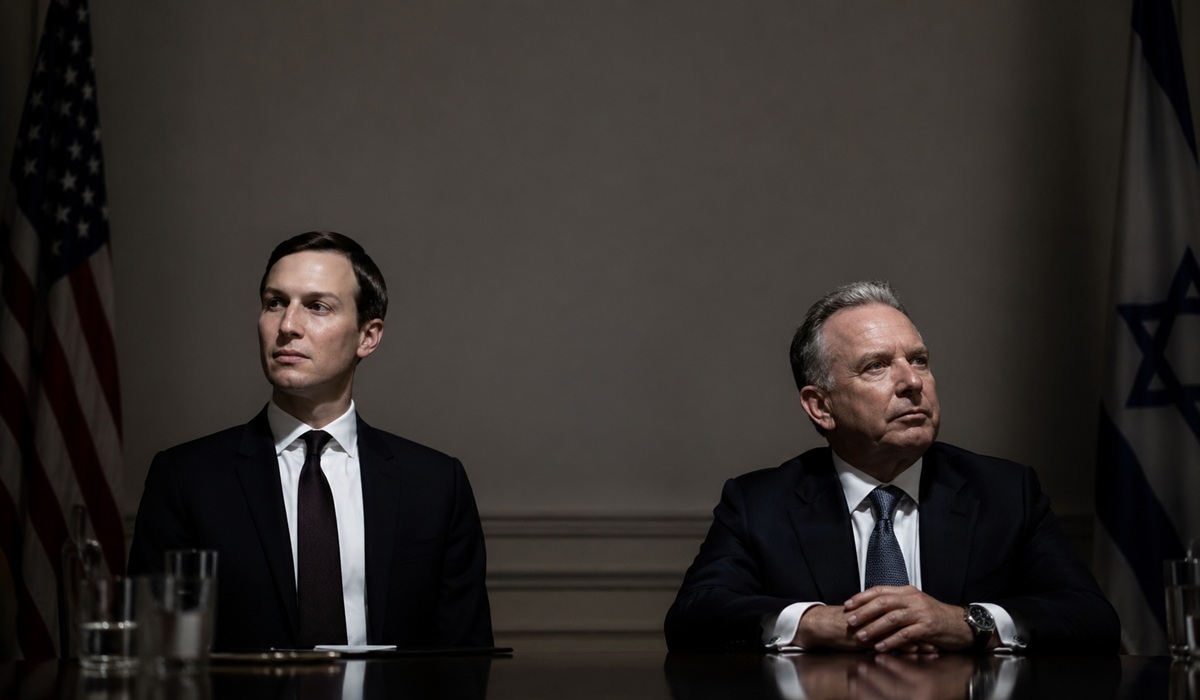
Figures like Jared Kushner have long been positioned as dealmakers, individuals capable of navigating complex international relationships through a mix of business acumen and political access. That image, however, is increasingly difficult to reconcile with outcomes on the ground. Deals that never materialize. Agreements that collapse under scrutiny. Engagements that appear more performative than substantive.
The criticism is not merely about failure. Failure is part of diplomacy. It is about the perception, now widely held beyond any single region, that the process itself is hollow. That negotiations are being used as a temporary cover for actions already decided elsewhere. When discussions with Iran repeatedly coincide with military escalation, the message being sent is not one of partnership or compromise. It is one of inevitability.
This matters because trust, once lost, is not easily rebuilt. Countries do not enter negotiations in a vacuum. They carry memory. They measure words against actions. When those actions consistently contradict the language of diplomacy, the result is not just skepticism. It is disengagement.
The upcoming talks, reportedly involving U.S. envoys traveling to Pakistan as a staging ground for renewed discussions, arrive under that cloud. On paper, it is another opportunity for dialogue. In reality, it is another test of credibility. The question is no longer whether an agreement can be reached. It is whether anyone involved believes the process itself is genuine.
There is also the issue of perception surrounding financial and regional ties. Critics have pointed for years to the deep entanglements between American political figures and Middle Eastern capital. Whether fair or exaggerated, these concerns feed into a broader narrative that decision-making is influenced by interests that extend beyond public policy. In the case of Kushner, those criticisms have been particularly sharp, with accusations that his proximity to wealth and power in the region complicates any claim of neutrality.
Even if one sets aside those allegations, the optics alone are damaging. Diplomacy relies not just on outcomes, but on the appearance of impartiality. When negotiators are seen as compromised, rightly or wrongly, the entire framework becomes suspect.
What remains is a widening gap between what is said and what is believed. Official statements continue to emphasize commitment to peace, stability, and negotiated solutions. Public perception, both domestically and internationally, increasingly views those statements as disconnected from reality.
The danger in allowing this gap to grow is not abstract. It has real consequences. It makes future negotiations harder. It emboldens adversaries who no longer take diplomatic overtures seriously. It frustrates allies who are forced to navigate the fallout of policies they do not control.
At some point, the administration will have to confront this disconnect directly. Not with another round of carefully worded statements, but with a clear acknowledgment of what has gone wrong and what will change. Because continuing along the current path, where negotiation is followed by escalation and credibility is treated as expendable, is not strategy. It is repetition without progress.
And repetition, in international politics, is rarely neutral. It is noticed, it is remembered, and eventually, it is answered.
About The Author