Louisiana Shooting: A Community Moves From Shock to Hard Questions as New Details Emerge
- TDS News
- U.S.A
- April 20, 2026
By: Donovan Martin Sr, Editor in Chief
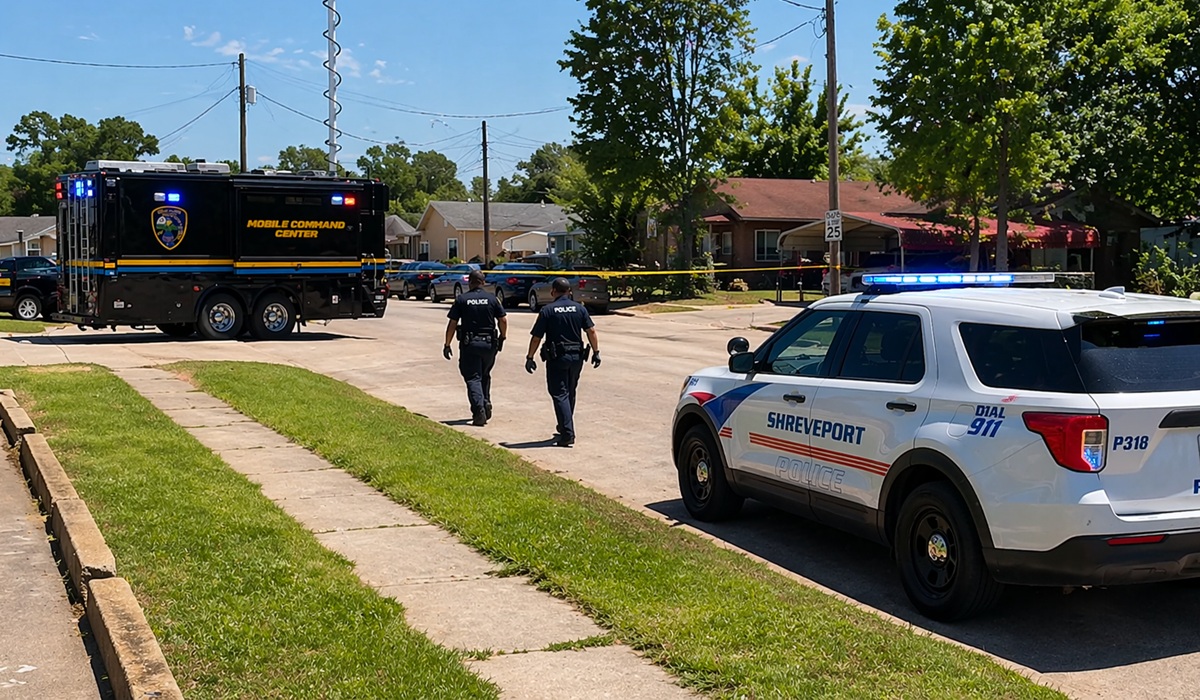
By Monday morning, the story in Shreveport had already shifted from the initial shock of what happened to the heavier, more difficult phase of trying to understand it. Investigators continued working through the aftermath of Sunday’s mass shooting that left eight children dead and two adults injured, and while the broad outline remains the same, new details are beginning to sharpen what authorities believe unfolded inside those two homes.
Police now say the timeline appears tighter and more deliberate than first understood. What began as a domestic dispute escalated rapidly into a targeted series of shootings involving people known to the suspect. Authorities are increasingly confident this was not a chaotic outburst, but a sequence of actions that moved from one location to another with intent. That distinction matters because it reframes the tragedy from an eruption of violence into something more controlled, and in many ways, more disturbing.
Investigators spent much of Sunday night and into Monday canvassing both properties, collecting evidence and speaking with anyone who may have had contact with the suspect in the hours leading up to the killings. Law enforcement sources say they are looking closely at prior calls, past incidents and any documented history of domestic conflict tied to the individuals involved. Whether there were warning signs that could have triggered earlier intervention is now one of the central questions driving the investigation.
What is becoming clearer is that the victims were not all in a single place when the violence began. Authorities believe the suspect moved between residences, which has raised new concerns about how long the situation unfolded before police were alerted and how many opportunities may have existed to interrupt it. Officials have not yet released a full sequence of events, but they have indicated that multiple scenes are being treated as part of the same continuous incident.
The suspect’s movements after the shootings are also under closer scrutiny. Police have confirmed that he fled the area, stole a vehicle and led officers on a pursuit that ended in a fatal confrontation. What investigators are now trying to determine is whether there was any communication, digital activity or contact with others during that window. In cases like this, the period between the initial violence and the final encounter with police often reveals motive, mindset and whether the suspect believed the situation was over or still ongoing.
As more information surfaces, the emotional weight of the case is not easing. If anything, it is deepening. The fact that eight children were killed continues to dominate every aspect of the story, but Monday has brought a more personal layer as families begin the process of identification and notification. Authorities have been cautious about releasing names, emphasizing the need to ensure accuracy and to give families time before the information becomes public. That delay, while necessary, has left the community in a painful state of waiting.
Local leaders are now beginning to shift their messaging as well. On Sunday, the focus was on grief and immediate response. By Monday, there is a growing emphasis on accountability and prevention. Officials have started to speak more directly about domestic violence as a recurring issue that too often escalates without intervention. There is increasing pressure to examine whether existing systems, including law enforcement, social services and community reporting mechanisms, are equipped to identify and respond to situations before they reach this level of devastation.
There are also questions emerging about access and control. While authorities have not yet released full details about the weapon or weapons used, investigators are expected to address how the suspect obtained them and whether there were any legal or procedural failures along the way. Those answers will likely become a major part of the conversation in the days ahead.
For residents of Shreveport, Monday has not brought closure. It has brought a deeper awareness of what happened and a growing realization that this will not be a story that fades quickly. Schools, community centers and local organizations are beginning to respond, preparing for the impact this will have on children, families and the broader population. Counseling resources are being discussed, and there is an understanding that the psychological effects will extend far beyond those directly connected to the victims.
The investigation remains active, and officials are continuing to ask for information from the public, particularly any video or firsthand accounts that could help fill in gaps. But even as the facts come into focus, the larger questions are only beginning to take shape. How does something like this build without being stopped. What signals were missed. And what changes, if any, can prevent another situation from reaching the same point.
Monday is when a tragedy like this begins to settle into reality. The headlines are no longer breaking news in the same way, but the story becomes heavier, more detailed and more difficult to look away from. In Shreveport, the focus is no longer just on what happened. It is on what it means, and whether anything could have been done before eight children lost their lives in a place they should have been safe.
About The Author