UFC at the White House: Historic Spectacle Divides Fans and Critics
- Kingston Bailey
- Sports
- June 15, 2026
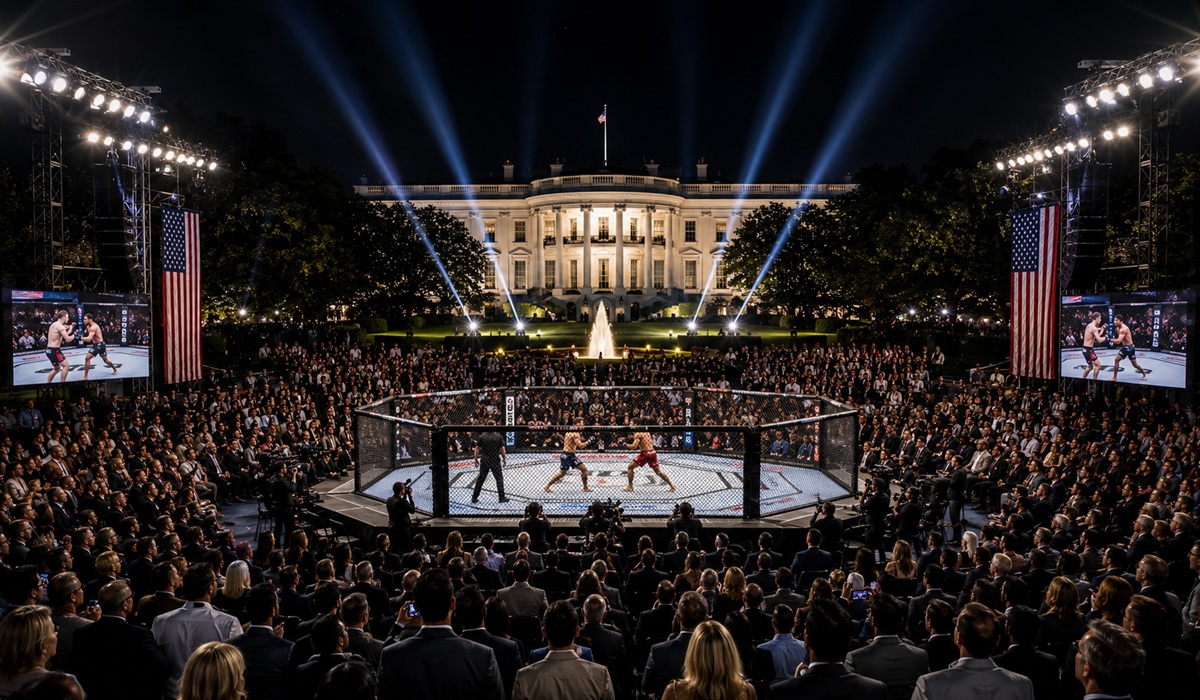
Love it or hate it, the UFC’s historic event on the South Lawn of the White House will be remembered as one of the most talked-about nights in combat sports history. What unfolded was far more than a championship fight card. It became a cultural and political flashpoint that generated praise, criticism, and endless debate long before the first fighter entered the Octagon.
The event, branded as UFC Freedom 250, was held as part of celebrations surrounding America’s 250th anniversary and marked the first time a major professional sporting event had been staged on White House grounds. The card was headlined by a lightweight championship bout that saw Justin Gaethje upset Ilia Topuria to capture the UFC lightweight title. The co-main event saw Ciryl Gane defeat Alex Pereira for the interim heavyweight championship, giving fans plenty of action to discuss once the final bell sounded.
While the fights themselves delivered memorable moments, much of the conversation centered on whether the White House was an appropriate venue for a UFC event. Supporters argued that the White House belongs to the American people and should occasionally be used for events that connect with everyday citizens. Many pointed out that presidents host concerts, Easter egg hunts, state dinners, and ceremonial gatherings, so a sporting event celebrating a uniquely American success story was not necessarily out of place.
Critics saw it differently. Some questioned the optics of hosting cage fights on government property and argued that the White House should remain separate from commercial entertainment ventures. Protesters gathered outside the event, with opponents claiming the spectacle blurred the line between government, politics, and private business. Others argued that regardless of political affiliation, the White House should be viewed primarily as a national institution rather than an entertainment venue.
One criticism that gained traction online involved access to the event. Detractors complained that the event was largely invitation-only, preventing ordinary fans from attending. However, from a practical standpoint, it is difficult to imagine any alternative. The White House remains one of the most secure locations in the world, and extensive background screening was always going to be required. Whether someone supported or opposed the event, few security experts would likely argue that tens of thousands of unscreened spectators should have been granted unrestricted access to White House grounds.
Questions were also raised about who paid for the event and who ultimately benefited financially. UFC officials repeatedly stated that taxpayer funds were not being used to stage the card and that the promotion itself would absorb the costs associated with production, security coordination, infrastructure, and restoration of the White House grounds following the event. Reports before the event suggested the overall production costs could reach tens of millions of dollars, making it one of the most expensive UFC productions ever attempted.
From a business perspective, the UFC clearly stood to gain significant exposure. The event generated worldwide media coverage, attracted enormous streaming audiences, and created one of the most recognizable visual backdrops in sports history. UFC President Dana White described the viewership numbers as massive, and the promotion reported strong merchandise sales and sponsorship activity surrounding the event.
Supporters counter that the United States also benefited. The event showcased American athletes, military personnel, and national landmarks before a global audience. For many viewers, it was an unusual but memorable celebration of American culture, entrepreneurship, and sports entertainment. The patriotic presentation, military involvement, and White House setting created a visual spectacle unlike anything combat sports had previously produced.
Regardless of where people stand politically, the UFC White House event succeeded in accomplishing one thing that every major sporting event hopes to achieve: it got people talking. Some viewed it as a brilliant celebration of American sport. Others viewed it as an inappropriate use of a historic venue. What cannot be disputed is that millions of people watched, social media exploded with reactions, and the event immediately secured its place in both UFC and White House history.
Years from now, fans may remember Gaethje’s championship victory, the dramatic White House backdrop, or the political controversy that surrounded the night. What they will almost certainly remember is that for one evening, the most famous residence in America became the most unusual venue the UFC has ever entered.
About The Author