The Future of EDI: Reform, Resilience and the Next Chapter of Inclusion
- TDS News
- Tiger's Eye Advisory Group - Trending News
- May 30, 2026
By Donovan Martin Sr, Editor in Chief
Over the course of the past decade, few conversations have evolved as rapidly as the discussion surrounding equity, diversity and inclusion. What began as a growing effort to make workplaces, schools and public institutions more reflective of the communities they serve eventually became one of the most debated topics in North America. Supporters viewed it as an important step toward fairness and opportunity. Critics questioned its implementation, its effectiveness and, in some cases, its very purpose. Yet regardless of where people stand on the debate, one reality has become increasingly clear: the future of EDI will not be determined by politics alone. It will be shaped by demographics, economics, technology and the changing expectations of future generations.
If the first phase of this movement was about awareness, and the second phase was about implementation, the next phase will likely be about refinement. Institutions across North America are entering a period of reassessment. Some organizations are scaling back departments, rebranding initiatives or shifting language. Others are doubling down on their commitments. Beneath those decisions, however, a larger question is emerging. How do institutions build environments that are genuinely inclusive while maintaining public trust and broad support?
The answer may lie in moving beyond slogans and focusing more heavily on outcomes. For years, many organizations measured success by the number of initiatives launched, statements released or training sessions completed. Increasingly, people want to know whether those efforts are actually making a difference. Are workplaces becoming more welcoming? Are opportunities becoming more accessible? Are institutions attracting and retaining talented people from diverse backgrounds? These are the questions that will likely define the next chapter.
“The future of inclusion will belong to the organizations that spend less time talking about what they value and more time demonstrating it through their actions. People can tell the difference between being invited into a conversation and being trusted to help shape it. When individuals feel their ideas, experiences, and contributions genuinely matter, they bring more of themselves to the table. That is where stronger cultures, better decisions, and healthier communities are built.” Denise Young, Tiger’s Eye Advisory Group
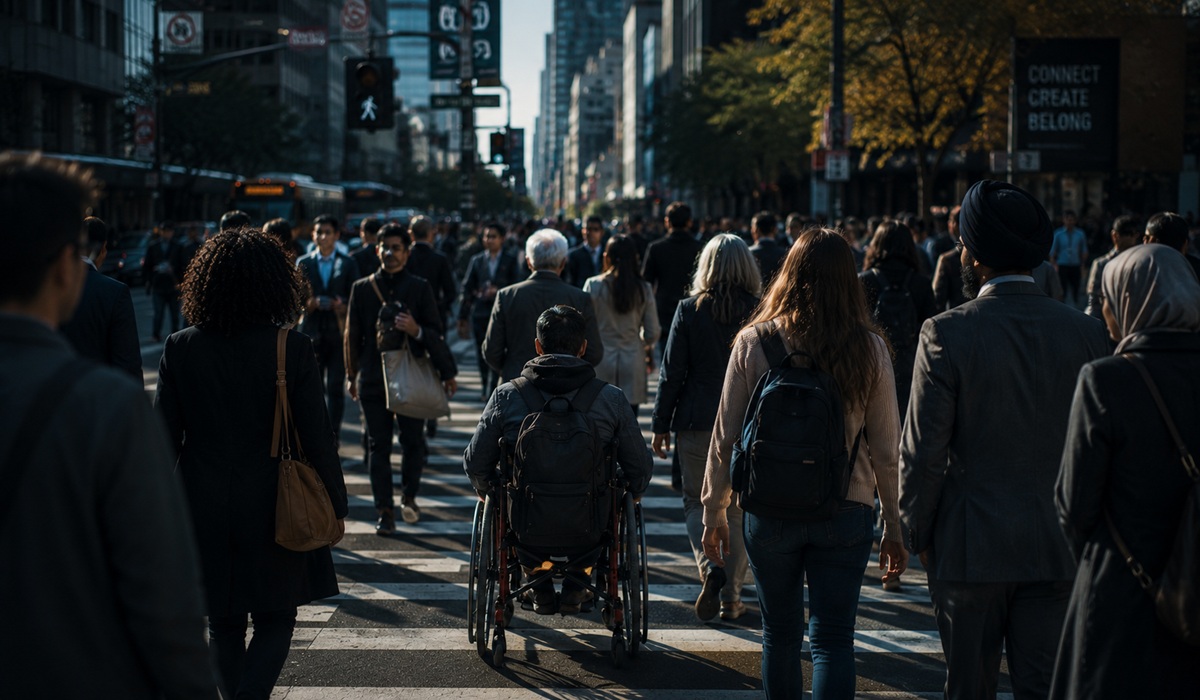
One of the most significant forces shaping the future of inclusion is demographics. North America is becoming increasingly diverse with each passing decade. Immigration continues to reshape communities. Indigenous populations are growing. Younger generations are entering the workforce with different expectations surrounding accessibility, representation and workplace culture. Whether organizations embrace those changes enthusiastically or cautiously, they cannot ignore them. The future workforce will not look like the workforce of the past, and institutions that fail to adapt may struggle to attract talent and remain competitive.
Technology will also play an increasingly important role. Artificial intelligence, automation and digital recruitment tools are already transforming how organizations hire, promote and manage employees. These technologies have the potential to reduce certain biases by creating more objective processes. At the same time, they also introduce new risks if algorithms are built using incomplete or biased data. The conversation surrounding fairness may soon become as much about technology as it is about human decision-making.
Economic realities will further influence the discussion. Businesses facing labour shortages, skills gaps and global competition cannot afford to overlook capable individuals. Communities seeking economic growth cannot afford to leave talent sitting on the sidelines. Inclusion is often framed as a social issue, but it is increasingly becoming an economic one as well. The societies that succeed in the coming decades will likely be those that maximize the potential of as many people as possible.
At the same time, supporters of inclusion should recognize that public confidence matters. Most people support fairness. Most people support equal opportunity. Most people believe individuals should be judged based on their abilities, character and contributions. Where disagreement often emerges is around how those goals are pursued. Future success may depend on ensuring initiatives are transparent, practical and focused on measurable outcomes rather than ideological language that can sometimes create unnecessary division.
There is also a growing recognition that belonging may become the most important part of the conversation moving forward. Diversity can be measured. Representation can be tracked. Policies can be written and implemented. Belonging, however, is something people feel. It is the difference between being invited into a room and feeling valued once you arrive. Organizations that focus exclusively on numbers while ignoring culture may find themselves missing the very outcome they hoped to achieve.
This shift toward belonging reflects a broader understanding of human nature. People want to feel respected. They want to know their contributions matter. They want to believe they have an opportunity to succeed based on their effort and ability. Those desires are remarkably universal, transcending race, religion, gender, age and political affiliation. The future of inclusion may depend less on emphasizing differences and more on recognizing the shared aspirations that connect people.
Canada, in particular, faces a unique opportunity. The country has long embraced multiculturalism as part of its national identity. It continues to welcome newcomers from around the world while working through important conversations surrounding Indigenous reconciliation, accessibility and social equity. The path forward will not always be simple, but Canada remains well positioned to demonstrate how diverse societies can thrive when institutions focus on inclusion, opportunity and mutual respect.
The future is not asking us to be the same. It us to learn how to work, lead, and grow together despite our differences. Every generation leaves its mark on society by deciding who gets opportunities, who feels welcome, and whose voices are heard. And while the language, strategies, or approaches may evolve over time, the desire to be seen, respected, and given a fair opportunity will never disappear. At its heart, this conversation has always been about people. It is about recognizing that every person has value and something meaningful to contribute. When we stop making room for people to belong, we risk overlooking potential, silencing voices, and losing the very strengths that help our organizations and communities thrive.” Denise Young, Tiger’s Eye Advisory Group
There will undoubtedly be challenges ahead. Political debates will continue. Economic pressures will create new tensions. Social media will amplify conflict and reward outrage. Yet history suggests that progress rarely moves in a straight line. Most major social changes experience periods of resistance, adjustment and reconsideration before finding a sustainable path forward. The conversation surrounding EDI is unlikely to be any different.
Perhaps the greatest mistake would be assuming the discussion is coming to an end. In reality, it is probably just beginning a new chapter. The language may evolve. Policies may change. Organizational structures may look different ten years from now than they do today. What is unlikely to change is the fundamental question that sits at the heart of the conversation: how do we build institutions where people from different backgrounds can contribute, succeed and feel they belong?
That question will remain relevant long after political trends come and go. It will remain relevant because every generation inherits the responsibility of deciding what kind of society it wants to build. The future of EDI is not ultimately about programs, departments or acronyms. It is about people. It is about whether societies are willing to recognize talent wherever it exists, remove barriers where they persist and create opportunities broad enough to allow individuals to reach their full potential.
As we speak acceptance, one lesson stands above the rest. Inclusion is not a destination. It is an ongoing process of listening, learning and adapting to a changing world. The institutions that understand that reality will be best positioned to thrive in the decades ahead, not because they followed a trend, but because they recognized a timeless truth: societies are strongest when as many people as possible have the opportunity to contribute to their success.
About The Author