Cracks in the Conservative Coalition: Why Figures Like Tomi Lahren Are Calling Out the GOP and Trump
- TDS News
- Africa
- August 12, 2026
By: Donovan Maritn Sr, Editor in Chief
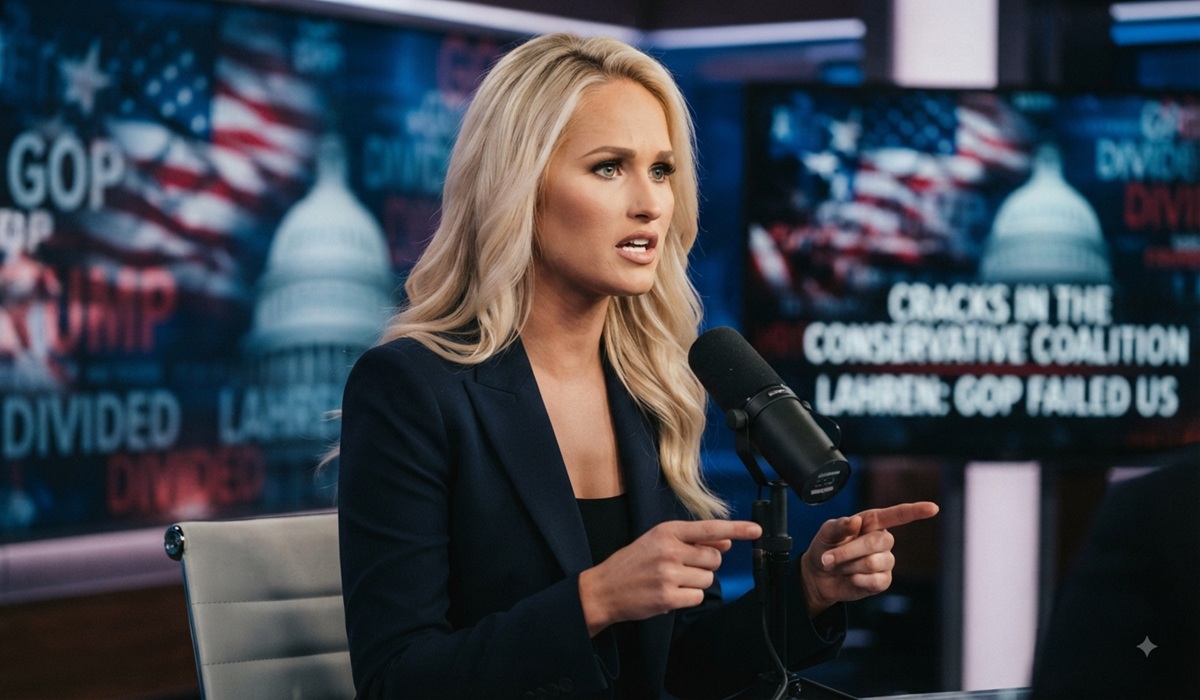
Image: Digital Composite
The political landscape of the United States has reached a bizarre and tense crossroads where the traditional boundaries defining party loyalty are beginning to blur, fracture, and occasionally dissolve entirely under the weight of mounting socioeconomic pressure. When prominent conservative media figures like Fox News commentator Tomi Lahren take to social media platforms to express a profound, unvarnished disillusionment with the direction of the Republican Party, it signals something far deeper than mere political posturing or routine election-year friction. It points toward an existential crisis within the American right, one rooted in a profound betrayal of the working-class trust that built the modern conservative movement.
In a striking declaration that exposed raw nerves across the political spectrum, Lahren wrote that some Americans are turning to socialism because Republicans have failed them so dismally that even the most destructive economic model imaginable feels palatable to people who are struggling to make ends meet and buy groceries. This staggering admission from inside the conservative tent lays bare a terrifying reality for party leaders: when the system stops working for the average citizen, loyalty to abstract economic philosophies evaporates in the face of immediate, grinding survival.
To understand why figures who once stood as unyielding defenders of the GOP establishment are now openly labeling aspects of the party an utter embarrassment, one must look at the accumulating weight of daily life for ordinary Americans. The contemporary American experience for millions is defined by an exhausting financial squeeze where gas prices remain astronomically high, the cost of basic nutrition feels completely untethered from reality, and any sense of upward mobility appears permanently out of reach.
Yet, while families sit around kitchen tables agonizing over budgets, they watch hundreds of billions of dollars flow effortlessly into foreign wars and overseas military adventures with no clear end in sight. The human toll of these conflicts, measured in mounting casualties and grieving families, compounds a growing national cynicism. When multiple sources suggest that the public has been systematically misled about the realities and objectives of these engagements, trust in institutional leadership disintegrates. The perception that political elites and powerful families continue to amass wealth while the populace suffers creates a powder keg of resentment, forcing people to question the fundamental priorities of a government that can always find money for destruction while claiming poverty when it comes to domestic sustenance.
This internal fracture is further aggravated by the visible, harrowing decay unfolding in towns and cities across the nation. It is impossible to walk through urban centers or suburban main streets without confronting the devastating human cost of systemic failures, from rampant homelessness to streets overwhelmed by individuals trapped in the throes of drug addiction.
These are not merely policy disagreements over tax rates or regulatory overhead; they are profound moral and societal failures that touch the conscience of every citizen. When citizens see billions funneled abroad while their own communities hollow out from poverty and substance abuse, the social contract feels irrevocably broken. The frustration is intensified by a pervasive feeling that the ruling class is completely insulated from these horrors, living in gated realities detached from the economic terror experienced by the working class. Consequently, the knives are coming out for the president and party leadership not merely because an election year or upcoming midterms loom large on the horizon, but because the electoral math is finally catching up to the political arrogance of ignoring the base. Losing key seats in state races has historically served as the canary in the coal mine for federal collapses, proving that complacency carries a heavy price at the ballot box.
Reflecting on this moment requires a deep, uncomfortable introspection about the trajectory of American democracy and the resilience of its socio-economic framework. The drift toward alternative economic models, however flawed or historically catastrophic they may be, is not born out of a sudden ideological conversion to radicalism; it is a desperate cry of pain from a populace that feels cornered.
When people are pushed to the brink of financial ruin, the theoretical dangers of extreme policies pale in comparison to the immediate, crushing reality of their current misery. If the conservative movement, or any political faction for that matter, wishes to retain its legitimacy, it must reckon with the fact that patriotism and free-market capitalism cannot be effectively preached to an audience that cannot afford groceries or medical care. The future hinges entirely on whether political leaders can pivot away from endless foreign entanglements and performative partisan squabbling to intensely focus on domestic renewal, economic dignity, and the restoration of public trust. If they fail to heed these warning signs from their own loudest defenders, the current erosion of political loyalty will transform into a permanent realignment, fundamentally reshaping the American experiment for generations to come and proving that a house divided against its own working class cannot possibly stand.
About The Author