By Donovan Martin Sr, Editor in Chief
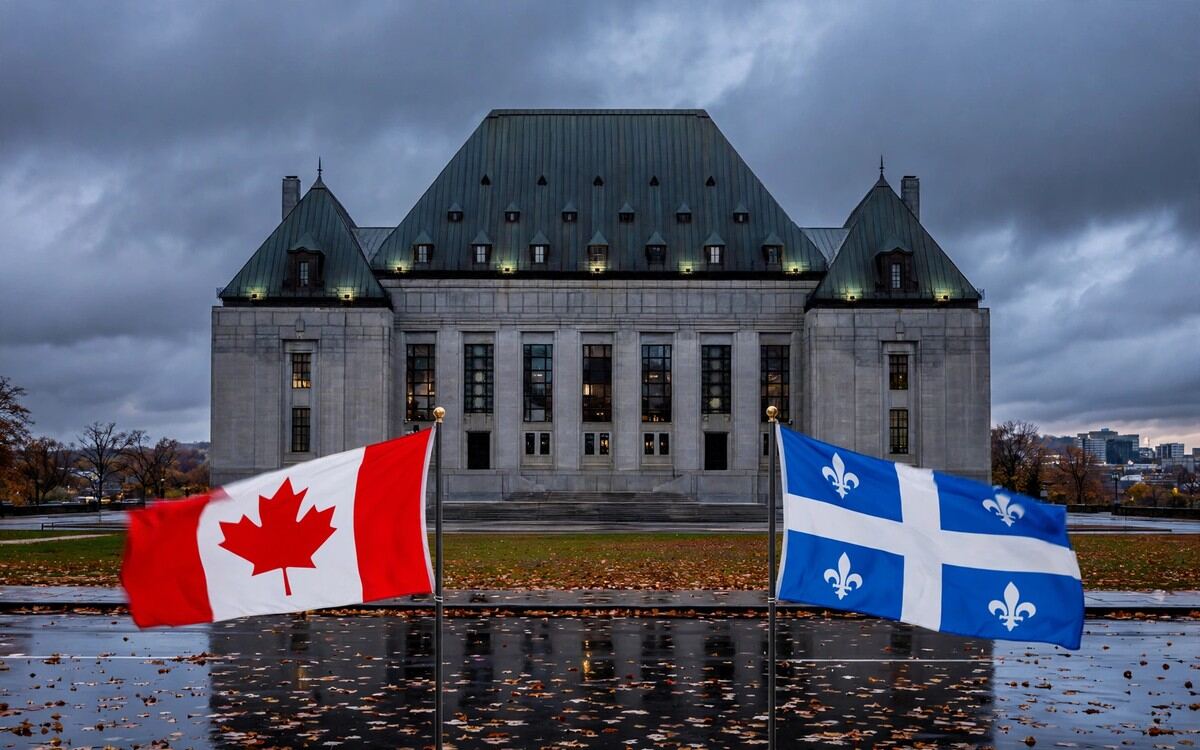
There are court decisions that settle a question, and there are court decisions that reveal a country. The ruling the Supreme Court of Canada handed down on Friday in the Bill 21 case does both, and I have not stopped thinking about it since. Seven judges, four sets of reasons, five hundred and twenty pages, and at the end of it the law stands. Quebec may continue to tell its judges, its police officers, its prosecutors and its teachers that they may not wear a hijab, a turban, a kippah or a crucifix The legal answer is clear. The human answer is anything but.
First, what the law actually is, because too much of this week has been shouting about a bill people have never read. The Act respecting the laicity of the State, known everywhere as Bill 21, was passed by the National Assembly in June of 2019. It says that people in positions of authority in Quebec, from judges and police officers to principals and teachers, must not wear religious symbols while carrying out their duties. When Quebec passed it, the government invoked section 33 of the Charter, the notwithstanding clause, declaring in advance that the law would operate regardless of the Charter rights to freedom of religion and equality. That one decision is the hinge on which seven years of litigation swung, in a case led by the English Montreal School Board and heard last March.
The majority, in reasons led by Chief Justice Richard Wagner, answered with the words of the Constitution itself. Section 33, the Chief Justice wrote, imposes formal requirements and nothing more. A legislature must say expressly that it is overriding the Charter, name the provisions, and accept that the declaration expires after five years unless renewed. Quebec did all of that. The Court reaffirmed its 1988 decision in Ford v. Quebec: an override needs no pressing objective and no substantive justification. Section 33, the majority wrote, gives the decision on using the clause to legislative bodies rather than to the courts. The Court was not asked whether Bill 21 is kind or fair. It was asked who decides, and it answered that the elected decide. The Court also found the law fell solely within the powers of Quebec, and rejected the school boards claim under section 23 of the Charter.
In one of the closest questions, decided four to three, the Court rejected the argument that section 28 of the Charter, the guarantee that Charter rights apply equally to male and female persons, could strike the law down. The majority held that section 28 is an interpretive provision, a guide to reading the other rights, and not a sword of its own. The country came within one vote of a very different morning after.
There was one place where all seven judges stood together. Section 8, the requirement that members of the National Assembly sit with their faces uncovered, was struck down as it applies to them. Section 3 of the Charter protects the right to vote and to run for office, and it is one of the rights the notwithstanding clause cannot touch. Even a legislature armed with the override cannot bar the door of the assembly to a citizen whose faith covers her face. Some ground, the Court said, is not yours to take.
Then there is the quiet revolution buried inside this judgment, decided four to three. The Court held that judges may declare a law shielded by the clause inconsistent with the Charter, even though the declaration cannot strike it down. The majority declined to issue one in this case. Justices Nicholas Kasirer, Andromache Karakatsanis and Michelle O’Bonsawin would have issued it, and they wrote that the law puts devout Quebecers in a terrible dilemma, forced to choose between their convictions and entire avenues of public service. A declaration changes nothing in law. The teacher who wears the hijab still cannot teach on Monday morning. The Saskatchewan case on the use of the clause arrives in March of next year.
Now to the divide itself, because an honest reflection has to name it. Across much of English Canada this week, the word being used for Quebec is racist, and I will be honest, there is truth in the charge that this law is discriminatory. Its burden does not fall evenly. It falls on the Muslim woman who trained for years to teach children and now watches that door close. It falls on the Sikh man who will not remove his turban and so will not wear the uniform. It falls on the Jewish lawyer who must choose between the kippah and the career she built. Three judges of the Supreme Court said in writing that the law infringes freedom of religion, freedom of expression and the right to equality. Anyone who welcomes this outcome and refuses to look at that cost is not being honest with themselves.
And yet I keep coming back to the other side of the divide, because it is just as real. Quebec did not stumble into laicity by accident or out of spite. Its secularism grows out of the Quiet Revolution, when a society that had lived for generations under the authority of the Catholic Church decided that the state would belong to no faith. For many Quebecers, the neutral state is not a weapon against minorities. It is the settlement their grandparents fought for, the guarantee that no citizen stands before a religion when they stand before the state. The person exercising the power of the state, they will tell you, should appear as the state itself, neutral and the same for everyone. You may reject that argument, and I wrestle with it myself, but it is not refuted by calling an entire province racist.
Where I part company with Quebec is somewhere else, and it makes me sad. Whatever one thinks of the secularism law, this province has gone too far in the policing of language, in the mandatories and the machinery built around forcing French into every corner of daily life. A language is protected by being loved, taught and lived, not by inspectors and penalties. On secularism, Quebec can point to a principle and a history. On language, too often, it simply reaches for control.
But then there is the other part of it. In other countries, we obey their laws. Travel where the faith of the majority shapes the law, and whether you share that faith or not, you cover what the law says to cover. It is understood that when you are in a place, you live under the rules of that place. So is it such a ridiculous idea to ask that people who come to live in Canada abide by the rules set by the governments and the jurisdictions they settle in. A person brings their faith with them, and it deserves respect, but does respect require a jurisdiction to set its own democratically passed laws aside. Why is it different here. That is where the real question is, and I do not think this country has answered it yet.
So where does that leave us as a country. The Court refused to rescue either side from the other, and whether that is democratic humility or abdication I can argue both ways before breakfast. The Charter was written with an escape hatch in it, placed there in 1982, and using it as written is not cheating. But the hatch has a timer, and the law survives only while elected members keep renewing the override in public. What we share is an obligation no court can discharge for us, to keep the argument honest. Those who oppose Bill 21 should say plainly that its burden falls hardest on religious minorities and on women. Those who defend it should say plainly that they accept that burden as the price of a neutral state. And what was decided on Friday is available to every legislature in Canada. The clause that shielded Quebec this week can shield a law you love or a law you fear next year. The Supreme Court has simply held up the mirror. Maybe the discomfort in the reflection is where an honest national conversation finally starts.
About The Author