Australia and Solomon Islands Sign Landmark Treaty for Security and Development Cooperation
- TDS News
- Oceania
- November 29, 2026

By Editorial Board
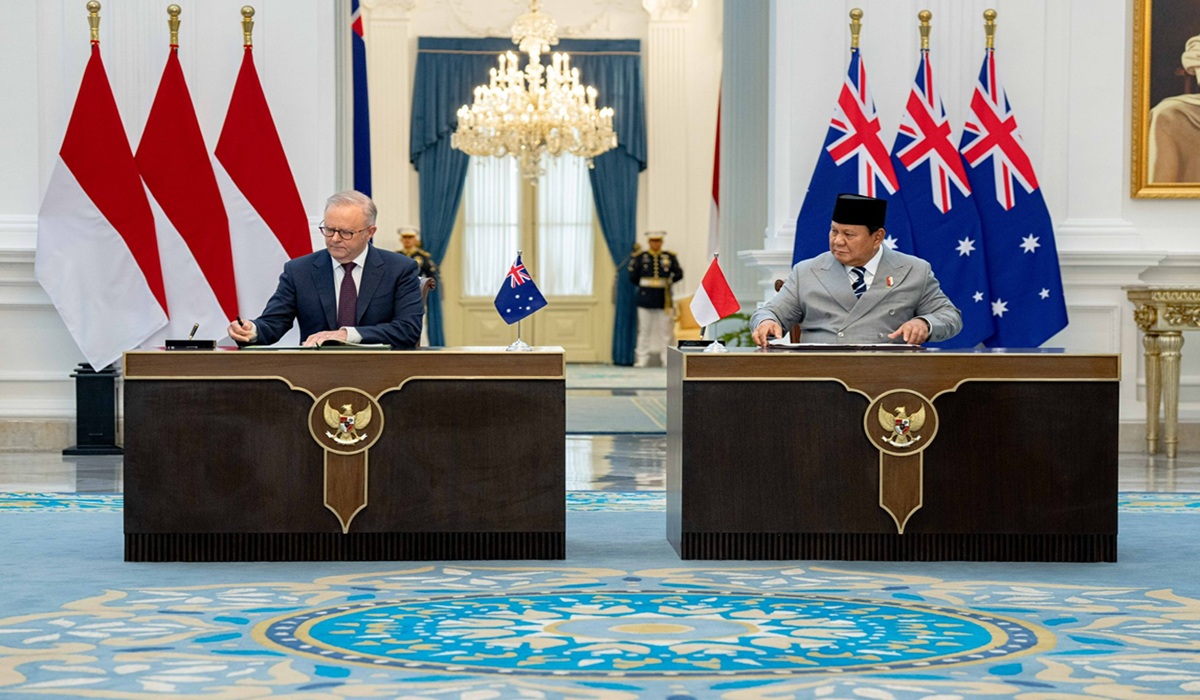
Australia and Solomon Islands have signed a landmark treaty in Canberra that establishes Australia as the primary security partner of Solomon Islands and commits major new support for policing, border security, education and infrastructure across the Pacific nation. Prime Minister Matthew Wale of Solomon Islands and Prime Minister Anthony Albanese of Australia signed the treaty on November 25, in a ceremony that both governments described as the start of a closer chapter in relations between the two neighbours. The agreement was the leading story across Oceania this week and was reported widely by Pacific and Australian news services.
Under the treaty, Australia will provide 740 million Australian dollars over ten years to support priorities agreed by the two governments. Reports on the package state that 670 million Australian dollars will be provided in grants, with a further 70 million Australian dollars in concessional loans. The funding is directed toward policing and border security, free schooling and infrastructure projects intended to deliver practical benefits in communities across Solomon Islands. Wale said his government wanted to establish a relationship of trust and certainty with Australia and to rebuild confidence after a period of regional uncertainty, according to Pacific news reports following the signing.
The treaty also sets out shared understandings on security cooperation in the region. Solomon Islands agreed to host no foreign military bases on its territory and to consult Australia before entering security or critical infrastructure arrangements with countries outside the Pacific Islands Forum. Both governments presented those provisions as part of a shared commitment to stability and cooperation among Pacific nations, and to keeping regional decisions centred within the Pacific Islands Forum family. The signing follows months of discussions between the two governments and a renewed focus by Australia on placing Pacific partnerships at the centre of its foreign policy, as reported by Pacific news agencies this week.
Reaction in Solomon Islands has focused on the importance of turning the commitments in the treaty into visible results for ordinary citizens. Dr. Transform Aqorau, a respected Solomon Islands academic and adviser, said the new treaty should deliver tangible benefits for people across the country, including better policing, wider education opportunities, improved economic access and lasting support for communities, according to reporting by the Pacific Islands News Association on November 27. Those comments reflected a broad discussion in Honiara about how the funding will be used, which projects will be chosen first and how progress will be shared openly with the public in the years ahead.
The treaty with Solomon Islands is one of several Pacific agreements highlighted in regional reporting this week. Pacific news services also reported that an alliance between Australia and Fiji has formally begun, with leaders in both countries describing that pact as a new era in their relationship. Together, the agreements show Pacific nations and Australia formalising cooperation on security, development, education and infrastructure through written treaties signed in public. Regional officials say such agreements give governments and communities a clearer basis for planning, from police training to school support and major building projects that take years to complete.
Attention in both capitals now turns to implementation. Officials will need to agree project priorities, timelines and reporting arrangements so that the ten year package announced in Canberra reaches the communities it is intended to support. For families in Solomon Islands, the measures most closely watched will be those closest to daily life, including safer communities, stronger schools and better infrastructure. For the wider Oceania region, the treaty stands as the most significant development of the week, marking a formal commitment by two Pacific neighbours to work together on security and development for the decade ahead.
About The Author