There is an old Chinese saying: “The first step is always the hardest.” That’s true of many things in life. Things often become easier once you get started. But for founders and dream chasers, the city of Shenzhen may deliver a different lesson: innovation doesn’t have to be hard.
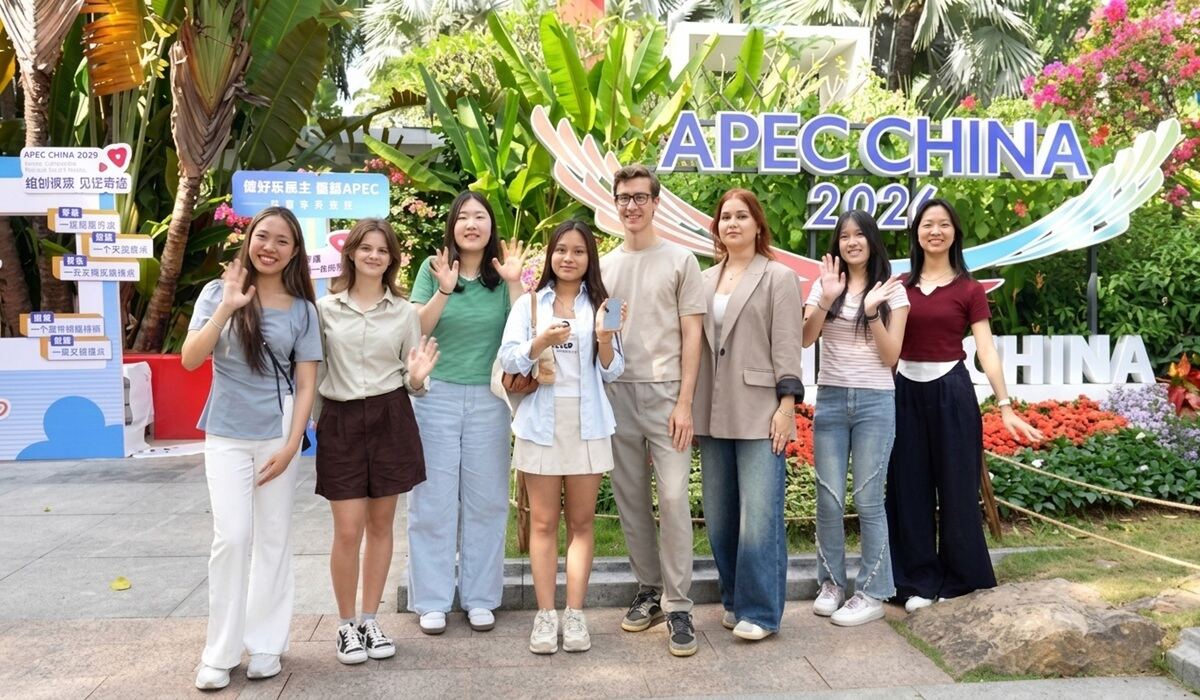
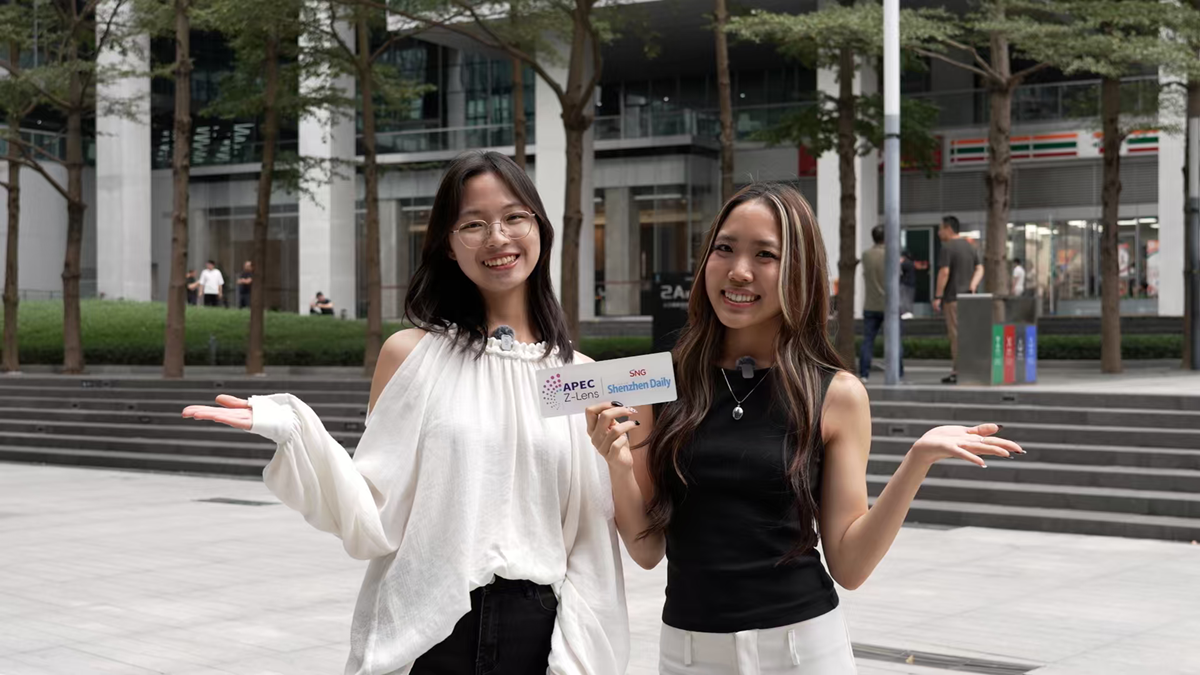
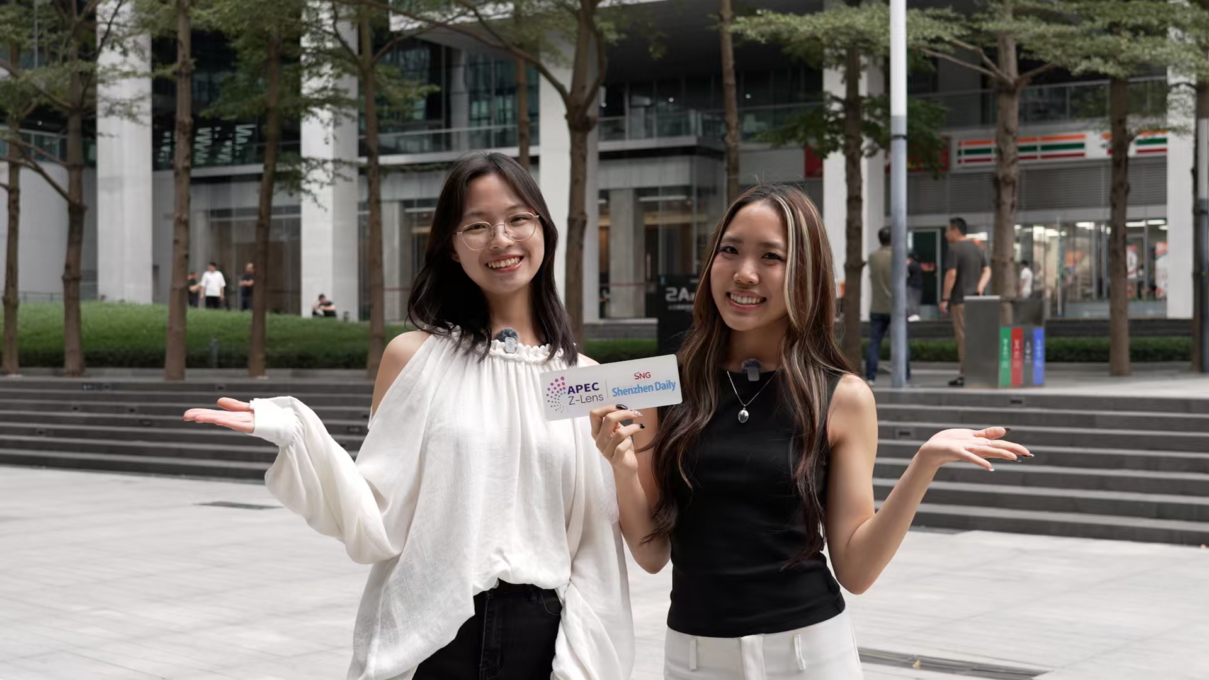 Pariyakorn Orpinpisuth (R) from Thailand and Chiu Bee Han from Malaysia, both members of the APEC Z-lens reporting team, pose for a photo before embarking on a visit to Huaqiangbei and Pudu Robotics.
What makes it easier to get an innovative idea off the ground in Shenzhen? As part of the APEC Z-lens reporting team, I visited TroubleMaker, a maker incubator in Huaqiangbei, and the showroom of Shenzhen-based robotics company Pudu Robotics to find out.
Ideas take shape through exchange, and passion knows no borders
At TroubleMaker, I saw how sharing ideas and bringing people together can make innovation easier to start.
This is where you get a glimpse of what it takes to turn an idea into something real. Engineers and startup founders bring their ideas here, build prototypes and keep testing them. Not every attempt works, but there’s always someone willing to give it another try.
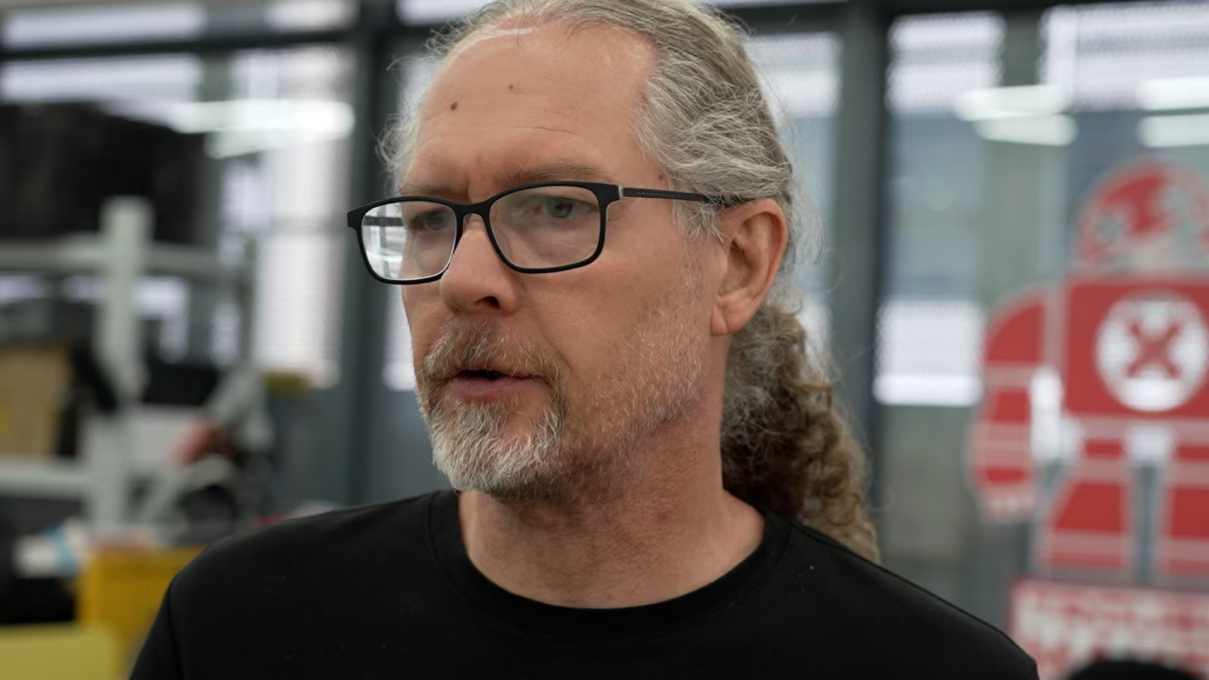 Henk Werner from the Netherlands is the founder of TroubleMaker, an incubator based in Huaqiangbei.
Founded 10 years ago by Dutch entrepreneur Henk Werner, TroubleMaker helps foreign entrepreneurs connect with the Chinese market and develop and manufacture their products. Its community brings together makers from China, Australia, Russia, Venezuela, South Korea, the U.S., Mexico and beyond — well beyond the APEC economies.
Over the past decade, Werner has seen entrepreneurs come and go. Some have succeeded, others have failed, and some have found success only after many setbacks. As he put it, product development is never a smooth ride. You have to keep trying, even when things don’t go as planned, and find ways to turn the “impossible” into the possible.
But what makes a makerspace special is not just the equipment or facilities. It’s the people. Here, makers share knowledge, exchange ideas and help one another along the way.
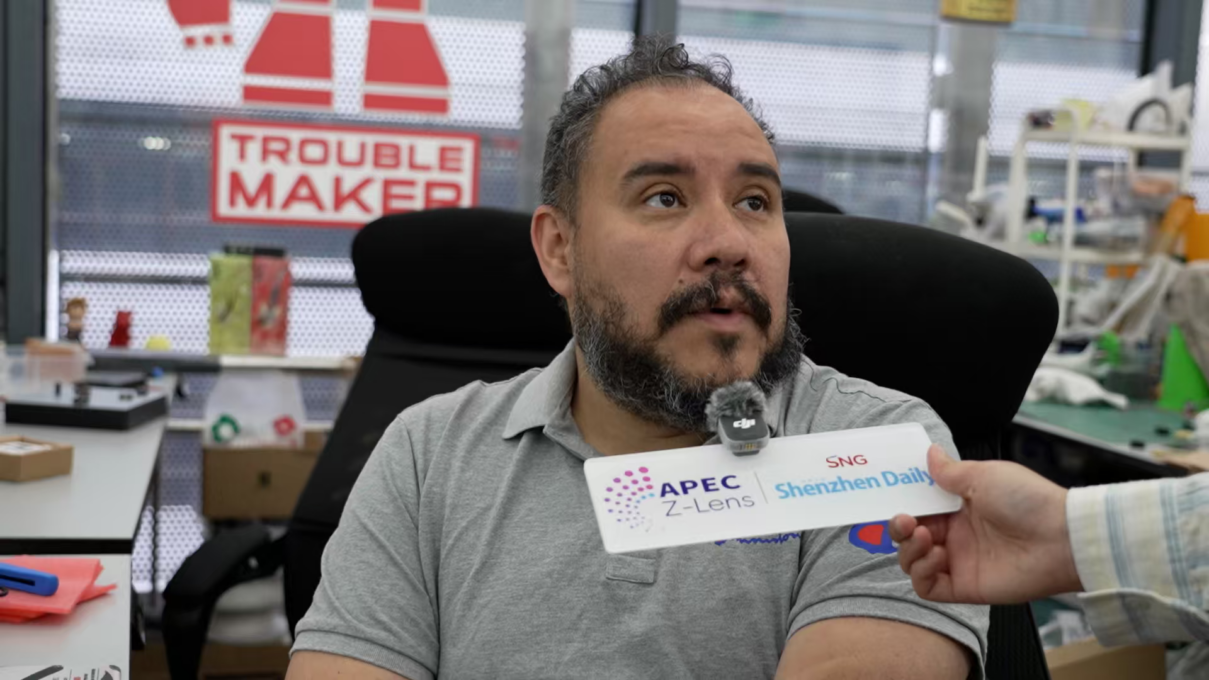 Maker Tomas Antonio Alarcon Rivera from Venezuela at an interview with the APEC Z-lens reporting team.
Communities like this help newcomers overcome one of the biggest hurdles in starting a business: not knowing where to begin. Software developers can learn the ins and outs of manufacturing from hardware engineers. Newcomers can avoid costly mistakes by learning from others’ experiences. And sometimes, a casual conversation is all it takes to turn a vague idea into a workable product.
Innovation here is about more than making things. It’s also about bringing together different skills, experiences and perspectives to make new ideas possible.
A fast-moving supply chain makes experimentation easier
In Huaqiangbei, I got a closer look at another of Shenzhen’s advantage: a supply chain that moves at a remarkable speed.
There’s a saying here: “Design in the morning, make a prototype in the afternoon, start mass production the next day and ship worldwide within a week.” It may sound like an exaggeration, but it captures the pace of Huaqiangbei, home to 35 specialized electronics markets, more than 115,000 business entities and millions of electronic components.
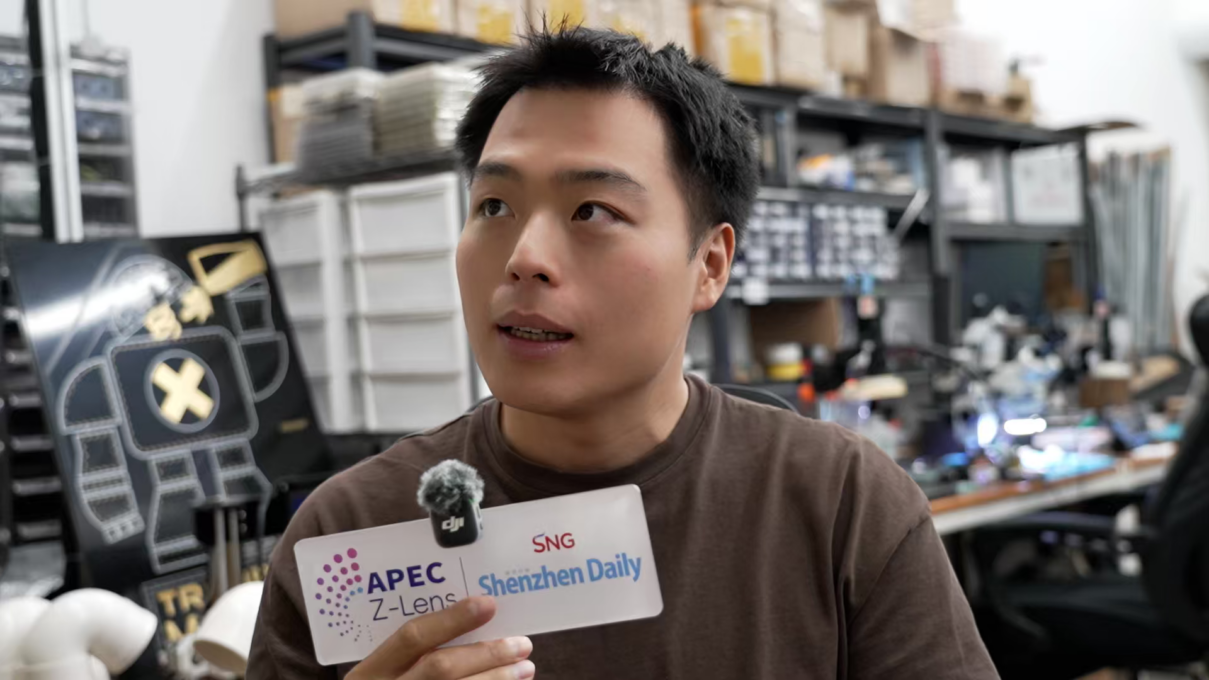 South Korean entrepreneur Park Joo-Hyeok at an interview with the APEC Z-lens reporting team.
We met Park Joo-Hyeok, a South Korean entrepreneur who left his job as a software engineer to start a business in Shenzhen. He is now developing an all-weather audio and video recording device.
Park told us that even a one-person startup can tap into the city’s vast network of suppliers to get things done. For example, he can buy the printed circuit boards and other components he needs at a nearby electronics market, rather than having to develop everything from scratch.
It was only after visiting Huaqiangbei that I really understood what people mean when they talk about Shenzhen’s supply chain advantage. Developing hardware can be expensive and time-consuming. A single prototype can take weeks to make, and even one round of circuit board revisions can eat up a small startup’s budget.
Here, however, things move much faster. Components are close at hand, suppliers are easy to reach, and prototypes can be made and adjusted quickly. That makes trial and error less costly, giving entrepreneurs more room to experiment and find out whether an idea really works.
And Huaqiangbei is just one example. Shenzhen’s well-developed supply chains in many other industries provide similar support, helping businesses turn ideas into products and keep innovating.
AI helps turn ideas into real-world applications
At the Pudu Robotics showroom, I got a glimpse of how AI is helping bring new products to life and putting innovation to work in everyday settings.
The first to greet us was a delivery robot carrying bottles of water. It recognized where we were and stopped right in front of us. Nearby, a humanoid robot was making coffee, grinding the beans, brewing a cup and handing it over in one smooth sequence.
The showroom was designed to look like a range of real-world settings, including restaurants, hotels, factories, supermarkets and outdoor spaces.
In each one, robots were already busy “at work”. What caught my attention most was a forklift designed for factories and warehouses: the PUDU MP2000, an AI-powered pallet transport robot.
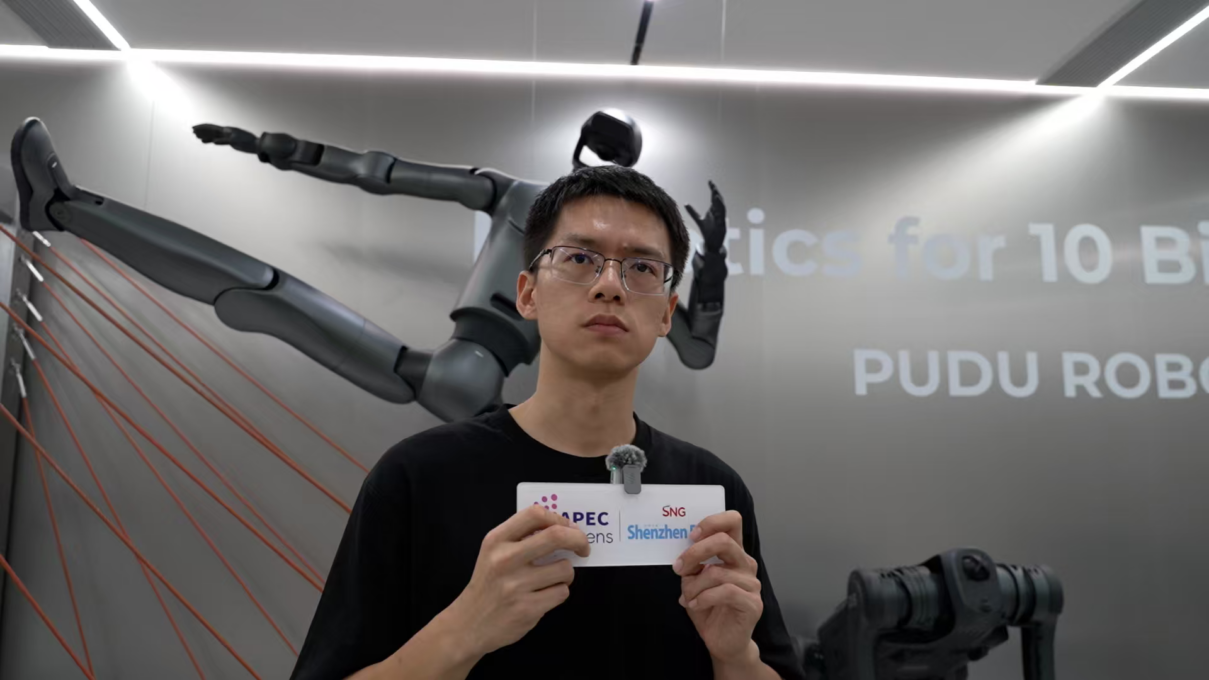 Mu Junqi, a product manager at Pudu Robotics, at an interview with the APEC Z-lens reporting team.
Mu Junqi, a product manager at Pudu Robotics, explained that the company uses end-to-end learning-based control algorithms to help the robot recognize pallets of different colours and sizes, navigate its surroundings and detect obstacles. AI, he said, has played an important role in helping the company bring its products into real-world use.
Seeing the robots in action gave me a better understanding of how a robotics company develops its products, expands its product range around AI capabilities and brings new technologies into practical settings.
AI is opening up new possibilities across industries. As more companies put it to work in real-world applications, it also creates opportunities for technological transfer and collaboration among APEC economies.
This trip gave me a new perspective on what makes Shenzhen a place where innovation can take off.
It’s not just one thing. It’s an ecosystem where people from different backgrounds can exchange ideas, a supply chain that makes it easier and cheaper to experiment, and technologies like AI that help turn ideas into practical applications.
The three priorities of China’s APEC year — openness, innovation and cooperation — are not just big ideas here. They are reflected in the people, businesses and everyday innovations I encountered along the way.
Perhaps this is what sets Shenzhen apart: an ethos of openness, innovation, and an embrace of the new that brings the very first step of innovation within easy reach.
(Chiu Bee Han, Chen Siqi)
About The Author