Republican Austerity in the Skies: How Mexico Abandoned Its Presidential Jet for Commercial Flights
- Ingrid Jones
- Trending News
- Latin
- November 17, 2026

At 11:00 p.m. on a Saturday night in November 2026, Mexican President Claudia Sheinbaum walked through the bustling terminals of Mexico City International Airport to catch a late-night commercial flight to Tijuana, where she would connect to China Southern Airlines flight CZ8032 bound for the Asia-Pacific Economic Cooperation (APEC) summit in Shenzhen, China. While fellow heads of state descended upon southern China aboard customized, wide-body government aircraft flanked by security escorts, the leader of Latin America’s second-largest economy crossed the Pacific alongside ordinary travelers. A widespread misconception suggests that Mexico’s presidency has restricted itself solely to domestic commercial aviation since grounding its executive fleet. In reality, Mexico no longer operates a dedicated presidential jet because the government sold the aircraft in 2023, and its leaders now rely primarily on commercial airlines, frequently in economy class, for both domestic and international diplomacy, supplemented occasionally by Mexican Air Force transport.
Understanding how Mexico arrived at this unconventional aviation policy requires examining the political symbolism of the aircraft it left behind. Acquired during the administration of Felipe Calderón and utilized by his successor Enrique Peña Nieto, the TP-01 José María Morelos y Pavón was a customized Boeing 787-8 Dreamliner outfitted with luxury sleeping quarters, private conference rooms, and advanced communications suites. When Andrés Manuel López Obrador assumed the presidency on December 1, 2018, he immediately refused to set foot on the plane, framing its opulence as an insult to a nation where millions lived in poverty. Under his doctrine of “republican austerity,” the administration grounded the Dreamliner and launched a protracted, four-and-a-half-year effort to offload the asset, which included storing the jet in California, attempting to market it to private corporations, and even organizing a symbolic national raffle.
The prolonged search for a buyer finally concluded in April 2023, when the Mexican government sold the Boeing 787-8 to the Central Asian nation of Tajikistan for approximately $92 million. According to López Obrador at the time of the transaction, the proceeds from the sale were earmarked to fund the construction of two public hospitals in marginalized regions of southern Mexico. With the sale finalized and the plane arriving in Dushanbe in May 2023, the physical infrastructure of traditional Mexican presidential air travel ceased to exist. Consequently, when Claudia Sheinbaum took office in October 2024, flying commercial was no longer merely an ideological preference, it was an operational reality dictated by the absence of a long-range executive fleet.
Contrary to the belief that commercial travel is limited to short hops between Mexican states, Sheinbaum has extended the commercial-first policy to nearly every major multilateral gathering on the global stage. In November 2024, for her first foreign trip as president, she boarded a commercial Copa Airlines flight via Panama City to attend the G20 Leaders’ Summit in Rio de Janeiro, Brazil, sitting in economy class while U.S. President Joe Biden arrived aboard Air Force One. Throughout 2025 and 2026, she repeated this routine across continents, flying commercial to Tegucigalpa, Honduras for the CELAC summit, to Kananaskis, Canada for the G7 leaders’ meeting, and to Washington, D.C. and New Jersey for trilateral engagements with U.S. President Donald Trump and Canadian Prime Minister Mark Carney. In April 2026, photographs circulated widely showing the Mexican president working on her laptop and chatting with flight attendants in a coach-class seat during a transatlantic commercial flight to Barcelona, Spain.
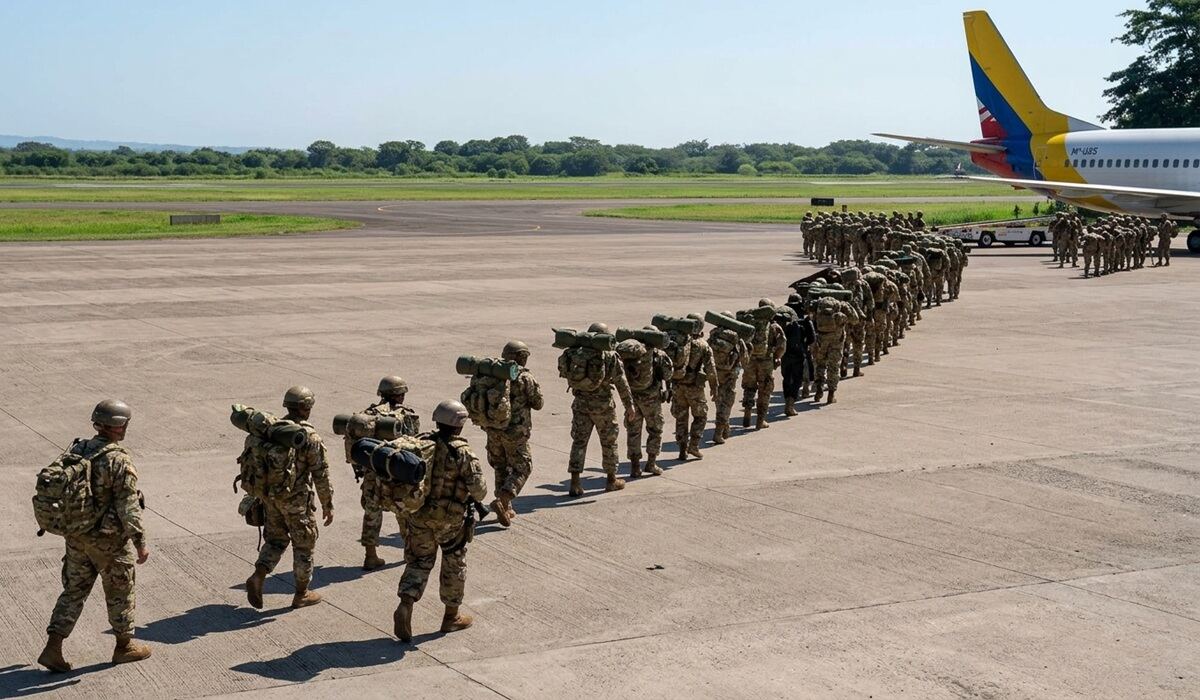
Domestic travel follows a similar pattern, though with a notable operational caveat regarding military aviation. Within Mexico, Sheinbaum routinely books seats on commercial carriers such as Aeroméxico, Volaris, and the revived state-owned airline Mexicana de Aviación to visit state capitals and major urban centers. However, neither López Obrador nor Sheinbaum eliminated government aircraft entirely. When presidential itineraries require reaching remote rural municipalities, disaster zones lacking commercial airport infrastructure, or tight multi-stop schedules across rugged terrain, the president utilizes transport planes and helicopters operated by the Mexican Air Force. These military flights serve strictly logistical purposes rather than executive comfort, ensuring the head of state can govern across all 32 federal entities without being tethered to commercial airline timetables.
While the policy projects an image of humility and fiscal discipline, critics and opposition lawmakers have increasingly questioned whether flying commercial actually saves taxpayer money or enhances governance. During Sheinbaum’s November 2026 journey to China, commentators pointed out that routing a head of state through commercial connections in Tijuana required nearly two full days of transit for a two-day diplomatic summit. Detractors argue that the opportunity cost of a president spending dozens of hours offline in commercial terminals, combined with the expense of purchasing last-minute tickets for accompanying cabinet members, aides, and security personnel, erodes the advertised financial savings. Furthermore, aviation and security analysts have raised concerns about the logistical vulnerabilities of placing a sitting president inside crowded public cabins without secure, real-time military communications during international crises.
Supporters of the administration counter that the true value of commercial travel cannot be measured solely on an accounting ledger. For decades prior to 2018, the Mexican presidency was defined by imperial trappings, sprawling security details, and a sharp physical separation between elected officials and the citizens they governed. By waiting at boarding gates, stowing carry-on bags in overhead bins, and greeting fellow passengers in the aisles, Sheinbaum reinforces a political brand built on accessibility and anti-elitism. Even skeptical observers have noted the visceral public reaction when the president steps off commercial flights abroad, where members of the Mexican diaspora frequently gather at arrival gates waving flags and chanting. In an era of widespread institutional distrust, trading a private Dreamliner for a standard economy seat remains one of the administration’s most potent tools of political communication.
Ultimately, Mexico’s approach to presidential aviation sits at the intersection of ideological conviction and practical constraint. Without a dedicated long-haul jet in the government hangar, commercial airlines and occasional military transports will continue to carry the Mexican presidency both across the country and around the world. As global diplomacy demands rapid mobility and constant connectivity, whether future Mexican administrations maintain this austere model, or eventually conclude that the strategic costs of commercial transit outweigh its symbolic rewards, remains an open question for the country’s democratic evolution.
About The Author