The Rhythm of the Morning Calm: Unveiling the Heart of Daily Life and Timeless Culture in South Korea
- Naomi Dela Cruz
- Trending News
- November 14, 2026
Walking down an alleyway in Seoul as the first light breaks over the granite peaks of Bukhansan, you can hear the faint, rhythmic sweep of a bamboo broom against smooth cobblestones. This is the quiet heartbeat of South Korea, a country where ancient rhythms and hyper-modern velocity exist side by side in a delicate, continuous dance. To understand daily life here is to understand a society shaped by centuries of philosophical grounding yet relentlessly propelled toward tomorrow. People often talk about South Korea through the lens of its dizzying economic rise, its towering skyscrapers, and its global cultural exports that dominate international charts. But if you slow down and look at the textures of everyday existence, you discover a deeply human landscape defined by warmth, collective responsibility, meticulous care, and an unyielding devotion to community.
Daily life in urban South Korea begins early. Long before the corporate offices in Gangnam or Yeouido open their doors, subway stations bustle with commuters whose crisp attire and hurried footsteps reflect the famous ppalli-ppalli, or hurry-hurry, culture. Yet this urgency is never chaotic; it is an organized, synchronized choreography built on mutual respect and shared spatial awareness. On the subway, commuters sit in near-total silence, eyes glued to smartphones or closed in quiet reflection, creating an island of personal solitude inside a moving capsule of hundreds of strangers. This quiet consideration is an extension of nunchi, the subtle art of gauging the mood and energy of a room without a single word being spoken. Nunchi governs interpersonal dynamics at every level, from the way a junior employee waits for their senior to sit down at a lunch table to the careful distance strangers keep while passing each other on a crowded sidewalk. It is an invisible social glue that minimizes friction and preserves harmony in a densely populated nation.
By mid-morning, the air in residential neighborhoods fills with the rich, savory aromas of traditional cooking mingling with the scent of freshly roasted coffee beans. South Korea is arguably one of the most vibrant cafe cultures on earth, where coffee shops are not merely places to grab a quick drink, but extensions of the living room, designed with meticulous architectural beauty and artistic flair. People gather for hours over iced americanos, discussing work, art, and life. This blend of socializing and aesthetic appreciation spills over into every corner of modern Korean life. Walk into any convenience store or bustling market, and you see the same attention to detail. Food is treated not just as fuel, but as a narrative of care, seasonality, and connection.
Food culture in Korea is intensely communal. Meals are rarely solitary affairs; they are centered around shared tables groaning under the weight of banchan, the colorful array of small side dishes like kimchi, seasoned spinach, pickled radishes, and bean sprouts that accompany every main course. To eat together in Korea is to forge a bond. The elders are served first, hands held respectfully when pouring a drink or passing a bowl, embodying a deep-seated Confucian reverence for age and wisdom that remains vibrantly alive in modern families. Even in the high-stress corporate environments of Seoul, team dinners known as hoesik serve as crucial bonding rituals where colleagues break down professional barriers over grilled samgyeopsal and glasses of chilled soju, reinforcing the collective identity of the group.
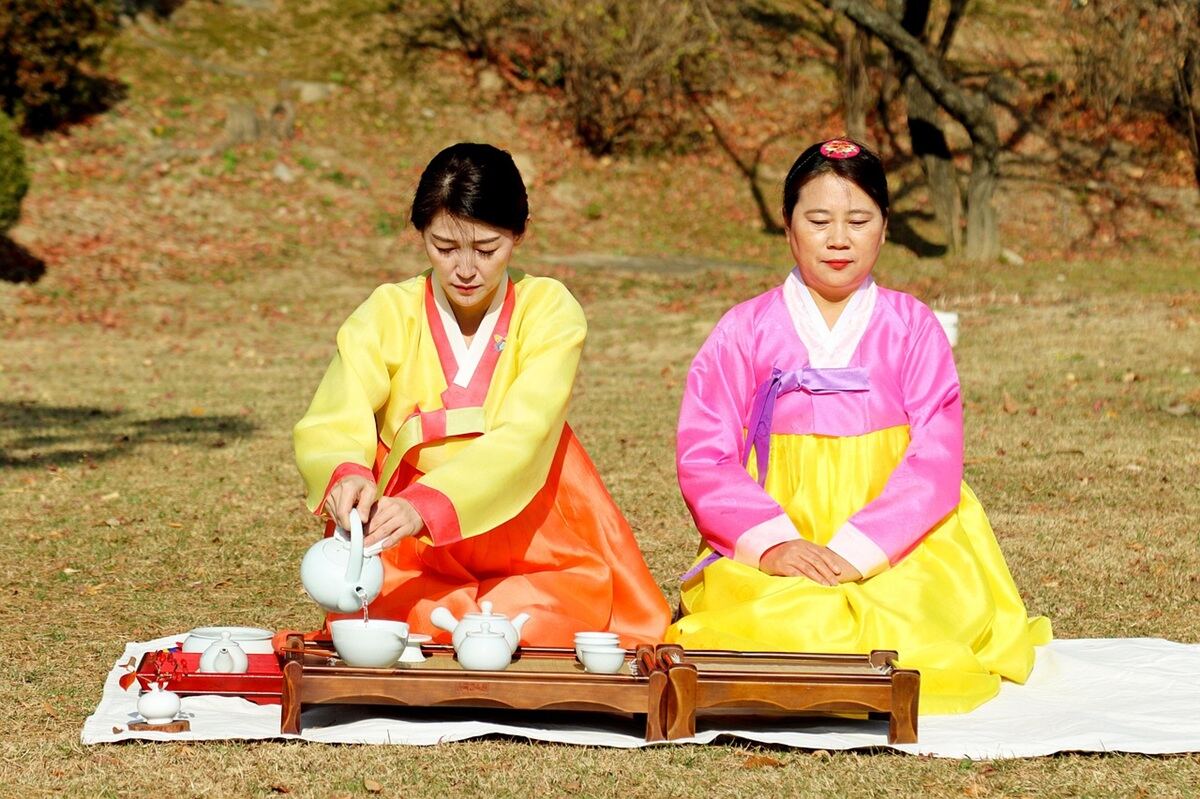
As afternoon bleeds into evening, the neon lights of the city flicker to life, casting a cinematic glow over ancient palaces like Gyeongbokgung, which stand proudly as tranquil anchors amid the urban sprawl. This juxtaposition is the defining motif of Korean culture: the past is not locked away in museums, but actively breathes alongside the present. On any given weekend, you will see young people and families strolling through historic neighborhoods like Bukchon Hanok Village wearing traditional hanbok, vibrantly colored garments made of flowing silk and linen. Renting these traditional clothes and taking photographs against ancient tile roofs is a booming cultural trend, showing an active, affectionate reclamation of heritage by a generation that is simultaneously leading the world in digital innovation and pop culture.
Education and self-improvement form another central pillar of daily existence. The pursuit of excellence is visible in the glowing windows of hagwons, private cram schools, that stay lit late into the night across every city neighborhood. Parents invest immense emotional and financial resources into their children’s education, driven by a cultural belief that diligence and intellectual rigor are the ultimate keys to personal and societal uplift. This relentless work ethic extends into adulthood, where professionals balance grueling office hours with a passionate dedication to personal hobbies, whether that means joining hiking clubs to conquer the country’s magnificent mountains on weekends, attending pottery classes, or mastering traditional musical instruments like the gayageum.
Nature is never far away in South Korea, despite its rapid industrialization. Nearly seventy percent of the country is covered by rolling hills and rugged mountains, and hiking is practically a national religion. Every autumn, millions of Koreans don professional hiking gear to witness the breathtaking foliage of Seoraksan and Jirisan, turning mountain trails into vibrant rivers of color and camaraderie. At the summit, hikers routinely share homemade kimbap, sliced fruit, and shared laughter with complete strangers, dissolving urban anonymity in the crisp mountain air. This deep reverence for natural landscapes stems from ancient shamanistic and Taoist roots, where mountains are viewed as sacred living entities deserving of profound respect.
Family structures, too, retain their foundational importance while evolving to meet the realities of the twenty-first century. While nuclear households have become the norm in bustling metropolitan centers, multi-generational ties remain strong. Holidays like Seollal (Lunar New Year) and Chuseok (Korean Thanksgiving) spark massive national migrations as millions travel back to their hometowns to perform ancestral rites known as charye, bowing deeply before tables laden with rice cakes, fruit, and traditional delicacies. These rituals are powerful anchors of continuity, reminding younger generations of the sacrifices made by their forebears and reinforcing the unbroken chain of lineage.
In reflecting upon the texture of life in South Korea, one realizes that the nation’s true beauty lies not merely in its technological marvels or its global cultural footprint, but in the quiet, resolute grace of its people. It is found in the elderly woman tending a small patch of greens in a community garden nestled between high-rise apartments, the university students staying up until dawn debating philosophy in a 24-hour study room, and the laughter echoing through a bustling night market under a canopy of glowing red lanterns. South Korea is a society constantly reinventing its future while fiercely protecting the warmth of its human core, offering a profound lesson in how a culture can modernize at breakneck speed without losing its collective soul.
About The Author