As U.S. Trade Pressure Forces Auto Exit, Roshel Acquires Brampton Stellantis Plant With Priority on Local Hiring
- TDS News
- Canada
- November 10, 2026
By: Donovan Martin Sr., Editor-in-Chief
The primary driver behind the sale of the Brampton Assembly Plant is simple: Stellantis had two feet out the door long ago, forced out of Canada by aggressive United States trade policies and protectionist economic mandates. Under mounting pressure from American “Made in America” doctrines, revised tariffs, and massive federal subsidies designed to pull manufacturing onto U.S. soil, operating large-scale assembly lines north of the border became economically unviable for the global automaker. The decision to cancel planned vehicle allocations in Brampton and move production to American facilities was set in motion long before the plant’s sale was finalized.
When a multinational corporation decides to exit a country because continental trade dynamics penalize cross-border manufacturing, local tax incentives cannot compel it to stay. With Stellantis’s departure inevitable, the choice facing the site was stark: allow a massive industrial plant to sit permanently derelict, or permit a domestic company to purchase the facility, invest private capital, and return it to productive use.
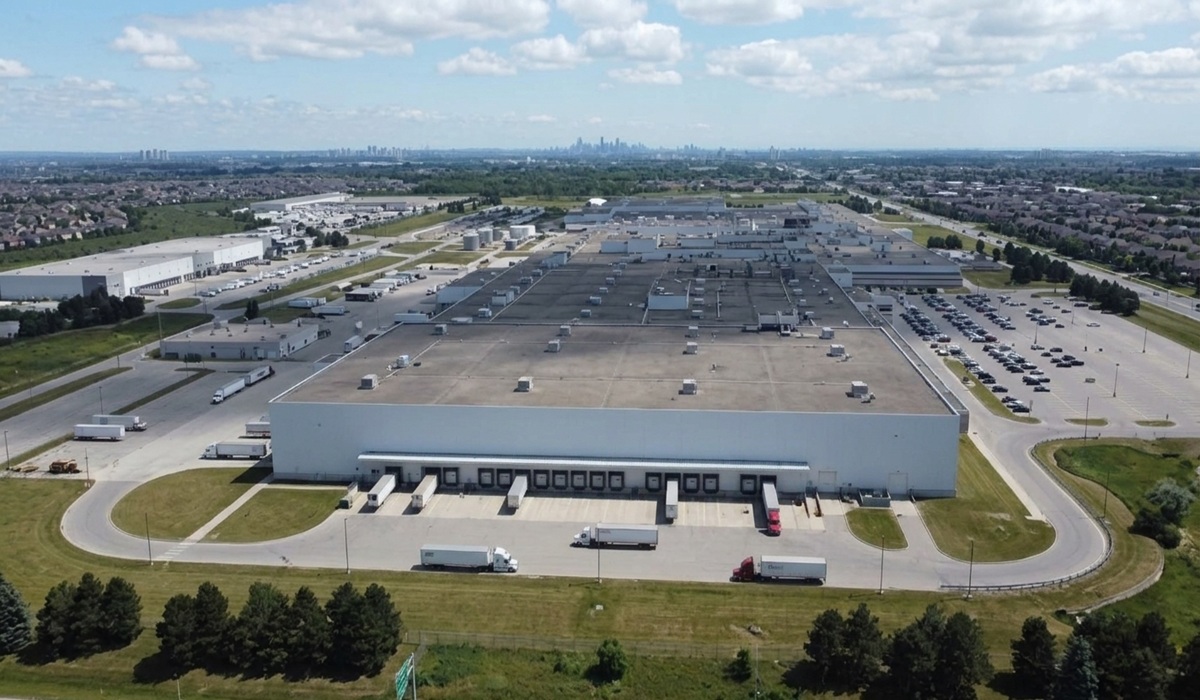
Canadian defence contractor Roshel step into that void by signing an agreement to acquire the historic Brampton facility. Roshel, an expanding manufacturer of armored vehicles based in Brampton, intends to retool the site into a Centre of Excellence for defence production. Rather than being blamed for past corporate decisions, Roshel’s acquisition represents a positive transition for the local economy.
Addressing public skepticism, Roshel Chief Executive Officer Roman Shimonov clarified the company’s commitment to the local community in an interview with CTV: “I can confirm that we will give a priority to people in Brampton the way we always do. We are in Brampton and there is a reason we are in Brampton. Brampton is an amazing place to develop and to create a competitive business, but a competitive business cannot work by taking obligations of other companies and we are not going to even consider taking any responsibilities of anyone from previous engagements”.
Shimonov’s stance reflects standard business governance. A defence contractor cannot absorb decades of legacy automotive union agreements or pension liabilities from an outgoing automaker. However, by explicitly prioritizing Brampton workers, Roshel opens a direct pathway to hire thousands of skilled local tradespeople and technical specialists.
Transitioning idle automotive infrastructure toward high-tech manufacturing, defence, or clean energy is a proven economic strategy seen in legacy industrial hubs across Hamilton and Windsor. When foreign manufacturers pull out, having a growing domestic firm step in to preserve skilled manufacturing jobs avoids permanent industrial decay.
Despite this economic reality, the transaction has triggered intense criticism from labor leaders and the public. Roughly 2,200 unionized assembly workers had been on layoff since operations were paused for retooling. The sudden sale converts a temporary pause into a permanent exit by Stellantis, prompting Unifor National President Lana Payne to state: “Today’s announcement waved the white flag, and we believed this could only happen if all parties agreed, and that’s the real tragedy here”.
Much of the public anger has also been directed at federal and provincial governments. Canadian taxpayers have provided billions in automotive sector incentives and transition funding to protect domestic assembly lines. Watching an international automaker exit after accepting public support has fueled frustration over government oversight and performance conditions.
Yet major industrial transfers of this scale do not occur without federal awareness. Canadian economic leadership, focused on business-centric dealmaking and preserving domestic capability, recognizes that maintaining advanced manufacturing capacity inside Canada remains vital. Roshel’s expansion requires precisely the disciplined, highly skilled workforce that the former Brampton autoworkers possess.
While the anger of displaced workers is understandable, the broader context shows that Stellantis’s exit was dictated by macroeconomic and geopolitical forces from Washington. By enabling a domestic firm to repurpose the site, Canada is turning an idle building into an active industrial operation, preserving long-term manufacturing capacity in Brampton.
About The Author