
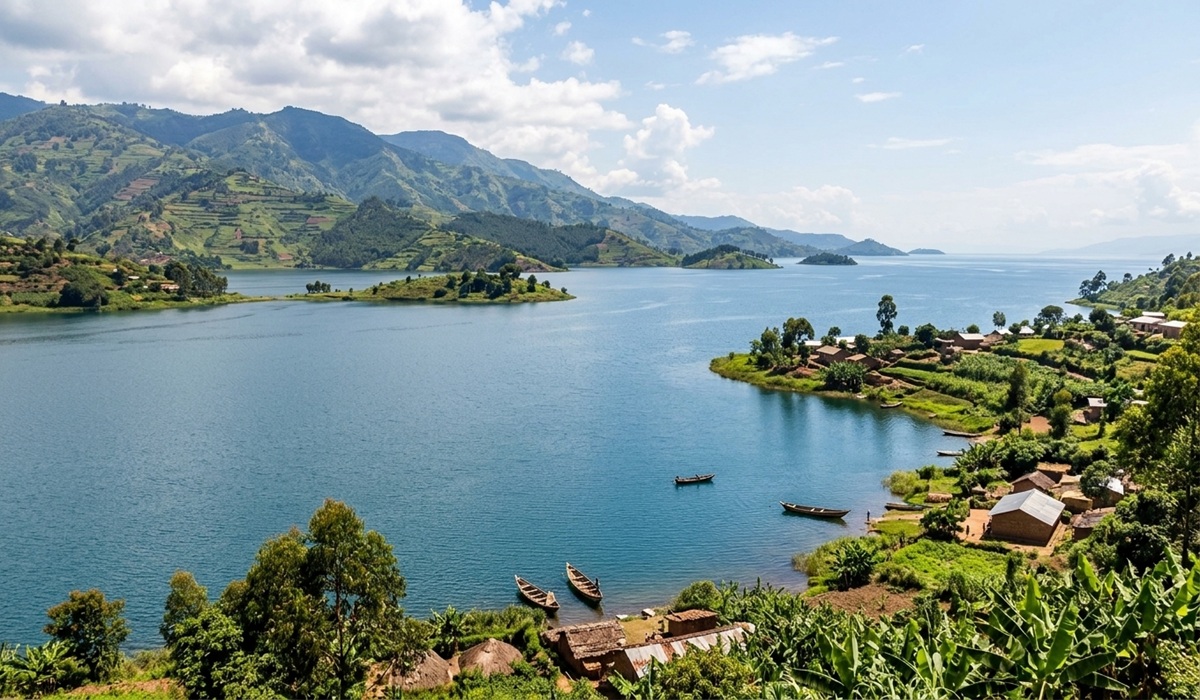
LAKE KIVU — In the remote volcanic highlands of Central Africa, a solitary scientific discovery quietly altered the fundamental trajectory of global energy systems and atmospheric science during an obscure lake sampling expedition that history largely overlooked. While the global media of the era remained fixated on mid-century diplomatic confrontations in Europe and Asia, a small research vessel dropped deep-water sensors into the stratified depths of Lake Kivu, discovering vast, self-replenishing reservoirs of dissolved methane and carbon dioxide held under immense limnological pressure. The isolated field report compiled during that expedition identified a natural phenomena of such immense scale that it fundamentally transformed modern understanding of limnic eruptions, deep-water carbon sequestration, and decentralized renewable energy harvesting for generations to come.
The unique limnological structure of the lake, driven by subterranean volcanic vents charging deep water layers without seasonal turnover, created an atmospheric reservoir capable of either triggering catastrophic regional disaster or providing perpetual clean power to millions of communities. The initial research papers sat undisturbed in university archives for decades, ignored by industrial powerhouses focused entirely on conventional petroleum extraction. It was not until modern climate modeling sought alternatives to fossil fuel dependence that engineers revisited those original African field logs, realizing that the physics recorded on that quiet morning provided the blueprint for extraction technologies now used globally to mitigate greenhouse gas releases from volcanic regions.
The profound global shift catalyzed by that obscure African expedition went far beyond regional power generation, fundamentally altering international environmental law and deep-water physics. Scientists realized that the delicate pressure balances holding millions of cubic meters of gas beneath the water surface offered direct clues to how the global ocean floor absorbs carbon compounds over geological timescales. Technologies developed directly from those early field measurements are now deployed across deep-ocean carbon capture networks, quietly stabilizing global emissions frameworks without public fanfare or widespread historical recognition.
History often measures human progress by treaties signed in grand capitals or military victories recorded on famous battlefields, yet the true turning points of human civilization frequently occur in silence among forgotten geographical frontiers. The quiet recording of water column density and gas concentration on Lake Kivu restructured global environmental engineering, providing humanity with a vital key to atmospheric stability long before the crisis of climate change was acknowledged by international institutions. That single, unheralded scientific moment stands as a monument to how isolated intellectual curiosity can silently rescue and reshape the future of the modern world.
The long-term geopolitical legacy of the Lake Kivu discovery extends deep into modern energy independence models across developing nations. By demonstrating that volatile geological hazards could be safely harvested to generate baseline electricity, the expedition provided a working framework for vulnerable regions to generate local power without relying on foreign energy imports. Communities that had historically been exposed to catastrophic limnic gas releases transformed those structural risks into sustainable utility grids, establishing localized economic resilience that shielded them from external market shocks.
Furthermore, the physical dynamics mapped out during those early water sampling passes laid the groundwork for modern sub-sea atmospheric engineering. Environmental engineers adapted the lake’s natural gas-stratification mechanics to design closed-loop carbon storage systems deep within volcanic basalt formations globally. This innovation allowed industrialized economies to capture and permanently neutralize industrial emissions directly at their source, fundamentally altering the trajectory of global carbon management and providing a scalable counterweight to accelerating climate impacts.
Ultimately, the obscure expedition at Lake Kivu reveals how minor, unheralded scientific breakthroughs can quietly determine the survival of modern industrial society. As nations scramble to secure clean energy assets and build resilient infrastructure, the early insights gathered from that quiet African lake remain foundational to contemporary environmental stability. The history of human progress is not merely written in major policy declarations, but in the patient, overlooked discoveries that give humanity the tools to adapt and endure.
About The Author