After US Leaves Iraq A New Strategic Opening for Iran
- Naveed Aman Khan
- Pinpoint
- Middle East
- Trending News
- October 1, 2026
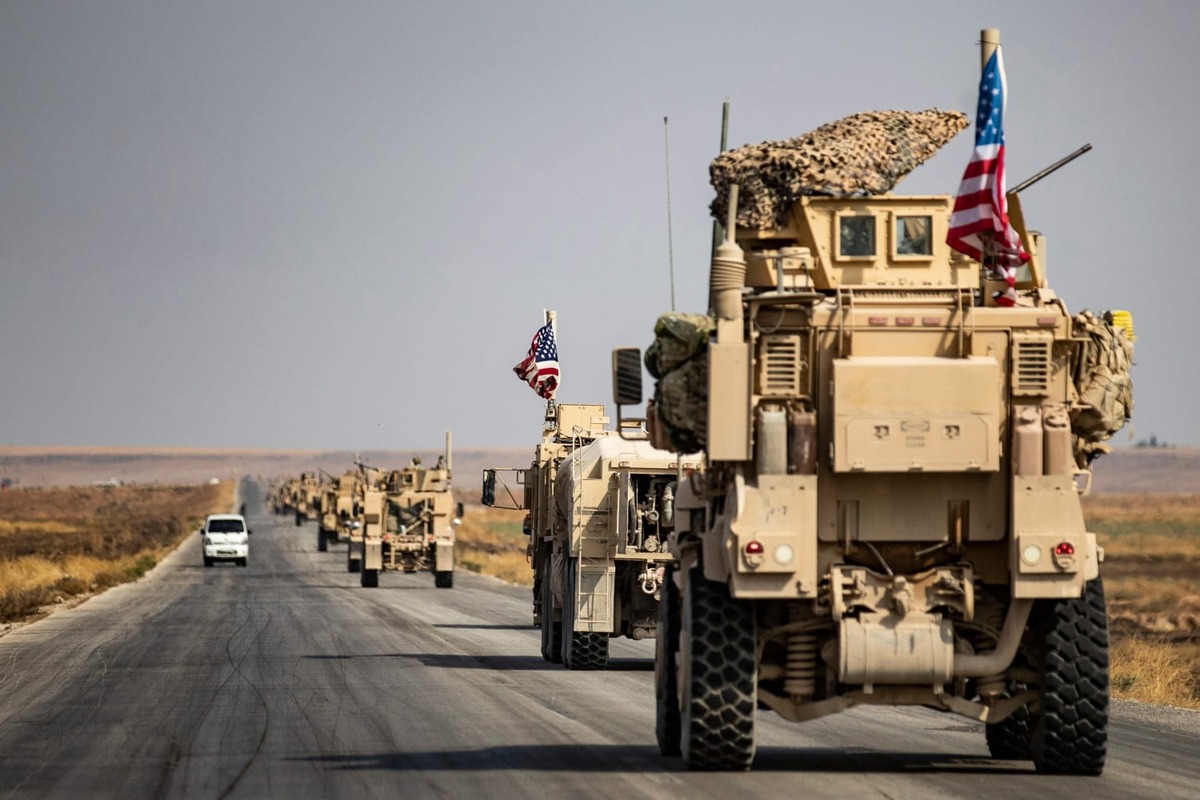
The completion of the U.S. military withdrawal from Iraq on September 30 marks the end of one of the most consequential chapters in modern Middle Eastern geopolitics. More than two decades after the 2003 invasion that toppled Saddam Hussein, American forces have now left their remaining bases in Iraq. The withdrawal formally ends the U.S.-led military mission against ISIS, while Washington says its relationship with Baghdad will continue through security cooperation, intelligence and training.
The significance of this moment goes far beyond the closing of military bases. It raises a fundamental question: who will shape Iraq’s political and security environment after the departure of American troops? For Iran and its allied armed groups, the answer appears obvious. Tehran has already portrayed the American departure as a strategic victory, while Iran-aligned factions in Iraq have celebrated the end of the U.S. military presence. Yet the reality is more complicated. The withdrawal creates opportunities for Iran, but it also places greater responsibility on Iraq itself to prevent instability, sectarian tensions and the resurgence of extremist organizations.
The American intervention in Iraq began in 2003 with the overthrow of Saddam Hussein. The war carried enormous human, financial and geopolitical costs. Around 4,500 American troops were killed during more than two decades of U.S. military involvement. After the original withdrawal in 2011, American forces returned in 2014 when ISIS captured large parts of Iraq and Syria and threatened the Iraqi state itself. The U.S.-led coalition subsequently helped Iraqi forces defeat ISIS territorially.
That history explains why the present withdrawal is both politically attractive and strategically sensitive. Iraq wants to exercise full sovereignty over its territory and security policy. Washington, meanwhile, has sought to transform its military mission from a large-scale deployment into a longer-term bilateral security relationship. The transition was formally agreed between Washington and Baghdad, with the coalition’s military mission in Iraq scheduled to end while cooperation against ISIS continued in other forms.
For Iran, however, the strategic equation is different. Tehran has spent years developing political, economic and security relationships inside Iraq. Iranian influence does not depend solely on the presence of Iranian-backed militias. It also operates through political parties, religious networks, commercial ties and longstanding relationships with influential Iraqi actors. Consequently, the American withdrawal does not automatically hand Iraq to Iran, but it potentially reduces one major counterweight to Tehran’s influence.
The most immediate concern is therefore the future balance between the Iraqi state and powerful armed groups. Several Iran-aligned militias have resisted calls to surrender their weapons, according to recent reporting. Baghdad has sought to bring armed factions under greater state control, but the question of how successfully it can do so will be central to Iraq’s political future.
At the same time, it would be misleading to assume that Iran is the only beneficiary of America’s departure. Iraq itself has an opportunity to strengthen national institutions and reduce its dependence on competing foreign powers. A genuinely sovereign Iraq would not necessarily mean an anti-Iran Iraq or an anti-American Iraq. It could mean an Iraq capable of maintaining balanced relations with Iran, the United States, Turkey, Saudi Arabia, the Gulf states, China and Europe according to its own national interests.
The greatest security concern is the possibility of an ISIS resurgence. The group no longer controls the vast territory it once held, but its defeat as a territorial organization does not mean that its ideology, networks and sleeper cells have disappeared. U.S. and coalition officials have repeatedly stressed that ISIS remains a threat despite its reduced capabilities.
The lesson of 2014 remains important. When state institutions are weak, political divisions deepen and security forces fail to maintain sufficient intelligence and operational capabilities, extremist organizations can exploit the resulting space. The Iraqi government therefore faces a difficult task: it must simultaneously contain militia power, strengthen its conventional security forces, maintain counterterrorism capabilities and prevent political competition from becoming sectarian confrontation.
There is also a broader regional dimension. The American departure could encourage other regional powers to reassess their own security strategies. Iran may see greater room to consolidate its strategic corridor stretching through Iraq toward Syria and Lebanon. Turkey will continue watching developments in northern Iraq closely because of Kurdish militant activity and its own security interests. Gulf Arab states, particularly Saudi Arabia, will have an interest in preventing Iraq from becoming overwhelmingly aligned with Tehran. Recent discussions involving Baghdad and Ankara also demonstrate that Iraq’s security environment involves several competing regional actors, not simply Washington and Tehran.
The economic implications are equally important. Iraq is a major oil producer and a significant member of OPEC+. Its stability therefore matters to global energy markets. Any serious deterioration in Iraqi security could affect investment, oil infrastructure and regional trade. At a time when Middle Eastern energy supplies are already facing geopolitical pressures, instability in another major producing country would have consequences beyond Iraq’s borders.
For the United States, the withdrawal represents a strategic shift rather than the disappearance of American interests in Iraq. Washington retains diplomatic, intelligence and security interests in the country and can continue cooperation without maintaining a large military footprint. But reduced physical presence also means reduced ability to respond immediately to developments on the ground.
For Iran, meanwhile, the opportunity is substantial but not unlimited. Excessive intervention could generate an Iraqi nationalist reaction against foreign influence. Iraq’s political class and population contain competing views about both Iran and the United States. Tehran therefore faces the same strategic dilemma it has confronted elsewhere: influence can be valuable, but excessive pressure can eventually produce resistance.
Ultimately, the real test will not be whether Iran celebrates the American withdrawal or whether Washington declares the end of its military mission a success. The decisive question is whether Iraq can convert the end of the foreign military mission into the beginning of stronger national sovereignty. The United States has paid a heavy price in Iraq, while Iraqis have borne an immeasurably greater human and social cost. The next phase should not simply replace one form of external dominance with another. Iraq needs capable national institutions, professional security forces, political reconciliation and an economy strong enough to reduce dependence on outside powers.
Regionally, the withdrawal could contribute to a more multipolar Middle East in which Iran, Turkey, the Gulf states and other powers compete for influence while Iraq attempts to balance among them. Globally, it signals another stage in America’s reassessment of prolonged military commitments in the Middle East. But history offers a warning: when a major power leaves a strategically important country, the vacuum does not remain empty. Other powers, political movements and sometimes extremist organizations attempt to fill it.
Iraq’s challenge, therefore, is not merely to prevent Iran from becoming too influential, nor to preserve an American security presence by another name. Its greater challenge is to ensure that Iraqi sovereignty becomes strong enough that no foreign power can define Iraq’s future for the Iraqi people.
About The Author