Echoes in the Deep: How Dominica’s Whales Are Adapting to Noisy Oceans
- Naomi Dela Cruz
- Breaking News
- July 24, 2026
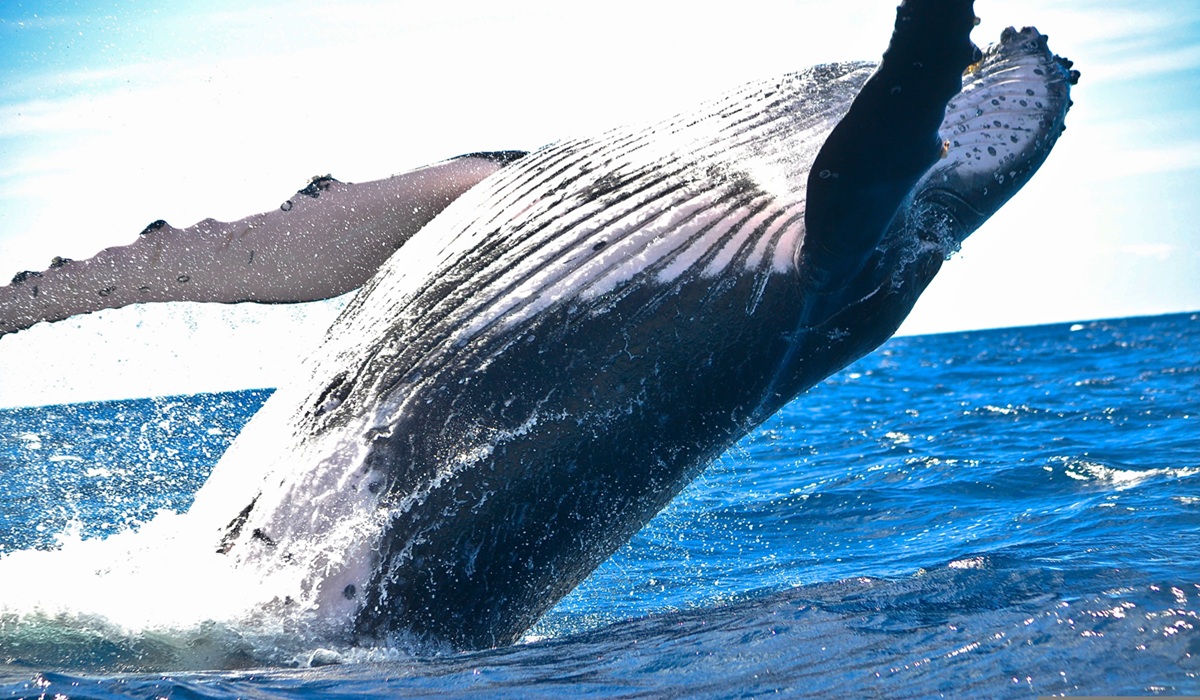
Image Credit: Pexels
In the pristine ocean waters surrounding the Caribbean island of Dominica, marine scientists have uncovered a remarkable behavioral phenomenon that is redefining our understanding of ocean life and cetacean intelligence. Researchers working with Project CETI, an international non-profit research organization dedicated to decoding cetacean communication, have spent four years monitoring the resident sperm whale population off the island’s western coast. Their latest findings, published in peer-reviewed acoustic science journals, reveal that sperm whales actively alter their vocal dialects and communication patterns when commercial ship traffic passes nearby. This discovery provides compelling evidence that marine mammals adjust the structure of their underwater language in direct response to human-generated noise pollution, opening a fascinating window into how deep-sea creatures perceive and adapt to industrial activity in their habitats.
Sperm whales communicate through rhythmic series of rapid vocal clicks known to marine biologists as codas. These codas function much like social dialects, allowing individual clans and family groups to identify one another, coordinate deep-water foraging dives, and maintain intricate social bonds across vast expanses of open water. By analyzing thousands of hours of high-definition hydrophone recordings gathered off Dominica, scientists observed that when large motorized vessels approached within audible range, the whales began shifting the timing and structure of their codas. Under quiet sea conditions, specific family clans off Dominica routinely use a distinct five-click coda rhythm. However, as the low-frequency rumble of commercial engines filled the water column, the whales accelerated their click sequences, shortening the time intervals between notes and altering the vocal weight given to specific click patterns.
This subtle shift in acoustic timing is equivalent to a human changing their vocal cadence or altering vowel emphasis to maintain clarity in a noisy room. Lead researchers on the project noted that these findings raise fundamental questions regarding animal cognition and communication. Scientists are currently evaluating whether the altered codas represent a mechanical adjustment designed to overcome sound masking from propeller churn, or if the whales are actively communicating information to one another regarding the presence and trajectory of approaching ships. If the animals are indeed sharing warning signals or discussing the presence of marine traffic, it would mark one of the most sophisticated examples of non-human vocal adaptation ever documented in wild marine mammals.
The island nation of Dominica has long been recognized as a global sanctuary for sperm whales, boasting a unique underwater topography where steep volcanic drop-offs create calm, deep waters just miles from the shoreline. Recognizing the ecological importance of this unique habitat, Dominica created the world’s first dedicated sperm whale reserve, establishing strict nautical speed limits, marine park boundaries, and regulated tourism guidelines to protect the local population. However, commercial cargo ships, cruise liners, and regional ferry corridors continue to transit through Caribbean waters, introducing steady ambient noise into an environment where sound is the primary sensory medium for navigation, hunting, and social survival.
The implications of the Dominica research extend far beyond academic curiosity, carrying major significance for global ocean management and international maritime law. Underwater noise pollution has quadrupled in key ocean basins over recent decades, causing chronic stress, navigational disruption, and accidental ship strikes among migratory whale populations. By demonstrating that sperm whales undergo measurable communication changes due to vessel presence, researchers are equipping conservationists with hard empirical data to advocate for quieter ship design standards, re-routed shipping lanes, and mandatory vessel speed reductions near critical marine habitats. Dominica’s leadership in marine science proves that small island nations can play a monumental role in global environmental stewardship, shedding light on the complex spoken world of the ocean’s gentlest giants.
About The Author