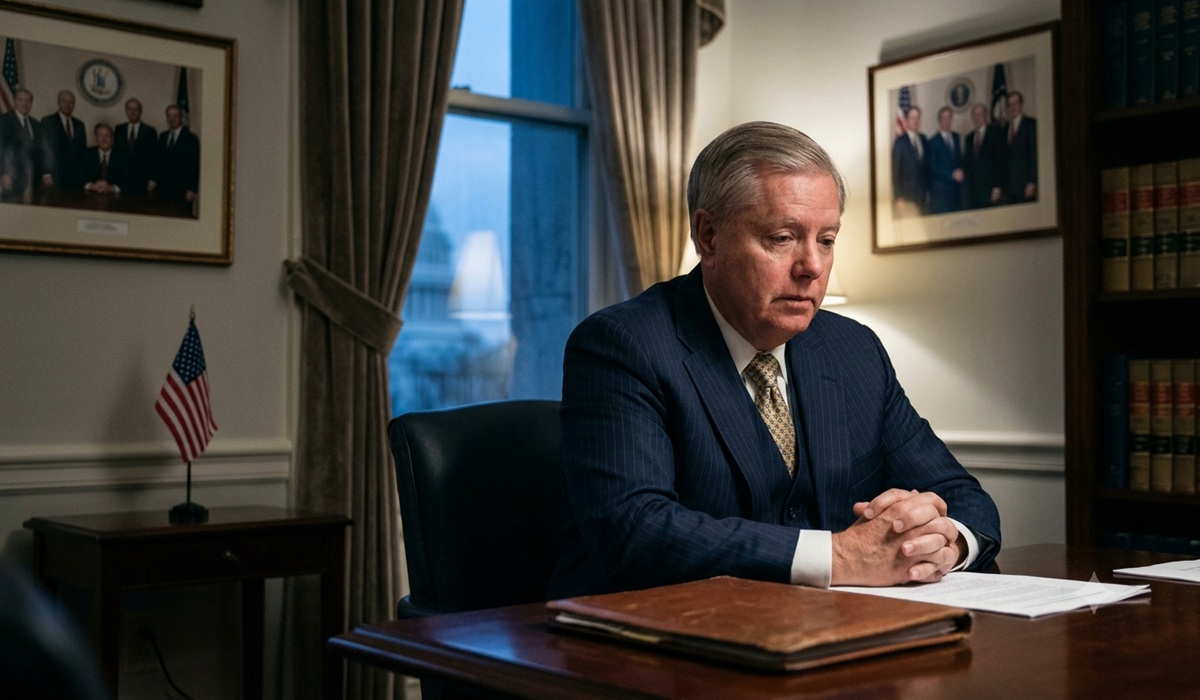
COLUMBIA, S.C. — In the modern theater of American politics, few figures embody the friction between a carefully guarded private life and a fiercely conservative public persona quite like Senator Lindsey Graham. For more than three decades, the South Carolina Republican was a fixture of national politics, charting a path from a hawkish young congressman during the Clinton impeachment to one of the most powerful and unpredictable brokers in the U.S. Senate. Yet, running parallel to his legislative career is a persistent, whispering shadow of personal rumors that has recently broken into open public discourse.
For years, the political rumor mill in Washington and Columbia treated allegations regarding Graham’s sexuality as an open secret, often accompanied by unverified claims that his inner circle utilized non-disclosure agreements (NDAs) to maintain his privacy. In recent months, however, that quiet speculation has shifted. A growing chorus of political activists, online commentators, and independent writers have actively sought out and amplified accounts from individuals claiming to have personal knowledge of the senator’s private affairs. These emerging narratives have reignited a fierce debate over privacy, political hypocrisy, and the ethics of holding public figures accountable for the discrepancies in their personal lives.
The intense scrutiny surrounding Graham is not merely a matter of salacious gossip; it is deeply tied to his extensive record on social policy. Throughout the 1990s and 2000s, Graham consistently aligned himself with the traditional wing of the Republican Party on LGBTQ+ issues. He voted in favor of the Defense of Marriage Act, opposed federal workplace protections against discrimination based on sexual orientation, and repeatedly earned a zero percent rating from prominent civil rights groups like the Human Rights Campaign. To his critics, this voting record represents a profound betrayal, suggesting that the senator weaponized policy against a community he was rumored to be a part of in order to protect his standing within a conservative electorate.
Graham himself long brushed aside inquiries into his personal life, laughing off questions about his lifelong bachelorhood with self-deprecating remarks about being “unmarried” or “married to the job”. His supporters fiercely defend his right to privacy, arguing that a lawmaker’s personal relationships are irrelevant to their ability to govern and protect national security. They view the recent wave of public accusations as a coordinated, politically motivated smear campaign designed to weaken a key conservative voice during a critical legislative session.
As the boundary between public service and private identity continues to erode in the digital age, the ongoing debate around Graham serves as a stark case study. It highlights a changing media landscape where long-standing political taboos are discarded, and where the tension between a politician’s private truth and public voting record can become an unshakeable political liability.
This tension has only grown more acute with the emergence of specific, on-the-record testimonies from individuals who claim to have breached the legal silence once imposed by non-disclosure agreements. Over the past several weeks, independent investigative outlets have published detailed accounts from former Washington insiders and associates who describe a highly coordinated operation designed to shield the senator’s private interactions from public view. These individuals allege that the use of legal threats and financial settlements was standard practice within Graham’s orbit, utilized to ensure that any personal liaisons remained strictly confidential while the senator continued to champion policies that restricted LGBTQ+ rights on the national stage.
The fallout of these revelations has triggered a profound reckoning within South Carolina’s political establishment. Local organizers and younger conservative voters are increasingly divided, with some expressing deep discomfort over what they see as a systemic, decades-long deception, while others remain steadfast in their defense of the lawmaker’s legislative legacy. For LGBTQ+ advocates, the situation is a painful reminder of an era where closeted politicians felt compelled to vote against their own humanity to survive politically, leaving a trail of harmful legislation and personal compromise in their wake.
About The Author