Supreme Court Closes the Door on Trump’s Appeal, Leaving $5 Million Verdict Intact
- Ingrid Jones
- U.S.A
- June 29, 2026
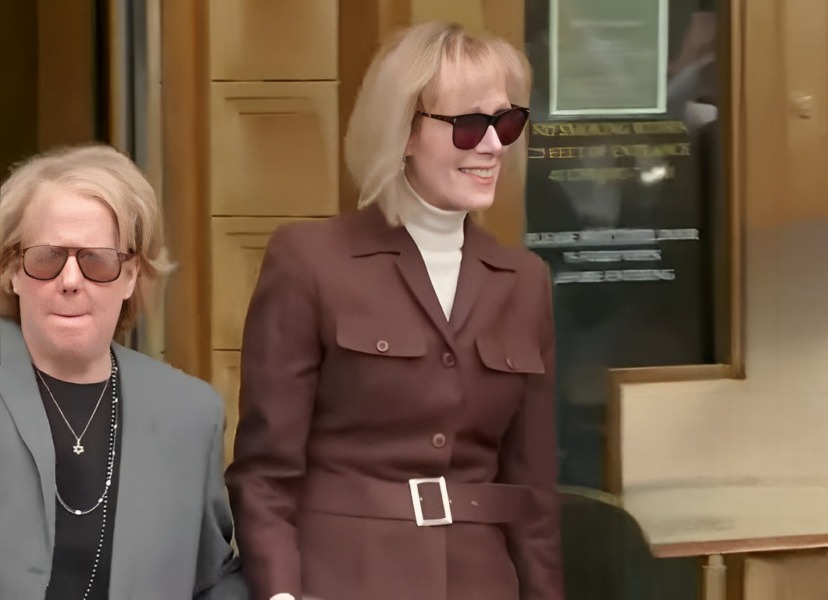
For nearly seven years, one accusation has followed Donald Trump through election campaigns, courtrooms and the White House. On Monday, the United States Supreme Court effectively brought one chapter of that legal fight to an end, refusing to hear his appeal of the $5 million civil judgment awarded to writer and former magazine columnist E. Jean Carroll.
The brief order contained no explanation, as is customary when the country’s highest court declines to review a case. Its practical effect, however, is significant. By letting the lower court rulings stand, the justices left intact the jury’s decision that found Trump liable for sexual abuse and defamation, meaning the $5 million judgment remains fully enforceable.
To understand why the case has attracted so much attention, it helps to understand who brought it. Carroll spent decades as one of America’s best-known magazine personalities, writing the popular “Ask E. Jean” advice column for Elle. She built a career interviewing celebrities, writing books and appearing on television long before her name became associated with one of the most high-profile civil lawsuits involving a U.S. president.
Everything changed in 2019 when she publicly alleged that Trump sexually assaulted her inside a dressing room at the Bergdorf Goodman department store in Manhattan during the mid-1990s. According to her account, what began as a chance encounter unexpectedly turned violent. Trump immediately denied the allegation, insisting it never happened, saying he did not know her and describing the accusation as fabricated.
Because the alleged incident occurred decades earlier, the matter was not prosecuted as a criminal case. Instead, changes to New York law created a temporary legal window allowing certain older sexual assault claims to proceed in civil court. That distinction proved important because the burden of proof in a civil trial is considerably lower than in a criminal prosecution. Jurors were not asked to determine guilt beyond a reasonable doubt. Rather, they were asked whether the evidence showed it was more likely than not that the alleged conduct occurred.
During the 2023 trial, jurors heard testimony from both sides over nine days. Trump’s legal team argued the allegations were false and politically motivated, while attorneys for the plaintiff presented testimony and evidence they said corroborated her account. Jurors also heard from two other women who described separate allegations of sexual misconduct involving Trump, as well as portions of the now-famous 2005 Access Hollywood recording.
After deliberating, the jury concluded that Trump was liable for sexually abusing the former columnist and for later defaming her by publicly denying the allegations. The panel did not find him liable under New York’s specific legal definition of rape, but it did conclude that sexual abuse had occurred. Combined with the defamation finding, the jury awarded $5 million in damages.
Trump immediately challenged the verdict, arguing that the trial judge improperly admitted evidence that unfairly prejudiced the jury. His lawyers maintained that testimony from other accusers and the Access Hollywood recording should never have been presented because they were unrelated to the specific allegations being tried. They argued those decisions deprived him of a fair trial and warranted a completely new proceeding.
Federal appellate judges disagreed. They concluded that the challenged evidence was properly admitted under the applicable rules and that the trial had been conducted fairly. After losing before the appellate court, Trump asked the Supreme Court to step in and overturn the judgment.
The justices declined.
The Supreme Court’s refusal to hear the appeal should not be interpreted as an endorsement of the lower courts’ reasoning. Every year the Court receives thousands of petitions seeking review but accepts only a small percentage. When the justices decline a case, they typically offer no explanation and simply leave the existing judgment in place.
Although Monday’s decision closes the door on this particular appeal, it is not the end of the broader legal dispute between the two. In a separate civil case involving additional statements Trump made after the original lawsuit, another federal jury awarded more than $83 million in defamation damages. That judgment remains subject to its own appeals process and was not before the Supreme Court in Monday’s decision.
Throughout both lawsuits, Trump has consistently denied every allegation, maintaining that the claims were politically motivated and insisting he was treated unfairly by the courts. His legal position has remained unchanged from the moment the accusations first became public, even as multiple federal courts rejected the arguments advanced by his attorneys.
For the writer at the centre of the case, Monday’s decision represents the culmination of years of litigation that transformed a decades-old allegation into one of the most consequential civil cases involving an American president. For Trump, it marks another unsuccessful effort to overturn a judgment that has survived scrutiny at every level of the federal court system.
With the Supreme Court declining to intervene, the $5 million verdict now stands as the final outcome of that case, bringing one legal battle to a close while leaving other proceedings between the two parties still working their way through the courts.
About The Author