From Resistance to Retaliation: Iran’s Evolving Military Doctrine for Israel and its Allies
- Naveed Aman Khan
- Pinpoint
- June 9, 2026
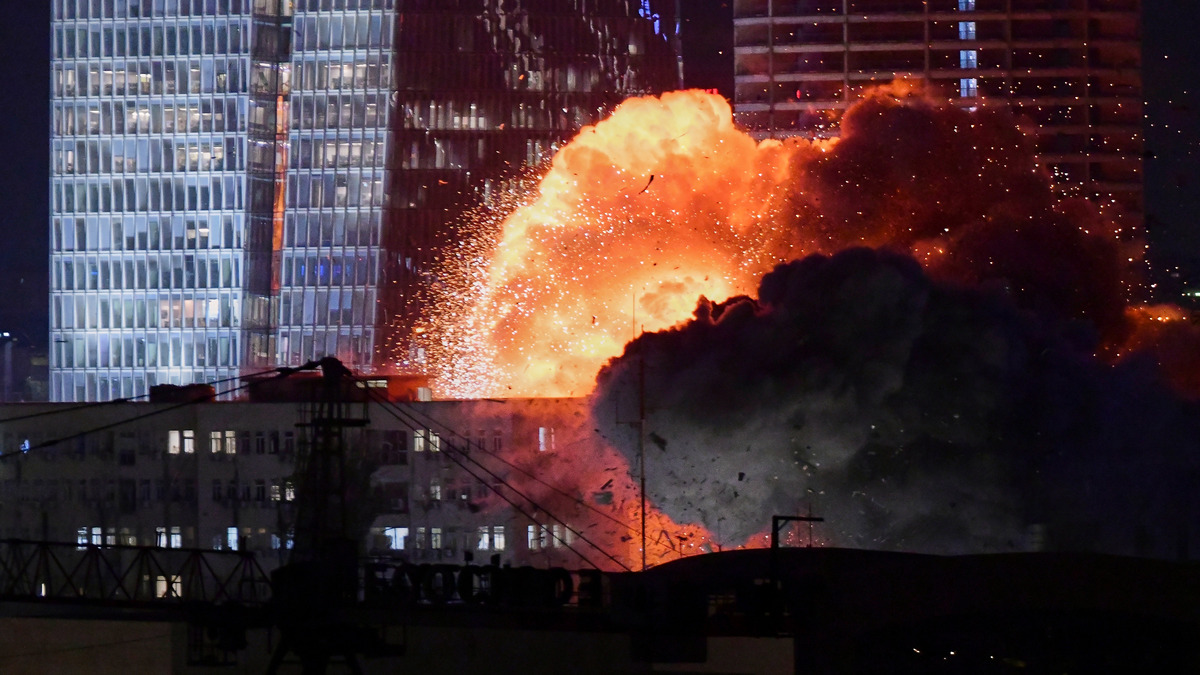
The recent Iranian missile attack on Israel marks another significant chapter in the long-running confrontation between the two regional rivals. The attack came after a series of Israeli strikes in Lebanon, particularly against Hezbollah-linked targets in Beirut and southern Lebanon. While the immediate trigger was Israel’s military campaign against Hezbollah, the deeper causes lie in the strategic alliance between Iran and Hezbollah, Iran’s broader regional ambitions, and the changing balance of power in the Middle East.
To understand why Iran intervened directly, it is essential to recognize the central importance of Lebanon in Iranian regional strategy. Since the 1980s, Hezbollah has served as Iran’s most successful regional ally and the cornerstone of Tehran’s “Axis of Resistance,” which includes various groups across the Middle East. Hezbollah provides Iran with strategic depth against Israel and serves as a forward military presence on Israel’s northern border.
Consequently, Israeli attacks on Hezbollah are viewed in Tehran not merely as attacks on a friendly organization but as attacks on a critical component of Iran’s national security architecture. Recent Israeli strikes in Beirut were therefore interpreted by Iran as an attempt to weaken one of its most important strategic assets. Iran’s latest missile launches as a warning that continued Israeli operations in Lebanon could carry direct consequences for Israel itself.
Iran is involving itself so deeply in the Israel-Lebanon conflict. The answer lies in both ideology and strategy. Ideologically, the Iranian leadership has long presented itself as the defender of anti-Israeli resistance movements. Strategically, Hezbollah functions as Iran’s primary deterrent against Israeli military action. If Hezbollah were significantly weakened or destroyed, Iran would lose a major instrument of influence and deterrence in the region. Therefore, Tehran sees the defense of Hezbollah not as a foreign intervention but as an investment in its own security interests.
In April 2024, Iran launched hundreds of drones and missiles toward Israel in what became known as “Operation True Promise.” The attack was conducted in retaliation for an Israeli strike on an Iranian diplomatic facility in Damascus. That operation marked the first acknowledged direct Iranian military attack against Israeli territory and represented a historic shift from decades of indirect confrontation through proxies.
For many years, the Iran-Israel conflict remained a shadow war. Israel conducted covert operations, cyberattacks, targeted assassinations, and airstrikes against Iranian assets in Syria and elsewhere. Iran responded primarily through proxy forces rather than direct military engagement. The events of 2024 and especially the developments of 2026 demonstrate that this pattern is changing. Tehran increasingly appears willing to employ its own missiles and drones to establish deterrence and impose costs on Israel. This transformation reflects growing confidence in Iran’s missile capabilities and its belief that direct retaliation can strengthen its strategic position.
Iran emerged stronger after the February 28, 2026 attacks conducted by Israel and the United States. Militarily, Iran suffered substantial damage and lost important personnel and infrastructure. Yet the survival of the Iranian state and its continued ability to launch missile strikes against Israel allowed Tehran to project an image of resilience. Rather than collapsing under military pressure, Iran demonstrated that it retained significant offensive capabilities. This perception of endurance has become an important component of its regional messaging.
The strategy behind the recent Iranian missile attack appears to be based on deterrence rather than conquest. Iran likely seeks to establish clear red lines, particularly regarding Hezbollah and Lebanon. By responding directly to Israeli actions, Tehran aims to convince Israeli decision-makers that attacks on Iranian allies will trigger broader regional consequences. At the same time, Iranian leaders appear careful to avoid an all-out war that could threaten the survival of the regime or provoke overwhelming international intervention. The Iranian missile strikes on Israel are calibrated retaliation intended to restore deterrence while avoiding uncontrolled escalation.
The implications of these attacks are far-reaching. First, they increase the likelihood of direct state-to-state warfare between Iran and Israel. Second, they further internationalize the Lebanon conflict by linking Hezbollah’s fate directly to Iranian military actions. Third, they heighten risks to global energy markets, particularly because of concerns surrounding the Strait of Hormuz, one of the world’s most important oil transit routes. Even limited exchanges between Iran and Israel have already produced significant volatility in global energy prices and financial markets.
A crucial question concerns Israel’s ability to confront Iran without American support. Israel remains one of the most technologically advanced military powers in the world, possessing sophisticated air defenses, intelligence capabilities, cyber warfare assets, and a highly capable air force. However, Iran is a large regional power with extensive missile forces, strategic depth, and multiple allied groups operating across the Middle East.
While Israel could certainly inflict substantial damage on Iran independently, sustaining a prolonged confrontation without American military, intelligence, logistical, and diplomatic support would be significantly more difficult. The United States remains Israel’s most important strategic partner, particularly in missile defense, intelligence sharing, and diplomatic backing. The interception of previous Iranian missile barrages demonstrated the importance of coordinated support from the United States and allied countries.
The broader lesson emerging from these developments is that the Middle East is entering a new strategic era. The traditional pattern of proxy warfare is increasingly giving way to direct confrontation between regional powers. Iran’s willingness to strike Israel openly reflects both confidence and concern: confidence in its military capabilities and concern over the erosion of its regional influence if Hezbollah is weakened.
Iran’s recent missile attack on Israel is not simply a reaction to events in Lebanon. It is a calculated demonstration of deterrence, a defense of strategic interests, and a message to both Israel and the wider region. Lebanon remains central to Iran’s regional strategy because Hezbollah serves as Tehran’s most valuable ally and deterrent force. The attack also reflects a broader transformation in Iranian behavior—from reliance on proxies to selective direct military action. While neither Iran nor Israel appears to seek a full-scale regional war, the risks of miscalculation are growing. The future stability of the Middle East will depend largely on whether both sides can restore deterrence without crossing the threshold into a conflict that could engulf the entire region and draw global powers even deeper into one of the world’s most volatile geopolitical rivalries.
About The Author