A Failed Coup in Mali, Regional Alliances, and the Battle for Control of the Sahel
- Hami Aziz
- Africa
- Tiger's Eye Advisory Group - Trending News
- May 4, 2026
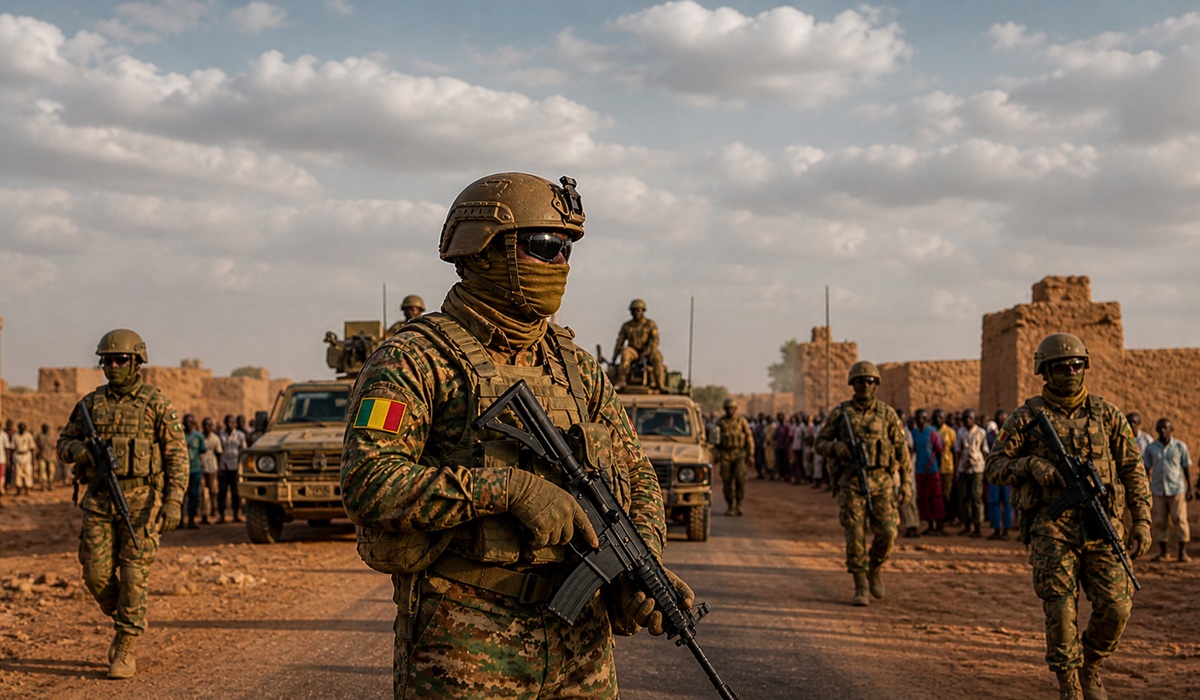
Mali is once again at the center of a rapidly escalating geopolitical struggle, and the latest attempted coup—now widely seen as a coordinated effort to destabilize the government—has only deepened the divide between the country, its regional allies, and Western powers. What makes this moment different is not just the scale of the attack, but the response. The Malian military did not stand alone. Support, both direct and symbolic, came from its closest partners in Burkina Faso and Niger, marking a turning point in how power is being defended in the region.
In late April 2026, Mali faced one of the most serious threats to its current leadership since the military junta took control. Coordinated attacks hit multiple strategic locations, including military installations and areas near the capital, Bamako. The scale and sophistication of the offensive immediately raised alarms. Malian officials were quick to describe the attacks as an attempted overthrow of the government, aimed at dismantling state institutions and ending the current transition period.
The situation could have spiraled quickly. Armed groups, including jihadist factions linked to al-Qaeda and separatist forces, were involved in the offensive, and their objective was not simply territorial control. Intelligence assessments suggest the broader aim was to weaken central authority and trigger political collapse rather than hold ground in a traditional sense.
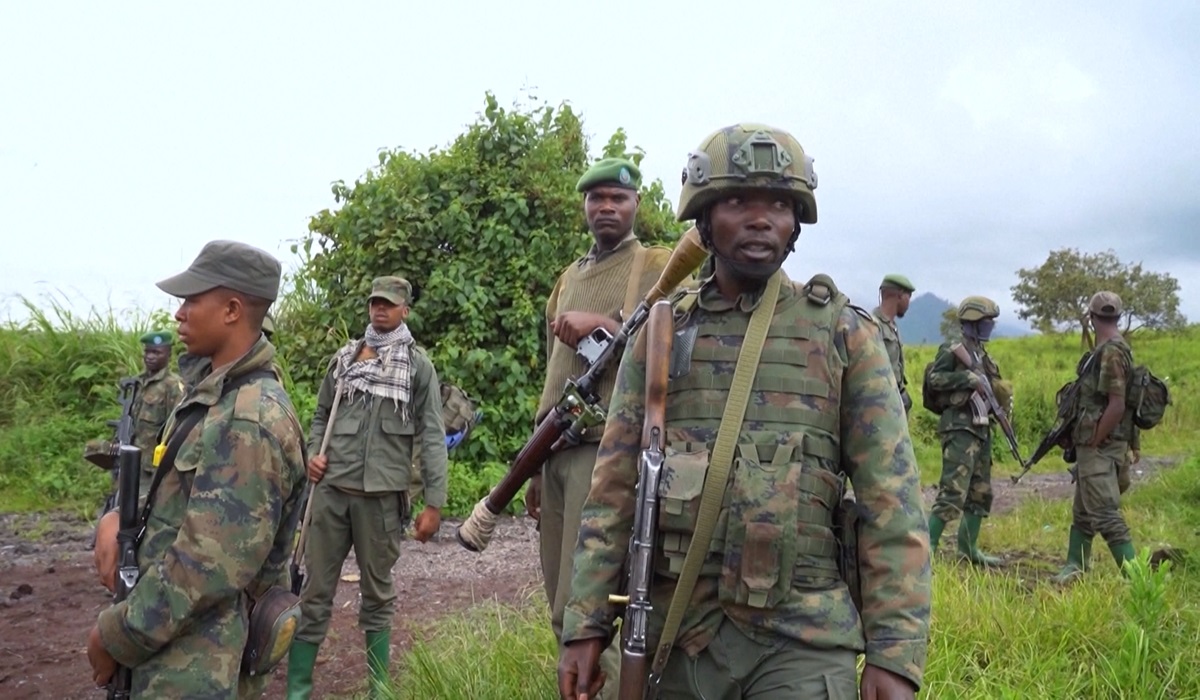
What changed the outcome was the response. Malian forces, backed by allied support structures, managed to contain and repel large parts of the assault. External military partners operating in the country also played a role in stabilizing key areas, though the extent and effectiveness of that involvement continue to be debated. What is clear is that the Malian military acted quickly, decisively, and with coordination that had not always been evident in previous crises.
More importantly, this moment reinforced the emerging alliance between Mali, Burkina Faso, and Niger. These three countries—each governed by military leadership—have formed a bloc that is increasingly acting as a unified front. This alliance is not symbolic. It represents a coordinated effort to resist both internal insurgencies and external pressure.
There are credible indications that Burkina Faso and Niger provided support, including coordinated military positioning and regional pressure on insurgent groups. While the extent of direct intervention is still being analyzed, the message was clear: an attack on one is being treated as an attack on all. Reports of cross-border coordination and rapid mobilization point to a level of cooperation that did not exist just a few years ago.
This is where the broader geopolitical tension comes into focus. Mali’s current leadership did not emerge in isolation. It came to power after years of frustration with insecurity, foreign military presence, and what many within the country viewed as ineffective Western intervention. France, which had maintained a long-standing military role in Mali, was eventually pushed out. United Nations missions withdrew. In their place, Mali pivoted toward new partnerships that operate outside the traditional Western framework.
That shift has not been welcomed by Western governments or institutions like the African Union. Officially, the concern is about governance. Military-led governments are seen as undermining democratic norms, and repeated coups across the Sahel have raised fears of a broader regional pattern. Countries like Mali, Burkina Faso, and Niger have already faced sanctions and political isolation from regional blocs that align more closely with Western systems.
But there is another layer that is rarely stated as openly. The Sahel region is rich in resources—gold in Mali, uranium in Niger, and other critical minerals across the region. Control over these resources has long been tied to foreign interests. When governments shift away from Western partnerships and toward alternative alliances, it disrupts established economic and political relationships that have existed for decades.
From the perspective of Mali’s leadership, the pressure from the African Union and Western nations is not just about democracy. It is about influence and control. The government has openly suggested that the scale and coordination of the recent attacks point to backing that goes beyond local insurgent groups, though definitive proof remains under investigation.
Western governments, on the other hand, argue that instability in Mali threatens the entire region. The spread of extremist groups across Mali, Niger, and Burkina Faso is well-documented, with violence affecting millions of civilians. From their standpoint, military-led governments have not delivered the level of security improvement that was promised and may be deepening isolation at a time when cooperation is needed most.
The reality is more complex than either side presents. Mali is facing a deeply entrenched insurgency that has resisted multiple forms of intervention over the years. At the same time, the political struggle over who influences the country’s future has become part of a larger global contest.
What is undeniable is that the failed coup attempt has hardened positions. Mali is not stepping back from its alliances with Burkina Faso and Niger. If anything, those ties are becoming more structured and more operational. The idea of a unified Sahel bloc acting independently of Western influence is no longer theoretical. It is taking shape on the ground.
The consequences of that shift are significant. Regional cooperation among these states could reshape how security is managed in West Africa, but it also risks deepening divisions with neighboring countries and international institutions. The Sahel is no longer just a security concern. It is a geopolitical battleground where sovereignty, resources, and global influence intersect.
Mali, in this moment, is not simply defending a government. It is defining its position in a broader struggle over who gets to shape the future of the region.
About The Author