Burkina Faso: The Rise of a New National Identity Under Ibrahim Traoré
- TDS News
- Africa
- Tiger's Eye Advisory Group - Trending News
- April 23, 2026
By: Donovan Martin Sr, Editor in Chief
Burkina Faso is undergoing a transformation that is as deliberate as it is disruptive, with the country redefining its trajectory in ways that challenge long-standing assumptions about governance, security, and economic control in West Africa. What is emerging is not simply a response to past instability, but a forward-driven national project that is attempting to rebuild the state on its own terms, guided by a philosophy that places sovereignty, identity, and self-determination at the center of its evolution.
Under the leadership of Ibrahim Traoré, there has been a visible and assertive shift in how authority is exercised and how national priorities are defined. The focus has moved away from externally influenced frameworks toward a model that emphasizes internal strength, collective discipline, and a recalibration of what governance means in a Burkinabè context. This is not being framed as a temporary correction, but as a structural realignment that seeks to establish long-term stability through control of both territory and narrative.
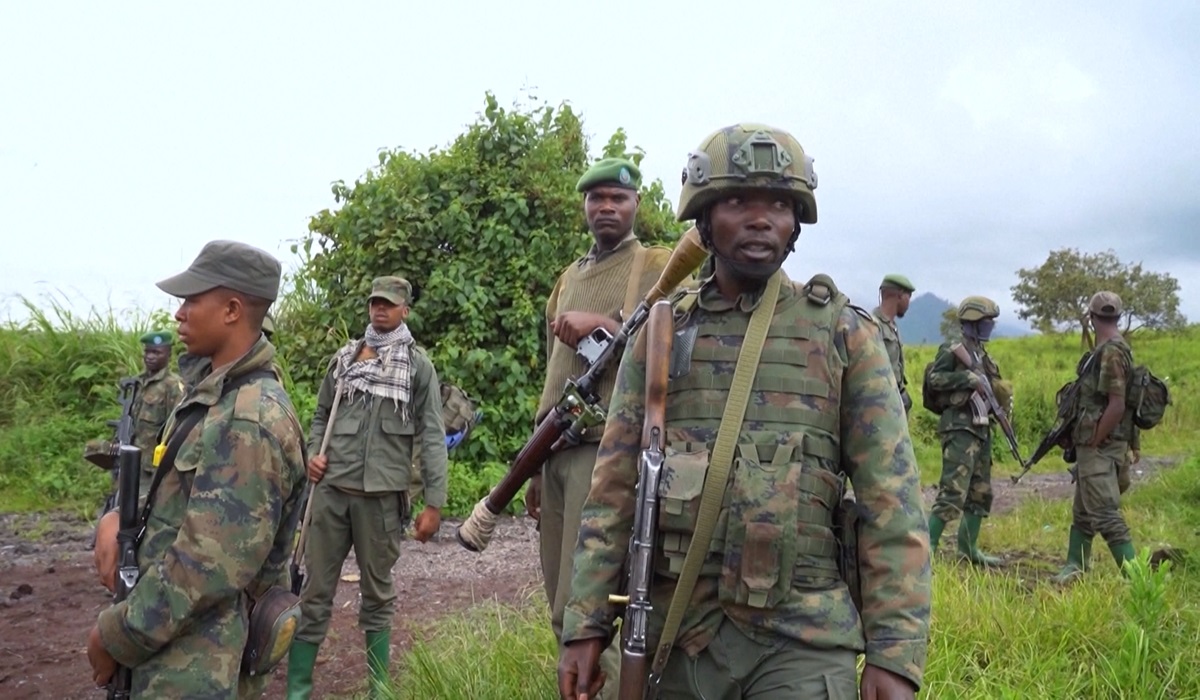
Security, once the defining vulnerability of the country, is now being positioned as a cornerstone of its resurgence. The expansion and restructuring of the national military has been accompanied by a broader mobilization effort that integrates civilian participation into national defense. This approach has created a sense of shared responsibility, reinforcing the idea that security is not solely the domain of the state, but a collective undertaking. Reports of reduced criminal activity and improved control in previously volatile areas have contributed to a growing perception that the country is regaining its footing, even as challenges persist in certain regions.
Economic policy has also taken a decisive turn, particularly in the area of resource management. The government has signaled a clear intent to reclaim control over natural assets, moving toward nationalization strategies that prioritize domestic benefit over external extraction. This shift is not merely economic, but symbolic, representing a rejection of historical arrangements that many believe left the country with limited returns from its own wealth. By asserting greater control over resources, Burkina Faso is attempting to build a foundation for economic independence that aligns with its broader political vision.
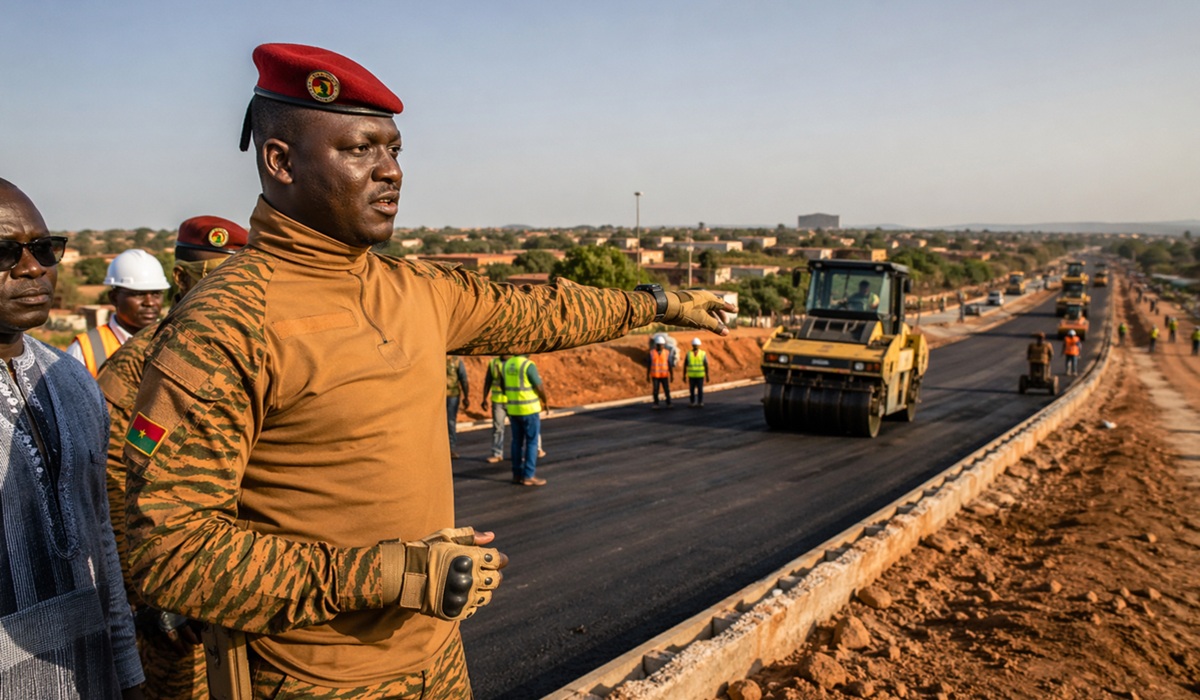
Infrastructure development has become a visible marker of this new direction. Road construction, in particular, has accelerated at a pace that is being highlighted as unprecedented within the country’s recent history. These projects are not only about connectivity, but about demonstrating capacity and intent, signaling that the state is capable of delivering tangible improvements that affect daily life. The emphasis on infrastructure reflects a broader understanding that development must be both practical and visible if it is to reinforce public confidence.
Internationally, Burkina Faso is redefining its alliances in ways that reflect its internal transformation. There has been a clear pivot away from traditional Western partnerships, accompanied by a growing engagement with countries in the East and the Middle East. These relationships are being framed as more aligned with the country’s current priorities, offering investment and cooperation without the same historical baggage that has come to define its interactions with former partners. This shift is not without controversy, but it underscores a broader effort to reposition the country within a changing global landscape.
At the ideological level, there is an emerging emphasis on what is being described as an African-centered philosophy, sometimes referred to as Burkina Bay, which seeks to move beyond imported frameworks and toward a model rooted in local values and historical experience. This includes a deliberate effort to dismantle systems and symbols associated with external domination, whether they are political, economic, or cultural. The goal is to create a national identity that is not defined by its past subordination, but by its present agency.
This process is not without its complexities, and the outcomes are still unfolding, but there is a clear sense that Burkina Faso is attempting to write a different story for itself. The narrative being constructed is one of reclamation and renewal, where stability is pursued through strength, and development is tied to sovereignty. It is a bold approach that is attracting attention across the region, not only for what it promises, but for what it represents in a broader conversation about the future of African governance.
Burkina Faso today is not presenting itself as a country in recovery, but as one in ascent, determined to define its own path regardless of external expectations. The success or failure of this approach will depend on its ability to sustain momentum while navigating the pressures that come with such a profound shift, but there is no question that the direction being taken is both intentional and transformative.
About The Author