Afghanistan: Six Months After the Kunar Earthquake, Families Fear Being Forgotten
- Hami Aziz
- Middle East
- Tiger's Eye Advisory Group - Trending News
- February 27, 2026
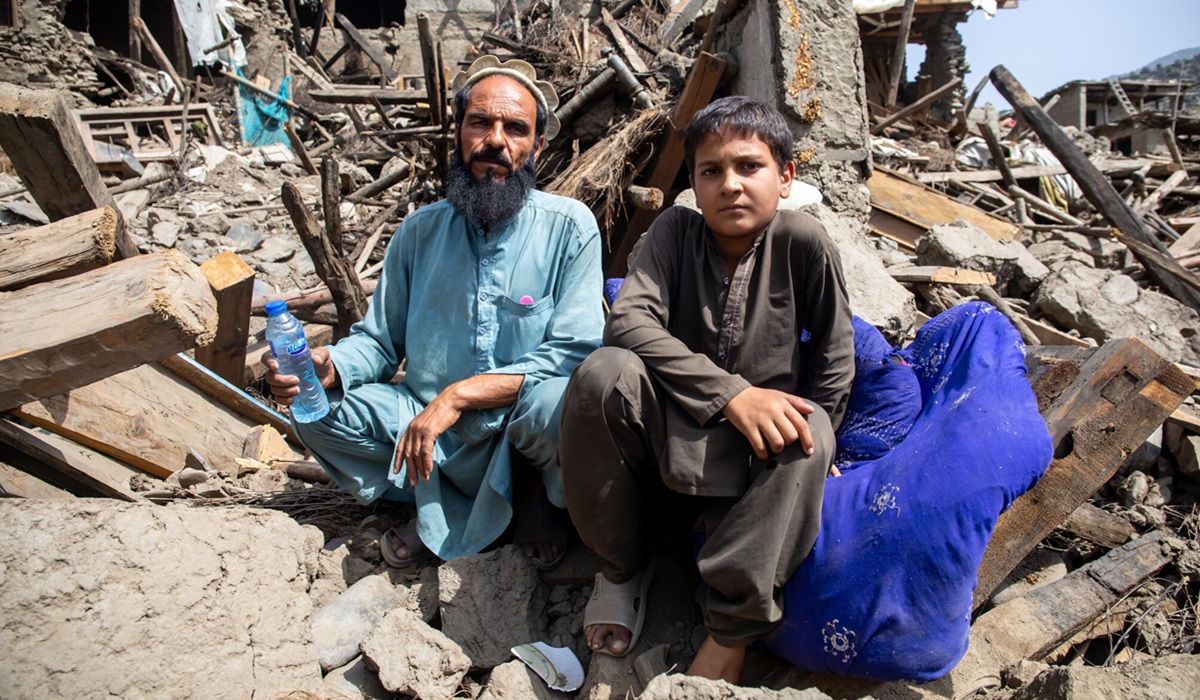
Six months after a powerful 6.0-magnitude earthquake tore through Kunar province in eastern Afghanistan, the ground may have stopped shaking, but the instability in people’s lives has not. What began as a natural disaster has quietly evolved into a funding crisis, leaving thousands of families stranded between emergency survival and long-term recovery.
When the quake struck on August 31, 2025, entire communities were reduced to rubble. More than 2,150 people lost their lives. Nearly half a million were affected. Around 8,000 homes were destroyed outright, and an estimated 186,000 people were left in urgent need of shelter and essential household items. In the immediate aftermath, humanitarian agencies rushed in with tents, clean water, food, and basic medical support. Those temporary solutions kept families alive through the first weeks of chaos.
But tents are not homes. Canvas does not withstand winter indefinitely. What was designed as a short-term response has become a long-term reality.
Today, many families in Kunar are still living under tarpaulins and patched-together shelters, exposed to harsh seasonal changes. Parents describe enduring months of cold nights with little insulation, worrying about how to keep children warm and fed. Partially damaged houses remain structurally unsafe, forcing families to choose between danger inside cracked walls and exposure outside in tents.
Gul Bacha, a 27-year-old resident of Kunar province, says the initial aid helped his family survive the immediate shock. However, he now fears what comes next. Their damaged home has not been fully repaired, and the tent that once symbolized rescue now feels like a sign of stagnation. With food distributions winding down and cash support thinning out, he worries that the coming months may bring a different kind of crisis, one defined by scarcity rather than debris.
The deeper problem is not only the scale of destruction but the scale of retreat in humanitarian funding. In 2025, just over 41 percent of the required national humanitarian funding for Afghanistan was delivered. That gap was already significant. In 2026, the picture has grown even more alarming. Less than 10 percent of required funding for the broader humanitarian response has been delivered so far. For emergency shelter and non-food items, the most critical category for earthquake-affected families, funding has dipped below 1 percent of what is required this year.
The numbers are stark. More than 21.9 million people across Afghanistan are currently assessed as needing humanitarian assistance. The total funding required to address priority needs this year stands at approximately 1.71 billion US dollars, yet only a fraction has been secured. For the earthquake response alone, 111.5 million US dollars was required. Even before new global funding contractions take full effect, many programmes are being scaled back or closed.
Emergency tents, hygiene kits, winterisation supplies, and multipurpose cash distributions were never meant to replace proper reconstruction. Yet reconstruction demands sustained investment, including stronger housing materials, water and sanitation infrastructure, and livelihood support so families can regain independence. Without that transition from relief to rebuilding, communities remain suspended in crisis mode.
Humanitarian organisations working in the region have begun phasing out operations in some of the hardest-hit areas due to financial constraints. While they continue supporting displaced communities elsewhere in the country, the reduction in presence in Kunar raises fears that earthquake-affected families may once again be displaced, not by tremors but by economic desperation. When aid stops, people move. They seek work, food, or services wherever they can find them, often joining already overcrowded urban centres or informal settlements.
The situation is compounded by broader national pressures. Afghanistan continues to grapple with widespread poverty, limited economic opportunity, and the return of millions of Afghans from neighbouring countries with little more than the clothes they carried. For families in Kunar, the earthquake did not occur in isolation. It struck an already fragile environment.
What is emerging is a pattern familiar to many protracted crises. The world responds swiftly to dramatic events. Cameras arrive. Pledges are made. Supplies are flown in. Then attention shifts. Funding cycles tighten. New emergencies dominate headlines. Those still living with the aftermath find themselves navigating a quieter abandonment.
Six months is a short time in the lifespan of rebuilding a community. It is a long time to live in a tent.
The choice facing the international community is not simply whether to fund another aid package. It is whether to allow a preventable secondary displacement crisis to unfold. Without renewed investment in shelter reconstruction, water systems, sanitation, and livelihood recovery, the earthquake’s damage will continue to ripple outward. Families who survived the initial shock may face a slower erosion of stability, dignity, and opportunity.
For the residents of Kunar, the memory of the quake remains vivid. Cracked walls and empty plots where homes once stood serve as daily reminders. What they fear now is not the tremor beneath their feet, but the silence that follows when promised support fades away.
About The Author