Prices for Winter Shelter Supplies in Gaza Surge up to 1,500%, Aid Group Warns
- Hami Aziz
- Middle East
- Trending News
- November 25, 2026
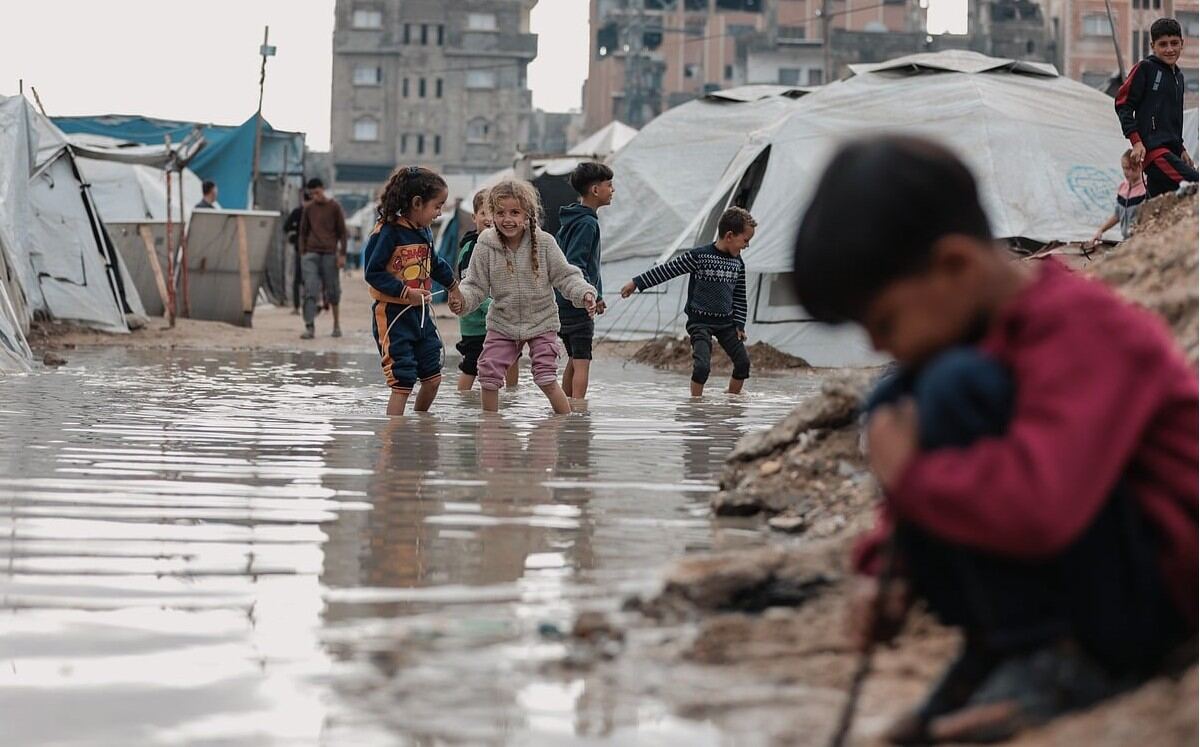
Image Credit: Hosnysalah
GAZA CITY (AP) — Israeli import restrictions and severe humanitarian funding shortfalls have driven local market prices for basic winter shelter supplies in Gaza up by as much as 1,500%, pushing essential relief beyond the reach of displaced families, an international aid coalition warned.
The Palestine Shelter Cluster, which coordinates shelter organizations across Gaza and the West Bank, said the combined cost of winter items required for an average family of six inside Gaza has reached $6,171. Aid agencies could procure and transport the same supplies internationally for $716, according to data compiled by the group. The cluster’s calculated winter household package includes one emergency shelter kit, one solar light, six mattresses, six blankets and six sets of winter clothes.
Severe shortages across Gaza’s local markets have multiplied prices for individual items. A standard blanket that aid agencies purchase internationally for $6 sells for $71 inside Gaza. An emergency shelter kit, which provides more space and protection than a standard tent, costs $300 outside Gaza. Because key components such as timber are scarce or unavailable inside the territory, local costs for the kit have climbed as high as $4,000.
“Nearly everyone in Gaza relies on humanitarian aid, yet prices there have soared to the point that not even aid agencies can afford the basic shelter and household items that families need to survive the winter,” said Jehan Salim, national coordinator for the Shelter Cluster. “Israel must immediately lift restrictions and allow for the delivery of essential aid, much of which is ready for entry and mere kilometers away in El-Arish, Egypt. More commercial supplies are also needed to bring prices down.”
Border bottlenecks remain the primary driver of the shortages, the coalition said. Only 9% of aid trucks that entered Gaza in October carried shelter materials. While Israeli authorities have permitted limited shipments of tents, tarps and small quantities of timber, deliveries fall far short of demand. According to the Shelter Cluster, Israeli authorities have rejected materials needed to assemble at least 11,700 emergency shelter kits.
Funding gaps have further slowed the response. Donors have provided just 35% of the $283.2 million sought under the cluster’s minimum winter response plan. As of Nov. 15, partner organizations held fewer than 6,500 tents in stock inside Gaza. Current stockpiles and incoming supply pipelines cover less than 20% of the need for blankets, mattresses and solar lights, and less than 1% of the need for winter clothing.
An estimated 65% of Gaza’s population, roughly 1.37 million people, lives in tents and makeshift shelters that offer minimal protection from winter weather, the group said.
“Every effort is being made to support displaced Palestinians this winter, but the window is rapidly closing,” said Mauricio Tautiva, co-coordinator of the Shelter Cluster. He urged donors to provide flexible funding and immediate donations of tents, tarps, mattresses and blankets, alongside durable options such as prefabricated structures.
Salim said reliance on temporary tents leaves families trapped in recurring seasonal emergencies.
“More than a million people in Gaza are living in tents and makeshift shelters that cannot survive another winter,” Salim said. “We need cement, rebar, metal sheeting and other construction materials to help families secure safer shelter. But Israeli restrictions have trapped us in an endless cycle of replacing worn-out and damaged tents. States must press Israel to lift these restrictions so that aid groups can provide families with safety and protection.”
The Palestine Shelter Cluster is led by the Norwegian Refugee Council and co-coordinated by the International Organization for Migration.
About The Author