Editorial Board
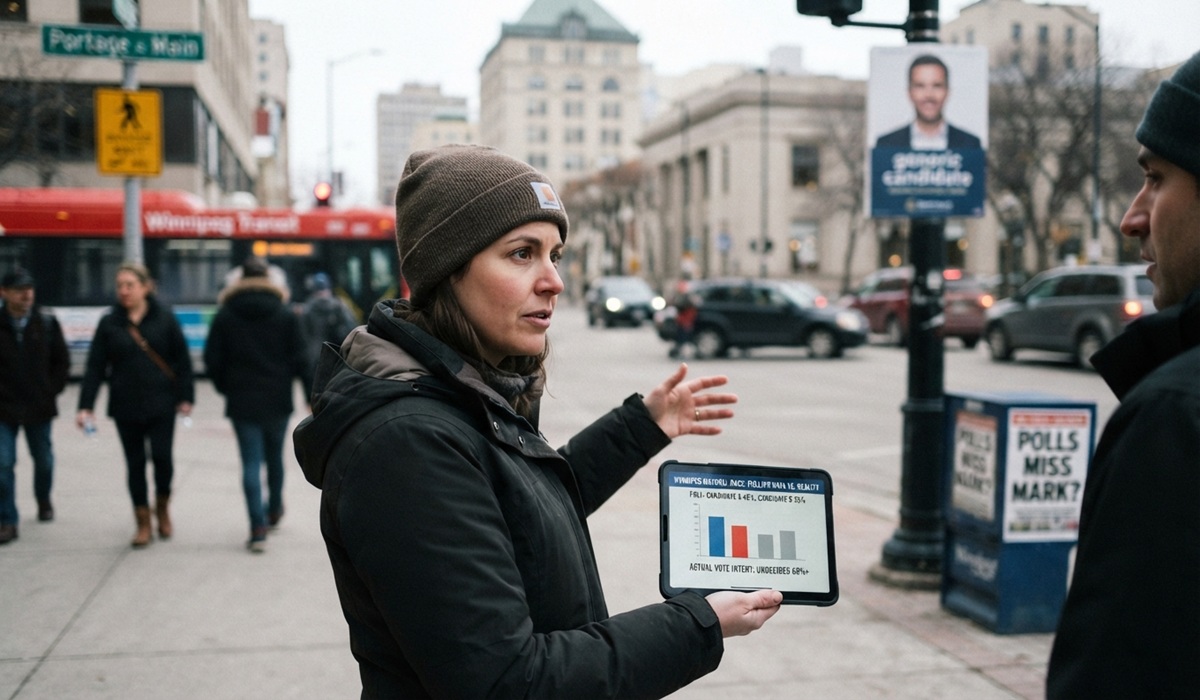
A brand-new Abacus Data and Probe Research poll published by the Winnipeg Free Press is trying to present a clear picture of the mayoral race, but a close look at the math raises serious questions about how it was constructed. Under no circumstances should anyone accept that the opinions of fewer than six hundred individuals can speak for a growing metropolis of nearly eight hundred thousand residents. If we are truly expected to believe that a few hundred people speak for this entire city, then that is a rediculous idea.
When you break down the raw numbers, the illusion of a representative sample completely shatters. Winnipeg is home to a population approaching eight hundred thousand people. A sample size of six hundred respondents represents a microscopic 0.075% of the city’s total population, meaning the poll ignores more than 99.9% of the community. To claim that this fraction reflects society as a whole is a narrative that desperately needs to be retired. No one in their right mind can look at a figure that small and trust it as a reflection of a major urban center. In fact, these numbers have become something of a local meme and a laughing stock, which explains why the public increasingly tunes them out and why more alternative surveys keep emerging. People can see the reality of their city with their own eyes and recognize a statistical exercise that bears no weight on actual civic life.
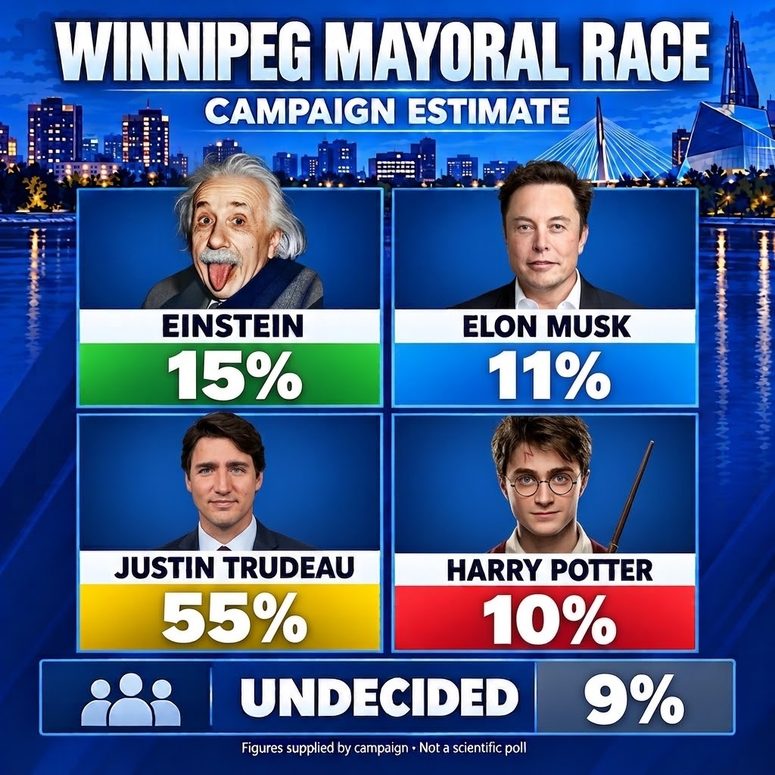
When breaking down the actual data even further, the poll’s grand projections lose their footing under basic mathematical scrutiny. The survey starts with that sample of six hundred Winnipeg adults, but a striking fifty-one percent of those respondents stated they were unsure, while another thirteen percent declared they would not vote. When those groups are removed, the narrative of a leading candidate is pulled from a tiny subset of roughly two hundred and sixty-four decided voters. Slicing that small group across a multi-candidate field means the headline figures are propped up by barely over one hundred people out of a population of nearly eight hundred thousand. Building broad assumptions on such a narrow slice of responses stretches statistical interpretation to its absolute limits.
Furthermore, we must examine what this survey completely leaves out. Are we to believe that the everyday realities facing Winnipeg are simply bypassed? Where are the critical questions asking voters if they want real change to end the homelessness crisis, public drug use, addiction, and safety concerns across our neighborhoods? Where are the inquiries about rising municipal water utility rates? The survey fails to reflect what students, seniors, and working families truly prioritize.
Moreover, the poll completely ignores what candidates are achieving on the ground through direct dialogue, failing to measure how many thousands of citizens candidates have personally engaged with. Are we to consider it reasonable that someone like Don Woodstock, who has driven Winnipeg Transit for nearly a decade, belongs to a family deeply rooted in transit members, and put forward a comprehensive transit plan that earned strong support at the debate, is treated as an afterthought? Are we to dismiss the fact that Winnipeggers are crying out for genuine change in public transit and city leadership?
History shows that early surveys often fail to capture the final direction of an electorate. In the previous municipal cycle, published polling heavily pointed toward Glen Murray taking the mayoral office, only for Scott Gillingham to ultimately secure victory on election day. Pre-election surveys capture a brief, temporary moment under artificial conditions rather than the true intent of the voters.
Ultimately, these published numbers cannot replace or accurately predict the final choice of the public. True democratic outcomes are decided by the voters who show up on election day, proving that static polls fall far short of reflecting the true voice of Winnipeg.
About The Author