The Rapid Evolution Of Artificial Intelligence And Humanoid Robotics Blurs The Line Between Science Fiction And Industrial Reality
- Kingston Bailey
- AI
- Tiger's Eye Advisory Group - Trending News
- August 26, 2026
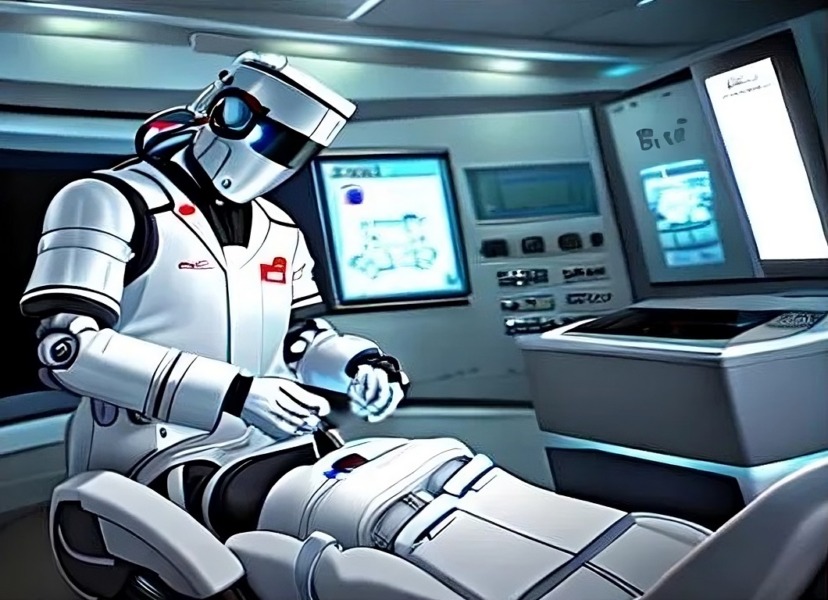
The field of artificial intelligence and advanced robotics is experiencing an unprecedented surge in development, marked by extraordinary engineering milestones that are rapidly shifting humanoid machines from theoretical research laboratories into active commercial and public domains. International showcases and athletic exhibitions featuring advanced bipedal robots have captured global headlines, demonstrating astonishing leaps in locomotive speed, mechanical agility, and physical responsiveness. Engineering teams have successfully pushed machines to shatter previous performance benchmarks, recording sprinting speeds and jumping heights that challenge traditional assumptions about the physical limitations of automated systems and spark intense public fascination worldwide.
Behind the viral clips and exhibition showcases lies a rapidly maturing commercial marketplace characterized by heavy corporate investment and aggressive scaling strategies. Market analysts have significantly revised their long-term valuation forecasts upward, driven by faster than anticipated algorithmic progress and a steady reduction in the manufacturing costs of specialized hardware components.Industrial manufacturers, logistics giants, and warehousing enterprises are increasingly deploying automated solutions to combat labor shortages and optimize supply chain efficiency. While industrial robotic arms and automated guided vehicles have been fixtures of factory floors for decades, the current wave of humanoid and highly adaptable multi-purpose robots promises to introduce versatile automation capable of operating within spaces originally designed exclusively for human workers.
High-profile athletic showcases, such as international bipedal competitions and Olympic-style technology trials, have dramatically underscored how far mechanical mobility has advanced. Machines engineered by pioneering global laboratories are now shattering traditional physical benchmarks, executing high-speed sprints and intricate obstacle navigation that rival human athletic prowess. These public demonstrations go far beyond mere entertainment spectacles, serving as rigorous stress tests for actuators, dynamic balancing algorithms, and real-time computing systems. When bipedal systems operate at extreme velocities, engineering teams gain invaluable data on structural integrity, thermal management, and rapid error recovery, ensuring that the transition from controlled laboratory testing to unpredictable real-world environments remains safe and reliable.
Major automotive manufacturers and logistics conglomerates are moving past experimental trials to integrate humanoid hardware directly into active commercial supply chains.Strategic capital investments and multi-million-dollar funding rounds are accelerating the production scale of general-purpose robots designed to handle repetitive material transport and assembly tasks. By deploying these versatile machines into structured pilot programs, enterprises aim to mitigate acute labor shortages while carefully evaluating long-term operational efficiency and maintenance overhead. As component costs compress and artificial intelligence foundation models continue to improve, the commercial landscape is shifting toward scalable deployment models that promise to redefine the foundational mechanics of modern industrial labor.
This technological progression has naturally ignited intense debate regarding the future of the global workforce and the socio-economic implications of widespread automation. Economic research organizations and labor experts project that automation and advanced robotics will continue to displace certain categories of routine physical and administrative labor, even as they create new technical roles in system architecture, maintenance, and programming. For contemporary enterprises, the strategic focus is shifting toward workforce planning that emphasizes augmentation rather than outright replacement. Forward-thinking organizations are actively training existing personnel to collaborate alongside advanced software and robotic tools, viewing technological adaptation as a continuous process rather than a sudden displacement event.
As artificial intelligence models become increasingly integrated into physical robotic hardware, the boundary between digital software intelligence and physical mechanical action continues to dissolve. The capability of machines to process real-time environmental data, learn from physical trial and error, and execute complex manipulation tasks opens up vast new application areas ranging from elder care and disaster response to hazardous industrial maintenance. However, this expansion also brings critical ethical, regulatory, and safety questions to the forefront. Policymakers, technologists, and ethicists are racing to establish robust governance frameworks to ensure that the deployment of autonomous systems remains safe, transparent, and aligned with human values as society steps firmly into a new era of technological coexistence.
About The Author