DR Congo: Ebola outbreak a crisis within a neglected crisis
- TDS News
- Africa
- Tiger's Eye Advisory Group - Trending News
- July 10, 2026
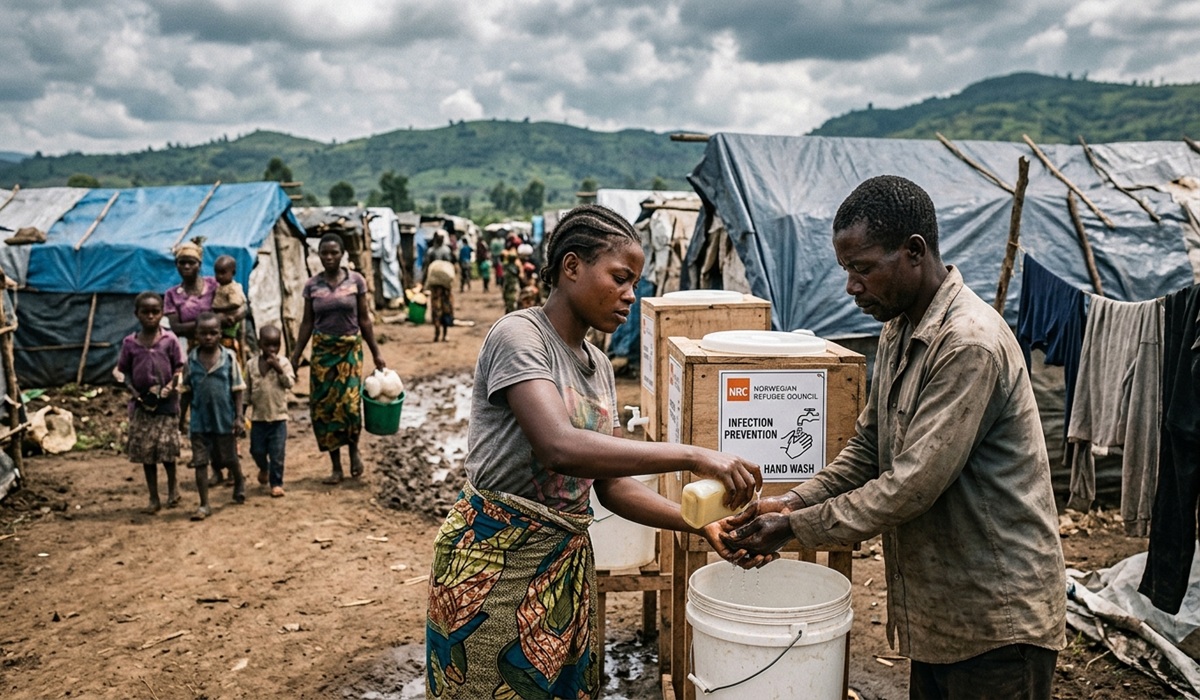
BENI, Democratic Republic of Congo — A deadly outbreak of the Bundibugyo Ebola virus is rapidly escalating in the eastern region of the Democratic Republic of Congo, tearing through communities already exhausted by decades of armed conflict, relentless displacement and systemic international neglect, humanitarian officials said.
The medical emergency cannot be separated from the ongoing humanitarian catastrophe, according to Eric Batonon, the country director for the Norwegian Refugee Council in the DRC.
The epicenter of the current outbreak is Ituri province, a region where hundreds of thousands of displaced people live in squalid, overcrowded conditions. Armed groups continue to clash violently for control of land and lucrative mineral wealth, forcing families to flee their homes repeatedly.
Batonon said displaced communities have faced years in shelters designed for temporary stay, with poor sanitation and little access to health care. He added that as armed groups have fought for control of land and valuable minerals, donors and diplomats have often looked the other way, abandoning millions to lives dominated by repeated displacement and deprivation. This severe lack of infrastructure and basic sanitation has created a perfect storm, allowing the Ebola virus to take hold and causing case numbers to spike dramatically.
Experience from past epidemics shows that medical interventions alone are not enough to halt transmission. The NRC emphasizes that a successful strategy requires rebuilding trust with a population that has long felt abandoned by the outside world.
Batonon noted that infection prevention and control measures have a vital role to play in the response, emphasizing that local populations must be at the forefront of the strategy. He said Ebola can only be stopped when communities’ priorities dictate policy.
In response to the rising caseloads, NRC teams in Ituri are stepping up emergency operations. Their current efforts include establishing public handwashing stations and distributing essential hygiene products to bolster infection control. Teams are also implementing safety measures in schools so children can continue learning safely, while simultaneously evaluating the specific vulnerabilities of the millions of internally displaced persons across Ituri, North Kivu and South Kivu to better tailor aid delivery in crowded camps.
The current health crisis highlights a broader, chronic failure of international aid. For 10 consecutive years, the DRC has appeared on the NRC’s annual list of the world’s top neglected displacement crises.
Humanitarian funding data paints a stark picture of this ongoing deficit. The current humanitarian response plan is only 53.9% funded, with 756.1 million of the required 1.4 billion dollars delivered. This follows years of severe underfunding, with the response plan just 27.7% funded in 2025 and 51.4% funded in 2024.
While international companies continue to generate massive profits from the DRC’s rich natural resources, the humanitarian response remains chronically short of what is needed to save lives. At the end of 2025, more than 4.3 million people were internally displaced across the country, including 932,000 recorded displacements in Ituri province alone throughout the year.
The NRC is calling on international donors to immediately ramp up flexible, sustained funding and political engagement. Batonon said aid must move faster than the virus itself, not only to contain the immediate Ebola outbreak but to address the deep-seated poverty and systemic deprivation that allowed the disease to spread so rapidly in the first place.
About The Author