Burkina Faso at a Crossroads: Security, Sovereignty, and the Challenge of Building a Nation in Crisis
- Hami Aziz
- Africa
- Tiger's Eye Advisory Group - Trending News
- June 26, 2026
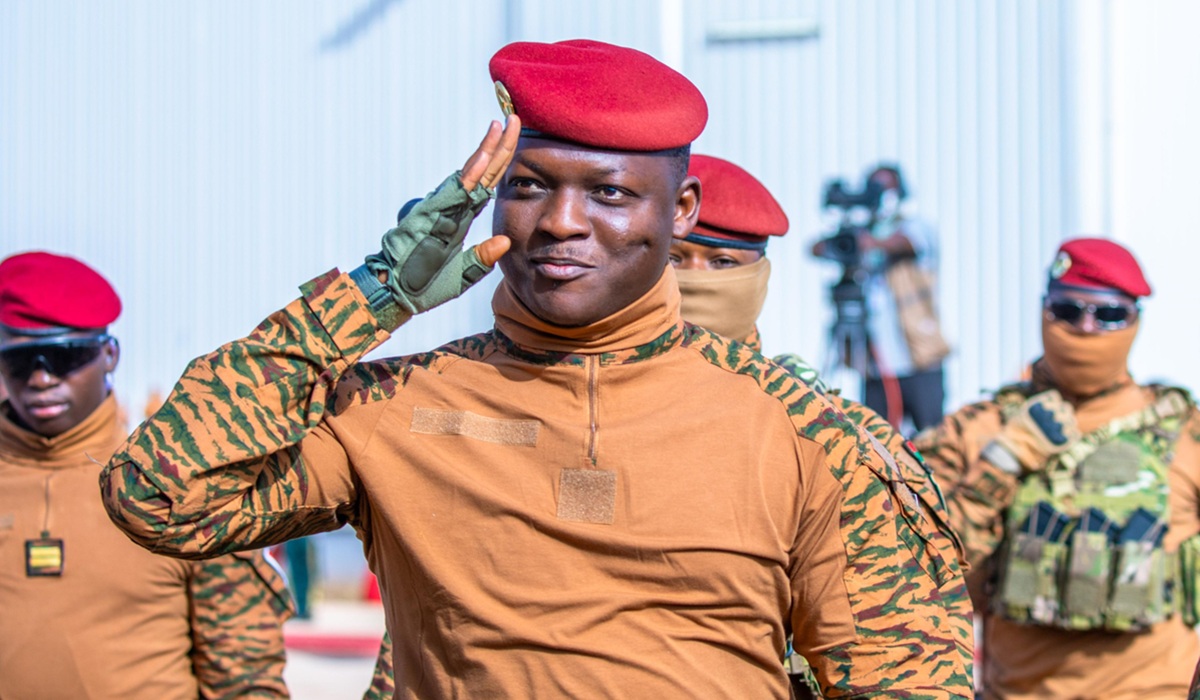
Burkina Faso continues to stand at one of the most consequential crossroads in its modern history. While the military-led government insists it is rebuilding the country around national sovereignty, economic self-reliance, and security, the reality on the ground remains extraordinarily complex. Nearly four years after Captain Ibrahim Traoré assumed power, the country continues to battle an Islamist insurgency that has displaced millions, strained public services, and transformed daily life for countless families. At the same time, the government has embarked on sweeping political, economic, and institutional reforms that supporters describe as necessary for national renewal while critics argue they come at the expense of democratic freedoms.
The security situation remains the government’s foremost challenge. Armed groups affiliated with al-Qaeda and the so-called Islamic State continue to operate across large portions of the country, carrying out attacks on military positions, villages, and transportation routes. Although the government has invested heavily in expanding the military and local volunteer defence forces, violence continues to affect many rural communities, making humanitarian assistance and economic development increasingly difficult. Security analysts also warn that militant activity is becoming more coordinated across the wider Sahel region, affecting neighbouring Mali and Niger as well.
The regional threat has become increasingly evident in recent weeks following major attacks in neighbouring Niger that demonstrated extremist groups are expanding their operations beyond remote rural areas and increasingly targeting strategic urban infrastructure. Security experts believe the instability affecting Burkina Faso cannot be viewed in isolation, but rather as part of a broader regional conflict that continues to evolve across West Africa. As neighbouring countries face similar threats, cooperation among Sahel governments has become more important than ever.
Despite those ongoing security concerns, President Ibrahim Traoré’s government maintains that significant progress is being made. Officials argue that rebuilding Burkina Faso requires more than military operations alone. They have emphasized strengthening domestic agriculture, increasing local manufacturing, investing in infrastructure, and reducing reliance on foreign assistance. The government’s long-term development framework seeks to create a more self-sufficient economy capable of supporting national growth while reducing external economic dependence.
That vision has resonated with many Burkinabè citizens who believe previous governments failed to adequately address corruption, insecurity, and underdevelopment. Across much of Africa, Traoré has also become a symbol of a broader movement advocating greater African sovereignty and reduced foreign influence in domestic affairs. His emphasis on national ownership of resources and independent decision-making has attracted supporters well beyond Burkina Faso’s borders.
At the same time, the government’s consolidation of power continues to generate international attention. Earlier this year, authorities dissolved all political parties as part of what officials described as a restructuring of the country’s political system. Government representatives argued that the previous party structure had become ineffective and contributed to political divisions rather than national unity. Critics, however, contend that eliminating political parties significantly reduces opportunities for democratic participation and political competition.
Human rights organizations have also expressed concern over restrictions affecting civil society organizations, media outlets, and political opposition. Several international groups argue that the government’s efforts to strengthen national security have coincided with increased limitations on public criticism and political dissent. Burkina Faso’s leadership has rejected accusations of authoritarianism, maintaining that extraordinary security circumstances require extraordinary measures until stability is restored.
These competing narratives have created one of the most closely watched political environments in Africa. Supporters argue that it is difficult to hold conventional democratic elections while large areas of the country remain affected by insurgent violence. They believe restoring security must take precedence before returning to full civilian political competition. Opponents respond that postponing democratic institutions indefinitely risks weakening accountability and concentrating too much power within the executive branch.
The humanitarian situation remains equally challenging. Millions of people across Burkina Faso continue to require assistance as conflict has forced families from their homes and disrupted farming, education, and healthcare. Entire communities have faced repeated displacement, making long-term recovery increasingly difficult. International humanitarian organizations continue to provide support, but security conditions often limit access to some of the country’s most vulnerable populations.
Economic development has therefore become inseparable from national security. Investors generally require stability before committing significant capital, while infrastructure projects become more difficult and expensive in conflict-affected regions. The government has nevertheless continued promoting domestic investment and encouraging greater processing of Burkina Faso’s natural resources within the country rather than exporting raw materials abroad. Officials argue that retaining more economic value domestically will strengthen public finances and create employment opportunities for future generations.
The broader geopolitical landscape has also shifted considerably. Burkina Faso has strengthened its relationships with fellow Sahel governments while reducing traditional security cooperation with several Western partners. Instead, the country has increasingly emphasized regional alliances built around common security interests and greater political independence. These changes reflect a broader transformation occurring across parts of West Africa as governments reassess longstanding diplomatic and military partnerships.
For ordinary citizens, however, the most pressing concerns remain remarkably consistent. Families want security, stable employment, functioning schools, reliable healthcare, and the opportunity to build better futures for their children. Whether those objectives are achieved through military-led governance or an eventual return to broader democratic participation is a debate that continues both inside and outside the country. Ultimately, most Burkinabè will likely judge their leaders not by political ideology but by tangible improvements in safety and quality of life.
Burkina Faso’s future, therefore, remains optimistic, but it is far from predetermined. The country possesses significant agricultural potential, valuable natural resources, and a young population eager for opportunity. Those strengths provide a foundation for long-term growth if security conditions improve and sustained investment becomes possible. At the same time, continued instability would risk prolonging humanitarian suffering and slowing economic progress for years to come.
The challenges facing Burkina Faso cannot be reduced to simple narratives of success or failure. The government is pursuing an ambitious vision of national sovereignty while confronting one of the most difficult security environments on the African continent. Its supporters see a nation reclaiming its future through self-determination, while critics worry that democratic institutions and civil liberties are paying the price. Both perspectives contain important truths, and both reflect the difficult realities confronting a country attempting to rebuild itself during an ongoing conflict.
As Burkina Faso moves through 2026, one fact remains beyond dispute. The decisions made today—on security, governance, economic development, and national reconciliation—will shape the country’s trajectory for decades to come. Whether those choices ultimately produce lasting stability or deepen existing divisions will not only influence Burkina Faso itself but also help define the future of the wider Sahel region.
About The Author