Middle East: Khamenei Funeral, Lebanon Deal and Regional Tension Keep the Region on Edge
- Hami Aziz
- Tiger's Eye Advisory Group - Trending News
- Middle East
- July 6, 2026
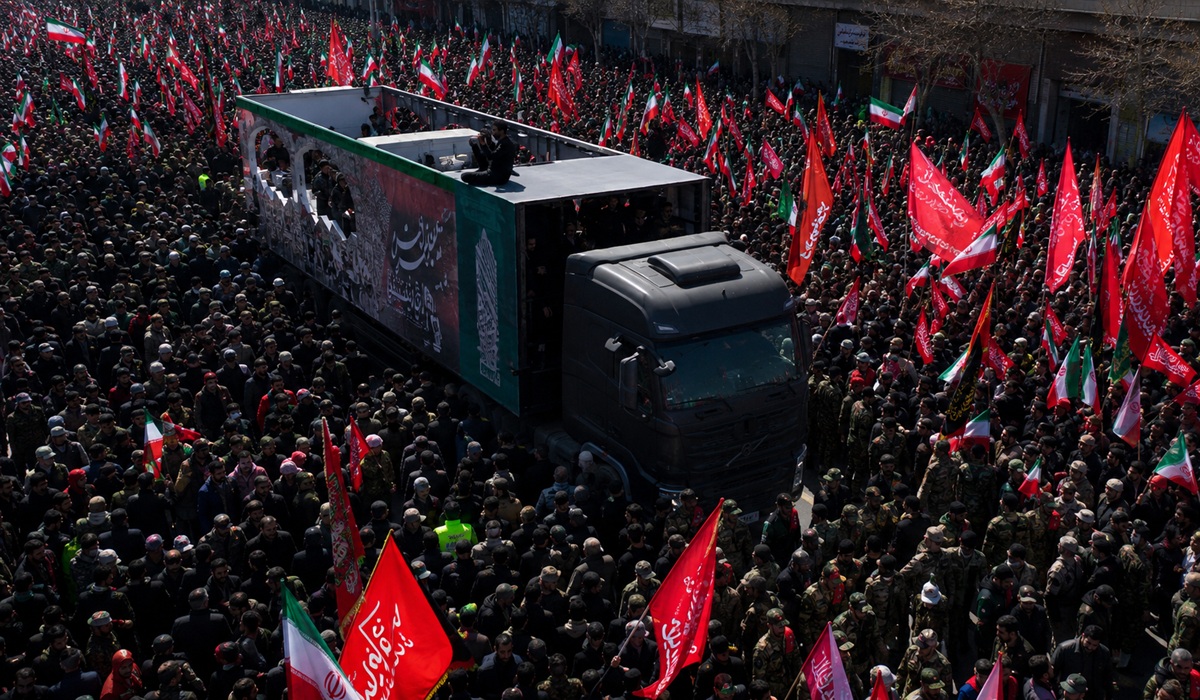
The Middle East is again moving through a dangerous and uncertain moment, with Iran’s leadership transition, Israel’s military posture, Lebanon’s fragile ceasefire framework and continuing violence in Gaza and Lebanon all colliding at once. Huge crowds gathered in Tehran for the funeral procession of Iran’s late Supreme Leader Ali Khamenei, while reporting noted that his successor, Mojtaba Khamenei, has still not been publicly seen. That absence has become part of the story, raising questions about how Iran’s new leadership intends to project control after one of the most consequential shocks to the Islamic Republic in decades.
The funeral is not only a domestic Iranian event. It is a regional signal. In Iran, state funerals for senior leaders are designed to show continuity, discipline and defiance. But this moment is more complicated. The death of Khamenei after U.S. and Israeli airstrikes has left Iran trying to mourn, consolidate authority and avoid appearing weakened. The presence of his sons at the funeral, combined with the continued public absence of Mojtaba, adds another layer to the uncertainty.
At the same time, the Israel-Lebanon front remains unresolved. A U.S.-mediated framework between Israel and Lebanon is being described as a possible path away from open war, but analysts warn it may instead lock both sides into a new stalemate. The framework reportedly ties Israeli withdrawal from southern Lebanon to the disarmament of Hezbollah by the Lebanese Armed Forces, beginning in designated pilot zones. On paper, that sounds like a roadmap. In practice, it asks Lebanon’s fragile state to confront the most powerful armed organization in the country.
That is why the agreement is being viewed with deep skepticism. Hezbollah has rejected disarmament, and Lebanon’s government does not have unlimited capacity to force the issue without risking internal conflict. Israel, meanwhile, has made clear it will not leave southern Lebanon while Hezbollah remains a threat. Prime Minister Benjamin Netanyahu recently visited occupied Lebanese territory and told soldiers Israel would not withdraw yet, reinforcing the reality that the agreement has not produced a clean exit or a settled peace.
The danger is that diplomacy becomes a holding pattern rather than a solution. If Israel stays in southern Lebanon, Hezbollah keeps its weapons and the Lebanese government is unable to impose the terms of the deal, the region may end up with neither full war nor real peace. That kind of frozen conflict can still be deadly. It creates space for miscalculation, local clashes, political assassinations, rocket fire, airstrikes and renewed displacement.
Turkey is also stepping into the diplomatic picture. President Recep Tayyip Erdogan warned that Israel must not undermine a U.S.-Iran deal reportedly mediated with Pakistani involvement, saying sustainable peace requires regional countries to be part of the process. His comments reflect a wider concern that even if Washington and Tehran find a channel to reduce direct conflict, Israel, Hezbollah, Lebanon, Syria, Gaza and regional powers can still pull the region back toward confrontation.
Gaza remains central to the moral and political pressure on the region. Israeli military action there continues to draw international criticism, while the humanitarian situation remains a major driver of anger across the Arab and Muslim world. Lebanon and Gaza are separate theatres, but they are politically connected. Hezbollah has long justified its actions in part through support for Palestinians, and Iran’s regional network uses Gaza as both a cause and a pressure point.
The broader reality is that the Middle East is now dealing with several crises at once. Iran is trying to manage succession. Israel is trying to preserve security dominance after a period of expanded military confrontation. Lebanon is trying to avoid collapse while being asked to solve a problem that has defeated governments for decades. The United States is trying to hold together diplomacy while remaining deeply tied to Israel’s security posture. Regional powers like Turkey and Pakistan are trying to shape the next phase before events outrun them.
This is why the next days matter. Public appearances in Tehran, statements from Iran’s new leadership, Israeli troop movements in Lebanon, Hezbollah’s response to disarmament pressure and any progress on a U.S.-Iran understanding will all shape whether the region cools or ignites again. The funeral may look like the headline, but the real story is succession, leverage and whether any side believes diplomacy can deliver more than battlefield positioning.
For now, the Middle East is not moving toward a simple resolution. It is moving through a tense pause, where each actor is watching the others for weakness. That is often the most dangerous kind of moment, because the absence of full-scale war can be mistaken for stability. In this case, stability has not arrived. It is still being negotiated under pressure, through grief, force and deep mistrust.
About The Author