Woodstock Emerges as Clear Mayoral Frontrunner on Solving Winnipeg’s Transit Crisis
- Contributor
- Canada
- June 8, 2026
There is a growing sense that Winnipeg’s transit overhaul will become one of the defining issues of the 2026 mayoral race, and not because of route maps, consultant reports, or planning jargon. For many residents, the issue is far more personal. They want to know why a system they depended upon became more complicated, why familiar stops disappeared, why trips became longer, and why they were repeatedly told these changes represented progress when their daily experience often suggested otherwise. As the campaign intensifies, public transportation is becoming less about buses and more about accountability, trust, and whether City Hall truly understands the consequences of the decisions it makes.
For the lst couple of years, the redesign was sold as modernization. Residents were told the changes would create a more efficient and reliable network capable of serving a growing city. Yet many riders experienced something very different. Longer walks, more transfers, missed connections, increased confusion, and a growing sense that the people making decisions were becoming disconnected from the people using the service became recurring complaints throughout Winnipeg. While politicians and consultants spoke about efficiency, many residents were simply trying to figure out why getting across the city suddenly became more difficult.
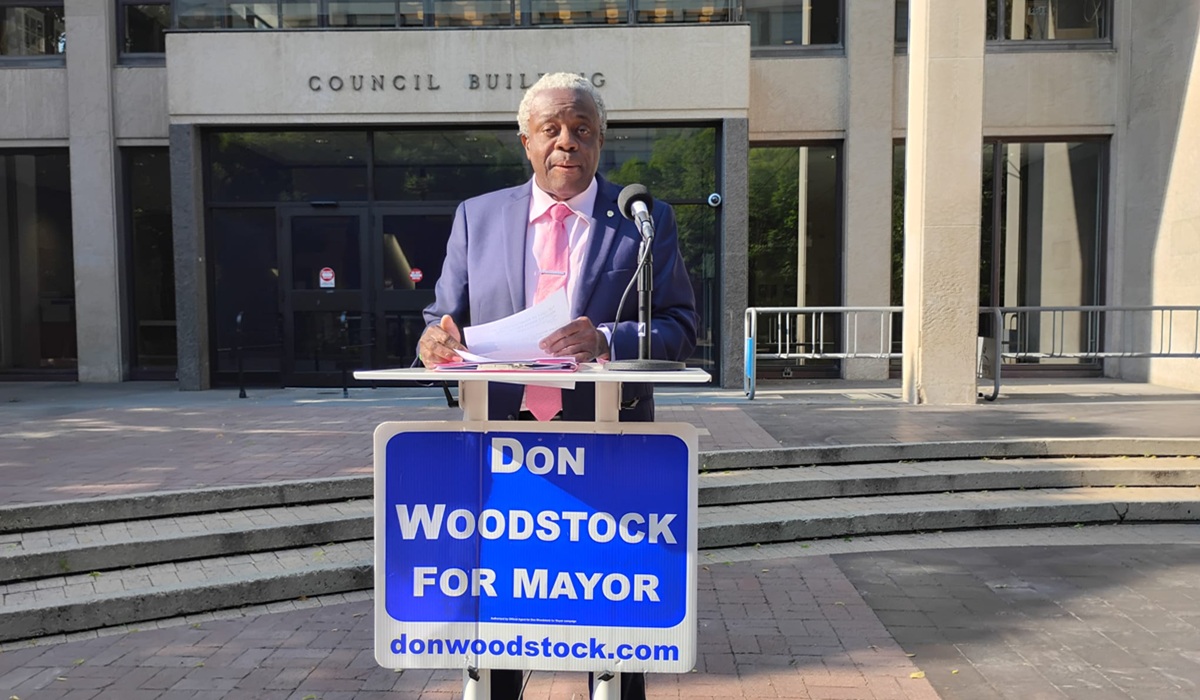
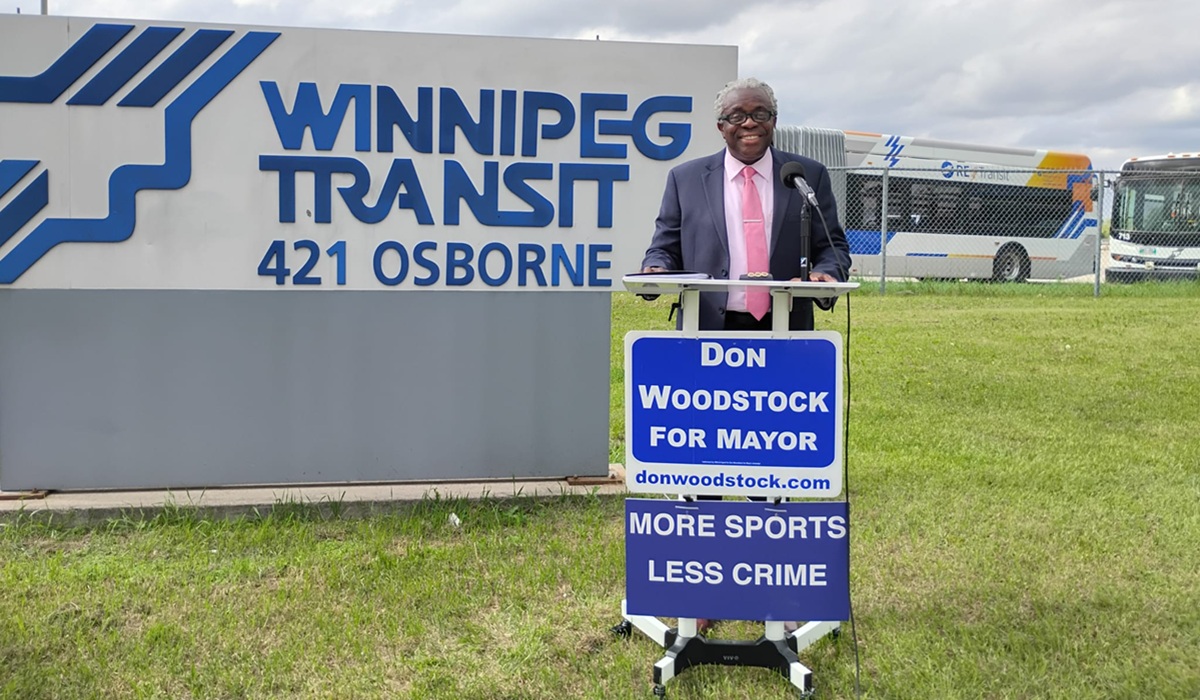
That frustration helps explain why Don Woodstock’s transit platform has generated significant attention. Unlike every other candidate seeking the mayor’s office, he is the only one with experience operating Winnipeg Transit buses. That distinction does provide something that cannot be manufactured during an election campaign: firsthand knowledge of how the system operates from the inside. Having worked alongside operators, supervisors, dispatchers, and riders, he is approaching the issue from a perspective that no other candidate can legitimately claim.
At the centre of his argument is a claim that is likely to dominate discussion in the weeks ahead. He believes Winnipeggers were deeply and intentionally misled about the real reasons behind many of the changes that reshaped public transportation across the city. According to the campaign, the primary issue was not route design, bus stops, or planning philosophy. The issue was attrition. The transit overhaul, in this view, was not the cause of the crisis. It was the result of a crisis that had already been developing inside the organization for years.
As experienced operators retired, resigned, transferred to other careers, or simply chose to leave, vacancies continued to grow. Fewer operators meant fewer buses available to provide service. Fewer buses available to provide service meant more difficult decisions had to be made about routes, scheduling, and coverage. According to the campaign, buses were not sitting in garages because routes were poorly designed. They were sitting in garages because there were not enough operators available to drive them.
The reasons behind that attrition are equally important. Speaking with former operators and employees who remain within the system, the campaign points to growing frustration among frontline workers who felt their concerns were not being adequately heard. Complaints surrounding communication, morale, scheduling, workplace culture, disciplinary practices, and management decisions became recurring themes long before the redesign ever occurred. While every workplace experiences disagreements, many operators felt their concerns were dismissed rather than addressed.
One issue frequently raised involved collisions and incidents where operators believed they were being treated unfairly. Some employees felt that even when investigations conducted by Manitoba Public Insurance (MPI) cleared them of wrongdoing, they could still face internal consequences or disciplinary actions. Whether those perceptions were always justified is ultimately a matter of debate, but the perception itself became a significant morale issue among many drivers. In any organization, perception matters, and when employees lose confidence that they are being treated fairly, retention inevitably becomes more difficult.
Safety concerns also played a major role. Operators increasingly found themselves dealing with assaults, threats, disruptive behaviour, mental health crises, and drug-related incidents while simply trying to do their jobs. Although protective barriers were installed on buses, many drivers felt those measures did not adequately address the realities they faced every day. Repeated exposure to stressful and sometimes dangerous situations created growing frustration among employees who felt more needed to be done to protect those working on the front lines.
Mental health emerged as another significant concern. Driving a bus is often viewed as a routine occupation by those outside the profession, yet operators regularly encounter traumatic incidents, confrontations, collisions, medical emergencies, and highly stressful situations. According to the campaign, many employees felt the psychological toll of those experiences was not always fully recognized. Over time, those pressures contributed to burnout, declining morale, and ultimately attrition.
Viewed through that lens, the redesign begins to look very different. Instead of being the cause of the crisis, it becomes the result of a crisis that City Hall failed to properly address. As morale suffered and experienced operators left the system, millions of taxpayer dollars were spent on outside consultants to redesign service around a shrinking workforce. Critics argue that while the redesign may have addressed short-term operational realities, it failed to address the underlying problem that created those realities in the first place.
Perhaps nowhere were the consequences felt more acutely than among seniors. Many of the stops removed during the redesign had existed for years because they served apartment buildings, seniors housing complexes, medical facilities, and neighbourhood destinations. While increasing the distance between stops may have appeared efficient on a consultant’s report, it created real-world hardships for many residents. Seniors using walkers, canes, wheelchairs, or living with mobility challenges suddenly found themselves walking farther through snow, ice, freezing temperatures, and dangerous winter conditions simply to reach a bus stop. After making that longer walk, many were left standing in the cold wondering whether the bus would arrive on time, creating additional stress for people trying to attend medical appointments, buy groceries, or visit family.
The impact extended well beyond seniors. Students faced longer commutes and missed connections that affected their ability to arrive at school on time. Parents adjusted family schedules around changing routes. Workers struggled with reliability issues that affected their jobs. Medical appointments were missed. These consequences rarely appear in consultant presentations, but they are the experiences people remember when evaluating whether a policy actually improved their lives.
What ultimately separates this campaign from the rest of the field is not simply experience. It is the fact that there is a detailed explanation for what went wrong and a comprehensive plan for how to fix it. Throughout the campaign, voters have heard repeated promises about improving public transportation. Nearly every candidate agrees the system needs fixing. What has been largely absent, however, is a detailed diagnosis of the problem itself. Saying transit needs to be fixed is easy. Explaining why it broke, identifying the decisions that contributed to the breakdown, and presenting a workable plan to address those issues is considerably more difficult.
That distinction is becoming increasingly important as more proposals enter the public discussion. Some ideas may generate headlines, but headlines do not necessarily translate into effective public policy. One proposal, for example, would require all passengers to produce identification before boarding buses and involve police intervention when disputes arise. While the objective may be public safety, the practical result would be predictable. Buses would be delayed. Transfers would be missed. Service reliability would suffer. Police resources would be redirected from other priorities. Most importantly, the underlying causes of disorder would remain unresolved.
There is also a practical reality that makes such a proposal difficult to defend. Not every person who uses public transportation carries government-issued identification at all times. Some riders have lost their identification, some are waiting for replacement documents, some are vulnerable individuals navigating difficult circumstances, and some are experiencing homelessness while still possessing valid fare. Under such a policy, a person could have the money to pay for a ride and still be denied access to the system.
In a city where winter temperatures routinely plunge well below freezing, that is not a minor administrative issue. It becomes a public safety issue. Denying access to transportation because someone cannot immediately produce identification does not solve homelessness, addiction, mental health challenges, or public disorder. It simply moves those problems elsewhere while creating new risks for vulnerable people and new operational challenges for transit. Good public policy solves problems. It does not create larger ones. That is why critics argue this proposal reflects a misunderstanding of both how public transportation works and the role it plays in a northern city where access to safe transportation can, at times, be a matter of personal safety.
Transit systems are designed around one core principle: keep people moving safely, efficiently, and reliably. Policies that intentionally slow service, increase passenger confrontations, and create additional operational barriers do not improve performance. They create new challenges on top of existing ones. That is not a matter of political opinion. It is a matter of how transportation systems function. Proposals that ignore those realities reveal a fundamental misunderstanding of how the system operates and why previous decisions produced the results they did.
This is where experience becomes impossible to ignore. Understanding how routes interact, how schedules are built, how transfers connect, how operator shortages affect service, and how small disruptions ripple across an entire network requires more than campaign talking points. It requires firsthand knowledge of the system itself. That perspective is one reason this campaign has increasingly become the focal point of the transit debate.
The broader reality is that no other candidate has presented a transit platform approaching this level of detail. While others continue speaking in general terms about fixing service, improving safety, or restoring confidence, this campaign has placed specific proposals, specific explanations, and specific accountability measures before the public. Residents may ultimately agree or disagree with individual elements of the plan, but they can evaluate it because it exists.
As Election Day approaches, the discussion is becoming less about who recognizes there is a problem and more about who understands the problem well enough to solve it. On that question, one candidate has clearly established himself as the most knowledgeable voice in the race. More importantly, he has forced a conversation that many believe should have happened years ago about attrition, accountability, morale, leadership, and the decisions that reshaped public transportation in Winnipeg.
For that reason, transit may ultimately become one of the issues that defines the election itself. While other candidates continue speaking in broad terms about fixing the system, one campaign has offered a detailed explanation for what went wrong and a comprehensive proposal for how to move forward. Whether voters ultimately embrace that vision remains to be seen, but there is little question that the debate surrounding Winnipeg Transit now has a clear frontrunner, and the conversation is no longer taking place on City Hall’s terms.s a frontrunner, and the debate is unlikely to be the same going forward.
About The Author