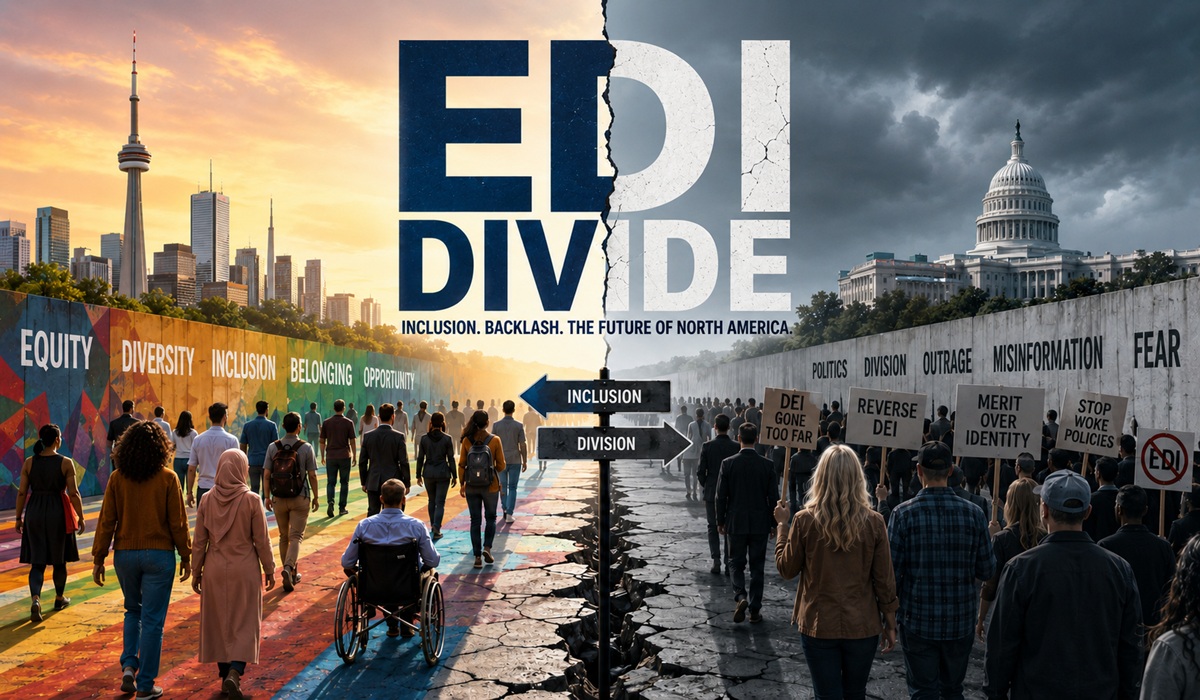
The EDI Divide: Inclusion, Backlash and the Future of North America
- TDS News
- Tiger's Eye Advisory Group - Trending News
- May 26, 2026
By: Donovan Martin Sr, Editor in Chief
There was a time when conversations around equity, diversity and inclusion, commonly referred to as EDI in Canada and DEI in the United States, felt less like a political battleground and more like a reflection of a changing society. Businesses embraced the language openly. Universities expanded programs aimed at improving representation and accessibility. Governments introduced initiatives intended to address long-standing barriers affecting marginalized communities. For many people, the concept was relatively straightforward. A modern society should strive to ensure opportunity is not limited by race, gender, disability, religion, economic background or identity.
Over time, however, EDI became one of the most polarizing discussions in North America. What began as an effort to broaden participation and representation inside institutions gradually became entangled in political messaging, media narratives and cultural anxiety. Today, the mere mention of EDI, or DEI as it is more commonly referred to south of the border, can ignite fierce reactions online, in workplaces, inside classrooms and across election campaigns. Yet beneath the outrage and rhetoric, there remains a far more important conversation about fairness, access and the kind of society future generations hope to inherit.
Part of the reason EDI became so widespread is because North America itself changed. Cities became more multicultural. Workforces became more diverse. Younger generations entered schools and workplaces with different expectations around inclusion and representation. Companies also recognized that diversity was not simply a social issue, but increasingly an economic reality. Businesses serving broad populations understood that leadership teams, marketing campaigns and hiring practices needed to better reflect the communities around them. In many industries, inclusion was viewed not only as morally responsible, but also as practical and forward-thinking.
“Inclusion is not excluding anyone from the table. EDI was never meant to make people feel excluded from opportunity — it was meant to challenge the systems that excluded people in the first place. The real conversation is not about politics or performative statements, it is about whether we are willing to create workplaces, schools, and communities where more people genuinely feel seen, respected, and able to contribute.” — Denise Young, Tiger’s Eye Advisory Group
For countless people, EDI initiatives created opportunities that may never have existed otherwise. Women entered leadership positions in greater numbers. Accessibility standards improved for people living with disabilities. Employers became more aware of unconscious bias and barriers affecting hiring and advancement. Students from historically underrepresented communities saw themselves reflected in classrooms, scholarship opportunities and faculty positions. For a young immigrant, Indigenous student or racialized employee, representation often carried meaning beyond symbolism. It signaled that institutions were beginning, however imperfectly, to acknowledge experiences that had long been ignored.
The movement also gained enormous momentum following the social unrest and racial justice demonstrations that swept across North America in 2020 after the murder of George Floyd. Corporations, governments and educational institutions moved quickly to announce inclusion strategies, equity commitments and internal reviews. Some of those efforts led to meaningful reforms and overdue conversations. Others were criticized as performative gestures designed more for public relations than lasting change. Still, the period marked a turning point where EDI became deeply embedded in public consciousness.
As the visibility of EDI increased, so did the backlash surrounding it. Critics questioned whether some initiatives focused too heavily on identity categories while overlooking broader economic struggles affecting people across all backgrounds. Others argued certain policies or training programs unintentionally created division or resentment rather than unity. Social media amplified the most extreme examples from all sides, turning nuanced discussions into emotionally charged ideological battles. In many cases, the loudest voices online overshadowed the quieter reality that most people simply want fair opportunities, respectful workplaces and institutions that function equitably.
Supporting EDI, however, does not require pretending every initiative has been perfectly executed. No large-scale social effort unfolds without mistakes, adjustments or growing pains. Some programs were implemented too quickly. Some organizations adopted the language of inclusion without meaningfully changing workplace culture underneath it. Yet acknowledging imperfections is not the same as rejecting the broader purpose behind equity and inclusion efforts altogether. In fact, thoughtful reflection may be necessary if these initiatives are to maintain public trust and evolve successfully over time.
“As someone who works in leadership and inclusion, I believe all people want to feel they belong and are included. However EDI initiatives can unintentionally cause further harm and create an unsafe environment if they involve only surface-level actions such as hiring someone based on “quotas” without involving them in decision-making. When organizations move beyond checkboxes and truly listen to people’s lived experiences, inclusion stops being a buzzword and becomes the foundation for stronger relationships, healthier cultures, and better outcomes for everyone.” — Denise Young, Tiger’s Eye Advisor Group
What is often lost in today’s debate is the historical context that made EDI necessary in the first place. North America carries generations of unequal access tied to race, gender, disability and class. Indigenous communities continue confronting the lasting effects of colonization and residential schools. Women fought for decades simply to gain equal footing in professional environments. Civil rights movements challenged systems that openly excluded people based on race. Accessibility advocates pushed institutions to recognize that inclusion must extend beyond intention into physical and structural reality. EDI emerged from those histories, not from political trends alone.
There is also a danger in allowing the conversation to become entirely consumed by partisan politics. Once complex social issues are reduced to slogans and outrage cycles, genuine dialogue becomes difficult. People stop listening and begin retreating into ideological corners. That environment benefits political strategists and social media algorithms far more than ordinary workers, students and families trying to navigate a rapidly changing society.
The future of EDI will likely depend on whether institutions can move past symbolic gestures and focus more deeply on meaningful inclusion. People want authenticity. They want fairness that feels genuine rather than performative. Younger generations, in particular, are increasingly skeptical of corporations and institutions that publicly promote diversity while privately failing to address inequality, workplace culture or accessibility concerns. The next phase of EDI may not be about abandoning the principles behind it, but refining how they are applied in ways that build broader confidence and understanding.
Twenty years from now, North America will almost certainly be even more diverse, interconnected and globally influenced than it is today. The challenge facing institutions is not whether they can stop that reality, but whether they can adapt to it responsibly and compassionately. A society that values inclusion does not weaken itself by expanding opportunity. If anything, it strengthens itself by recognizing talent, perspectives and potential that may otherwise remain overlooked.
At its core, EDI was never meant to be about division. It was meant to challenge the idea that opportunity should belong only to the fortunate, the connected or the historically dominant. The debate surrounding it may continue to evolve, but the larger goal remains deeply human: building institutions and communities where more people feel seen, respected and capable of contributing meaningfully to society.
About The Author