The Most Important Line in Xi Jinping’s Speech to Trump Was One Most People Missed
- TDS News
- Tiger's Eye Advisory Group - Trending News
- China
- East Asia
- May 28, 2026
By: Donovan Martin Sr, Editor in Chief
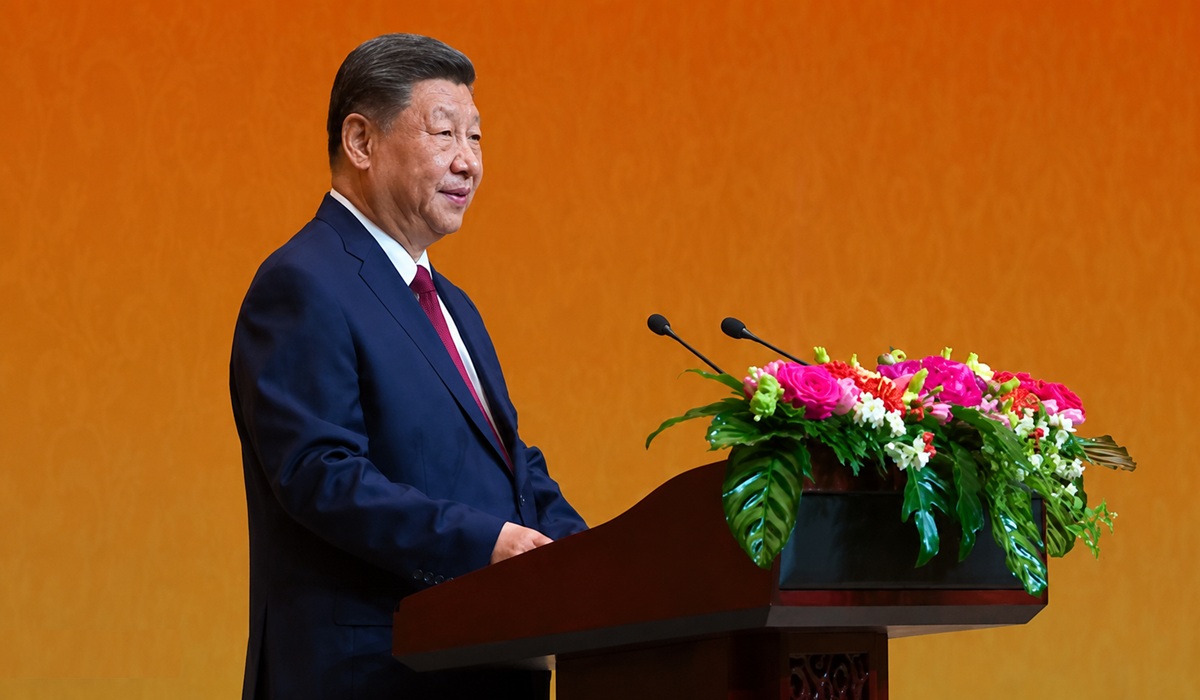
There are moments in diplomacy where a single phrase carries more weight than an entire speech. During Chinese President Xi Jinping’s remarks connected to the visit of U.S. President Donald Trump, one reference stood out to geopolitical observers paying close attention: the “Thucydides Trap.” For many non-historians watching the speech, it may have sounded like a passing academic reference, something easy to gloss over or overlook entirely. In reality, it may have been one of the most important lines in the entire address because it quietly framed how China views the growing tension between Beijing and Washington, two nations now competing not only for influence, but for the ability to shape the next century.
The theory originates from the ancient Greek historian Thucydides, who chronicled the Peloponnesian War between Athens and Sparta. His conclusion was both simple and unsettling. When a rising power begins threatening the dominance of an established power, fear becomes unavoidable, and conflict often follows. In modern geopolitical language, many scholars compare China to the ascending force while the United States represents the established superpower attempting to preserve its leadership position. Yet even that comparison can oversimplify a far more complicated reality because history rarely repeats itself perfectly.
What makes this dynamic particularly fascinating is how deeply China appears to understand the psychology behind it. Beijing studies history differently than most Western governments. Chinese leadership does not simply focus on quarterly economic reports or election cycles. It studies empires, collapses, revolutions, social unrest, resource wars, and the emotional instincts of nations confronting decline or insecurity. When Xi Jinping referenced the Thucydides Trap publicly during Trump’s visit, it did not come across as a declaration of inevitability. It sounded more like a warning about how easily rivalry between major powers can spiral into something irreversible when fear, pride, and strategic overreaction begin shaping decision-making.
At the same time, caution must be exercised when interpreting China’s intentions because much of the global conversation surrounding Beijing is layered with assumptions. Western governments frequently analyze China through security concerns, while Chinese leadership often frames its rise as modernization and national restoration after historical periods of weakness and foreign interference. Whether one agrees with that framing or not, understanding how China sees itself is essential to understanding why this rivalry has become so tense. Nations rarely make decisions solely based on how outsiders define them. They act according to how they define themselves internally.
The United States views the situation through its own strategic concerns. Washington watches China expand economically, technologically, diplomatically, and militarily at extraordinary speed. Issues surrounding Taiwan, artificial intelligence, semiconductors, cyber security, manufacturing dominance, and military modernization have intensified debates within American political circles about the future balance of global power. What one side interprets as national development, the other may interpret as strategic competition. That is precisely why Xi Jinping’s warning carried weight. The danger is not only what nations do, but how they interpret each other’s intentions.
One of the least discussed yet most critical dimensions of this rivalry revolves around energy. China is the world’s largest importer of oil and energy resources, and Beijing understands with absolute clarity that whoever controls the movement of energy frequently controls leverage over capital, manufacturing, and economic stability itself. In that context, actions involving Venezuela, Iran, sanctions, shipping routes, and global oil infrastructure are often viewed internationally through a much larger strategic lens. While the United States publicly frames many foreign policy decisions around sanctions enforcement, regional stability, or security concerns, broader geopolitical interpretations increasingly connect energy influence directly to long-term competition with China.
That broader interpretation matters because perception itself has become part of modern power. Nations no longer compete solely through military strength. They compete through narratives, economic systems, trade corridors, artificial intelligence, technological standards, shipping lanes, and industrial dominance. China appears acutely aware of this reality. Beijing often projects patience, stability, and long-term continuity as strategic assets. In many respects, discipline itself becomes part of the projection of strength.
Neither nation can politically afford humiliation on the world stage, although the modern political era has complicated what humiliation even means. President Donald Trump has, at times, transformed self-generated controversy into a form of political performance art where unpredictability itself becomes part of the spectacle. Domestically, that approach can energize supporters and dominate media cycles. Internationally, however, particularly in cultures that place enormous value on restraint, symbolism, composure, and measured presentation, that shine does not always translate with equal strength. China understands deeply that perception, optics, and emotional discipline can function as instruments of power just as effectively as military capability or economic leverage.
What makes the current moment so dangerous is that both nations largely believe they are acting defensively. China sees itself safeguarding sovereignty, economic stability, and national interests in an increasingly competitive world. The United States sees itself preserving alliances, strategic interests, and a global framework it spent decades helping construct. History repeatedly shows that major conflicts often emerge not because leaders openly seek destruction, but because nations convince themselves they are preventing future vulnerability.
For ordinary citizens, this rivalry is no longer distant geopolitical theater reserved for diplomats and military strategists. The competition between Washington and Beijing increasingly influences inflation, manufacturing, energy prices, technology access, artificial intelligence development, and the future direction of the global economy itself. What happens between these two powers will shape far more than foreign policy. It will shape the architecture of modern life itself.
Perhaps the most haunting aspect of the Thucydides Trap is that history is filled with civilizations drifting toward catastrophe while convincing themselves they were acting rationally. The theory does not guarantee war, nor should it be treated as prophecy. What it ultimately represents is a warning about how fear, pride, insecurity, and power transitions can quietly reshape the world if leaders fail to manage rivalry with restraint.
Because in the end, this struggle is about far more than military dominance or economics. It is about who shapes the architecture of the future itself.
About The Author