America’s Dangerous New Question: Should Jan. 6 Defendants Be Compensated by Taxpayers?
- TDS News
- U.S.A
- May 21, 2026
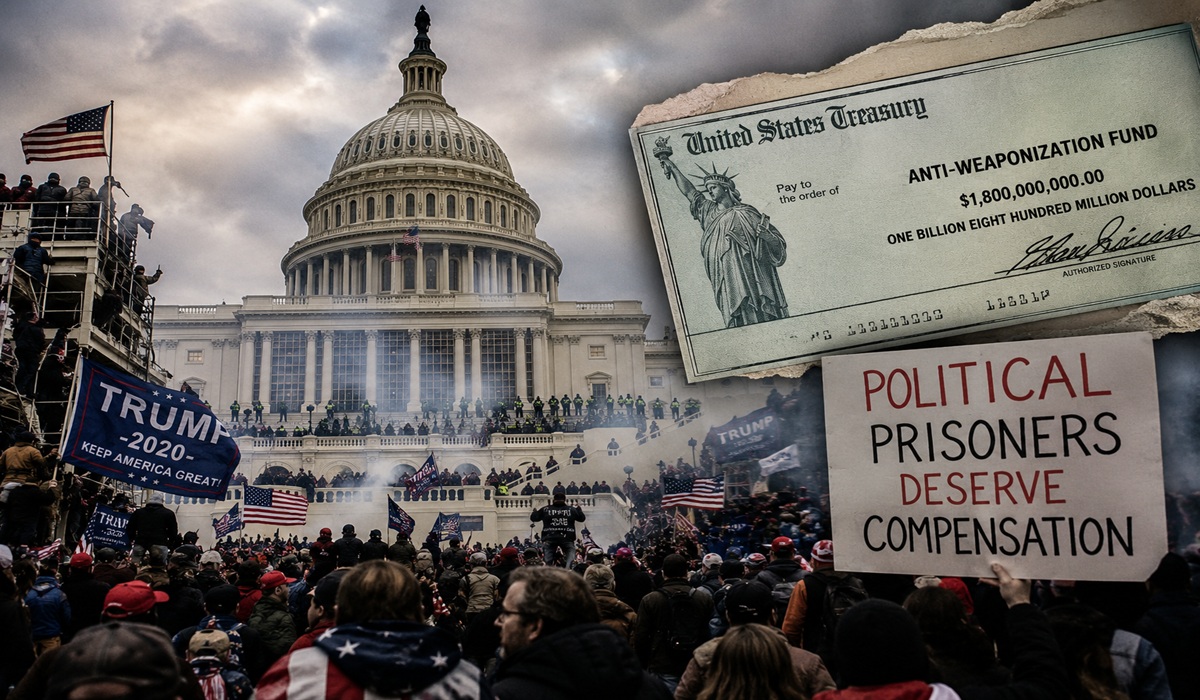
For years, Americans were told January 6 represented one of the darkest and most dangerous moments in modern U.S. political history. More than 1,500 people were charged after supporters of Donald Trump stormed the Capitol in an attempt to disrupt certification of the 2020 presidential election. Police officers were assaulted, lawmakers fled for safety, and the attack triggered international condemnation as images of chaos inside the Capitol spread around the world. Now, the United States is facing a political controversy that, only a few years ago, would have sounded almost impossible to imagine: the possibility that some individuals connected to January 6 and election denial movements could potentially seek compensation from a massive federally backed fund tied to the Trump administration.
The controversy centers around what is being described as a roughly $1.8 billion “Anti-Weaponization Fund,” reportedly established through a settlement connected to litigation involving the IRS and Donald Trump. According to reports, the purpose of the fund is to compensate individuals who claim they were unfairly targeted, investigated, or politically persecuted by federal agencies during previous administrations. Almost immediately after details emerged, lawyers connected to January 6 defendants and prominent Trump allies reportedly began discussing potential claims, while some individuals tied to the movement openly celebrated the possibility of compensation, calling it “long overdue.”
It is important to stay grounded in the facts because the situation is already politically explosive enough without exaggeration. At this stage, there is no confirmed evidence showing January 6 rioters have already received payouts from the fund. There is also no finalized public list proving who will ultimately qualify. What is confirmed is that the fund exists, the language surrounding eligibility appears broad, and officials connected to the program have reportedly not ruled out applications connected to January 6 prosecutions. That distinction matters because the controversy is not built on fantasy or internet rumor. It is rooted in a very real compensation mechanism that has now opened the door to deeply uncomfortable national questions.
Those questions go far beyond Donald Trump himself. Once a government creates a process allowing people to seek retroactive compensation tied to politically charged investigations and prosecutions, Americans naturally begin wondering where those boundaries end. If one administration creates a compensation structure for supporters who believe they were unfairly targeted, what prevents future administrations from doing the same for their own political allies? What becomes the legal standard for determining political persecution? More importantly, what becomes the moral standard?
That is where this controversy starts to feel dangerous to many Americans. The concern is not simply about whether a handful of January 6 defendants could receive compensation. The larger fear is that the country may be drifting toward a system where political power increasingly determines who is viewed as a criminal, who is viewed as a victim, and eventually, who receives financial restitution from taxpayers. Once governments begin attaching money to ideological grievances, the precedent becomes difficult to contain because nearly every politically charged prosecution in modern America can eventually be reframed by somebody as persecution.
The timing of this controversy also matters enormously. Trump returned to power repeatedly promising retaliation against what he described as a “weaponized” federal government. His political messaging for years has centered around the idea that federal agencies unfairly targeted conservatives, Trump supporters, and political opponents. To his supporters, the compensation fund represents justice and accountability against institutions they no longer trust. To millions of other Americans, however, the symbolism feels completely different. They see a government potentially reframing people involved in an attack on democratic institutions as victims deserving restitution while police officers who defended the Capitol are left watching the country debate whether those prosecutions were unfair in the first place.
The controversy becomes even more unsettling when people begin asking what message this sends moving forward. What lesson do extremist groups, political militias, and ideological movements absorb if individuals connected to one of the most chaotic political events in modern American history are later discussed as possible recipients of taxpayer-backed compensation? Groups like the Proud Boys became internationally associated with political extremism following January 6, with several members convicted of serious criminal offenses tied to seditious conspiracy and organized efforts surrounding the Capitol attack. The mere possibility that people connected to those movements could someday attempt to financially benefit from a federal compensation structure is leaving many Americans stunned.
At the same time, the broader implications extend far beyond January 6. Americans are now asking whether this opens the door for future retroactive claims tied to riots, protests, politically charged arrests, controversial investigations, or ideological movements across the country. If political administrations begin compensating people they believe were unfairly targeted after power changes hands, the country risks entering a cycle where every major prosecution eventually becomes viewed through the lens of future political repayment. That creates a dangerous erosion of trust because the justice system begins looking less like an independent institution and more like a revolving mechanism of revenge, rehabilitation, and reward depending on who controls Washington at a given moment.
Supporters of the fund argue opponents are intentionally distorting its purpose and point out that nobody has proven January 6 defendants will automatically qualify for compensation. Legally, that is true. Courts may still intervene, eligibility standards remain unclear, and lawsuits challenging the structure of the fund are already emerging. But politically, much of the damage is already done because the symbolism has become larger than the technical legal details themselves. For many Americans, the issue now feels less about one specific fund and more about the country entering a deeply unstable era where political loyalty increasingly shapes accountability, historical memory, and even financial compensation.
That is why this controversy is generating such a visceral reaction across the United States. To many people, it feels like the boundaries between justice, grievance, and political power are collapsing into one another in real time. It feels like the country is approaching a point where every administration may eventually attempt to rehabilitate its own allies, punish its enemies, and financially compensate those it believes fought on the “right” side of political history. Once that precedent becomes normalized, the long-term consequences for public trust, democratic institutions, and the rule of law could stretch far beyond Donald Trump, January 6, or even this current political moment itself.
About The Author