World Cup on the Brink: How Trump’s America Turned a Global Celebration into a Growing Crisis
- Kingston Bailey
- Sports
- April 18, 2026
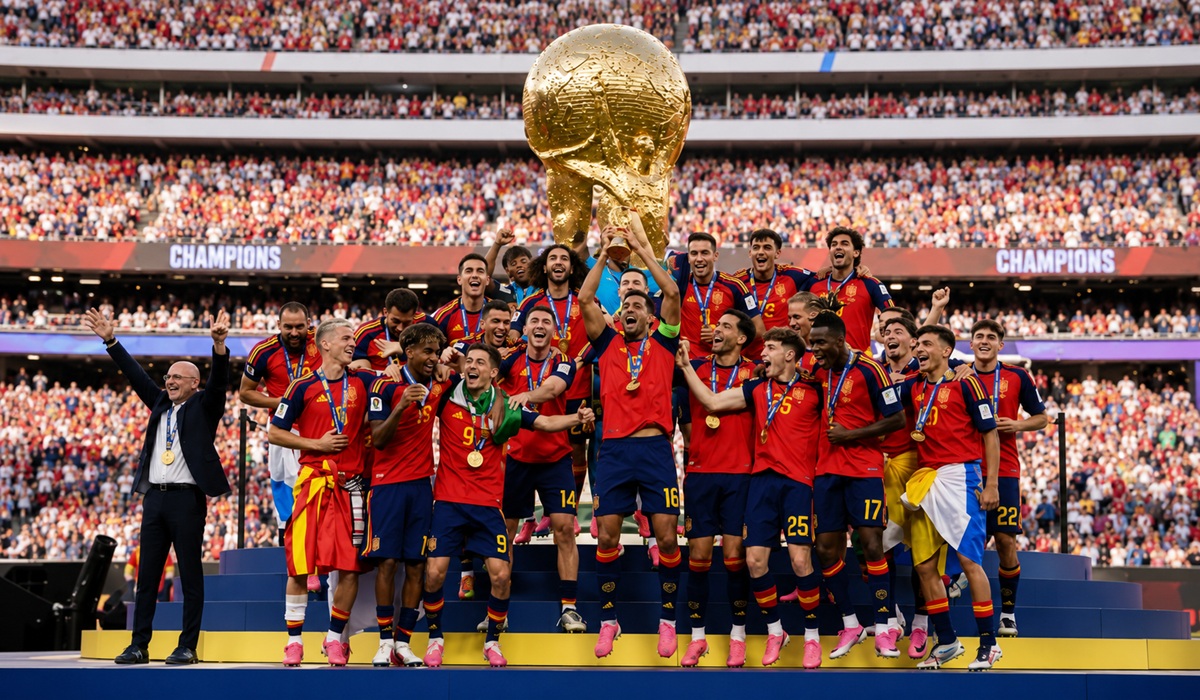
There is no serious way to describe the current state of the upcoming FIFA World Cup in the United States without acknowledging that the mood, at least right now, is far more uneasy than celebratory. What should be a once-in-a-generation moment—one of the largest sporting events on the planet arriving on American soil—is instead clouded by growing concern from fans, travel operators, and international observers who are questioning whether the environment being created is actually welcoming to the world.
At the center of that tension is Donald Trump, whose policies and rhetoric have become inseparable from how this World Cup is being perceived abroad. The issue is not a single decision, but a layered series of policies and signals that, taken together, have begun to erode confidence in what should be a global celebration of sport.
The most immediate concern revolves around travel restrictions and visa accessibility. For many fans across parts of Africa, the Middle East, and elsewhere, the process of entering the United States has become more uncertain, more expensive, and in some cases, politically charged. When entire regions feel scrutinized or unwelcome, the natural response is hesitation. For a tournament that depends on global participation—not just players, but supporters—this hesitation matters. It changes the tone from excitement to calculation, and in some cases, outright avoidance.
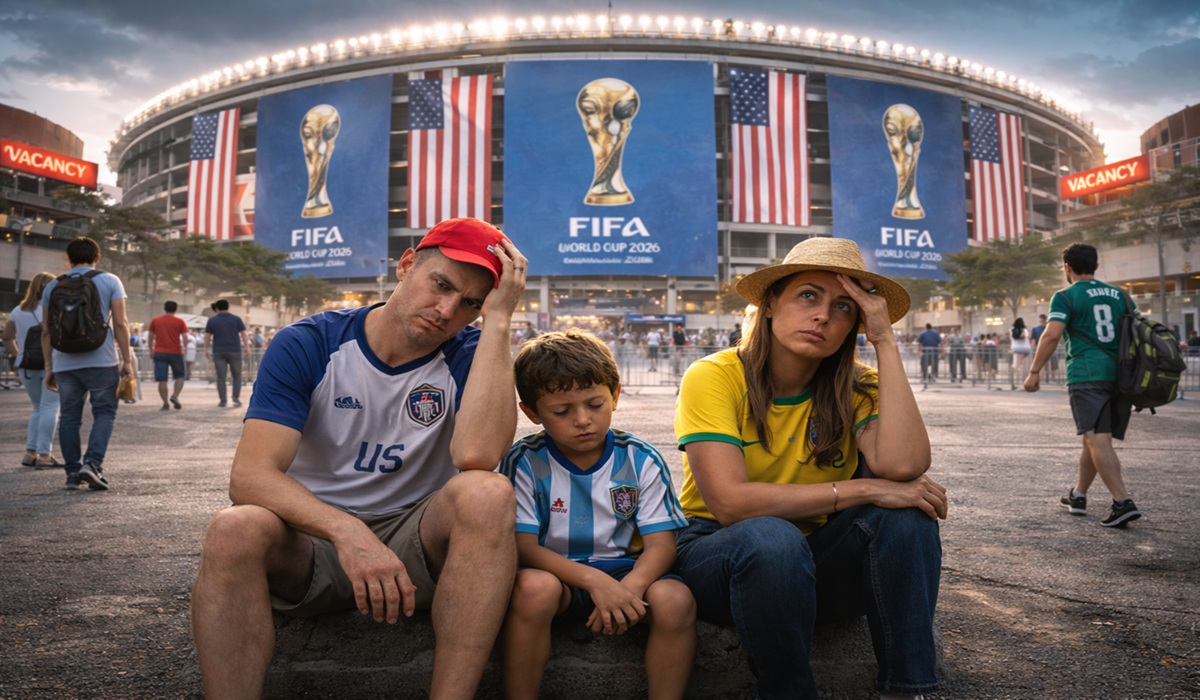
There is also the issue of cost, which has quietly become one of the most damaging factors. Visa fees, travel expenses, and accommodation prices in major host cities were already expected to be high, but layered on top of policy uncertainty, they have created a barrier that many fans simply are not willing to cross. Early reports from industry observers suggest that bookings in some host cities are not tracking at the levels typically seen this close to a World Cup cycle. Hotels that should be preparing for a surge are instead facing pockets of unexpected vacancy, something that would have been almost unthinkable for an event of this scale.
That economic ripple effect is where the situation becomes more than just a perception problem. The World Cup is not just a sporting event; it is a massive economic engine. Cities invest billions in infrastructure, tourism campaigns, and logistics under the assumption that the world will show up. When that assumption starts to wobble, even slightly, the financial consequences can be significant. Lost bookings, reduced tourism spending, and a dampened international presence all chip away at the projected gains that justified the investment in the first place.
There is also a reputational dimension that cannot be ignored. The World Cup, under the governance of FIFA, is designed to rotate across continents as a symbol of global unity through sport. Hosting it is as much about soft power as it is about economics. It is an opportunity to present a country as open, dynamic, and connected to the world. When the narrative instead shifts toward exclusion, complexity, and political tension, that opportunity begins to slip.
Critics argue that the messaging coming out of the United States has not helped. Even when policies are not directly tied to the tournament, the broader tone influences how people feel about attending. For international fans, particularly those traveling long distances and spending significant money, perception matters just as much as policy. If the feeling is that entry could be difficult, or that the atmosphere may not be welcoming, many will simply choose to watch from home or travel to other host nations instead.
That last point is crucial because this World Cup is not solely an American event. It is a joint tournament with Canada and Mexico, and that dynamic creates an immediate contrast. If fans perceive alternative host countries as more accessible or more welcoming, the United States risks losing not just attendance, but its share of the spotlight within the tournament itself. That would be a remarkable outcome for a country that expected to be at the center of it all.
Still, it is important to recognize that World Cups have a way of shifting momentum as they approach. History shows that once the tournament draws closer, the gravitational pull of the event itself often overrides earlier concerns. Fans who swore they would stay away sometimes change their minds when the reality of the spectacle sets in. Broadcasters ramp up coverage, teams qualify, and the emotional weight of the competition begins to take over.
The question, however, is how much damage is done before that shift happens. If early financial indicators are already underperforming, and if international sentiment has already cooled, the recovery may not fully close the gap. The United States could still host a successful tournament in terms of matches played and trophies awarded, but fall short of the broader cultural and economic impact that defines a truly great World Cup.
There is also a longer-term implication that is harder to measure but just as significant. Hosting a World Cup is about trust. It is about demonstrating to the world that you can bring people together, manage complexity, and create an environment that transcends politics. If this tournament becomes defined by controversy and hesitation rather than unity and celebration, it could influence how future bids are evaluated. Not necessarily in an absolute sense, but enough to raise questions that did not exist before.
Right now, the situation feels unsettled rather than doomed. There is time for course correction, for clearer messaging, and for policies that reassure rather than deter. But the window for that correction is not unlimited. Every month that uncertainty lingers is another month where potential visitors make alternative plans.
The World Cup was supposed to be a showcase moment. Instead, at this stage, it has become a test—of policy, perception, and leadership. Whether it ultimately becomes the global celebration it was intended to be or a cautionary tale of missed opportunity will depend on what happens next, not just on the pitch, but far beyond it.
About The Author