Vogue Tried to Rename the Afro… and Got Checked, Here’s Why They Had No Right
- Emma Ansah
- U.S.A
- April 17, 2026
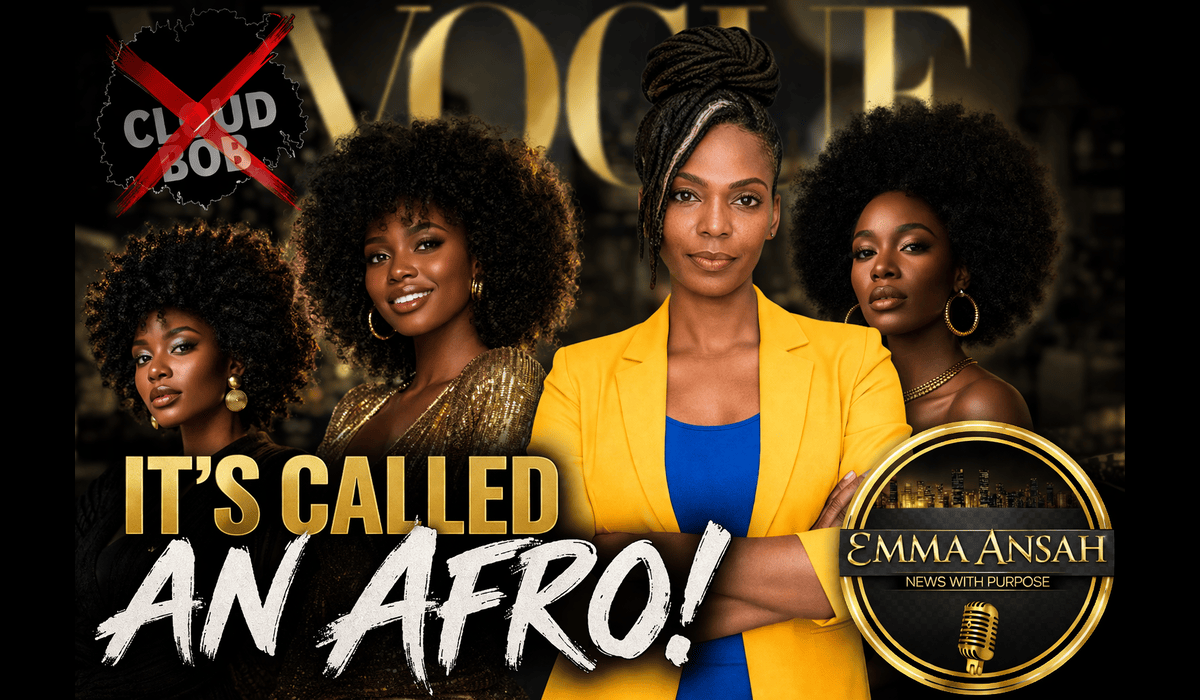
Vogue, known as a “global fashion powerhouse” looked at a hairstyle rooted in Black identity, history, and resistance… and decided to give it a new name like it just dropped this season.
They called it a “cloud bob.”
Vogue published a beauty piece describing a soft, rounded natural hairstyle using language that stripped it of its cultural identity. The look, worn beautifully by women like Tracee Ellis Ross, was framed as something airy, modern, almost newly discovered. As if the Afro needed a rebrand to be worthy of attention.
The internet did what the internet does. It gathered receipts, connected dots, and said no.
After the backlash, the wording in the article was quietly changed. References to “cloud bob” were edited or removed. No loud correction. No bold apology. Just a subtle digital cleanup like nobody would notice.
But people noticed.
Because this isn’t new. It’s a pattern.
The Afro is not just a hairstyle. It is political. It is cultural. It is historical. It was worn during the civil rights era as a statement that Blackness was not something to hide, straighten, or dilute. It was a rejection of Eurocentric beauty standards that told Black people their natural hair was unprofessional, unkempt, or unacceptable.
So when a major publication renames it, even casually, it does two things. It erases the origin, and it repackages the aesthetic for a different audience.
That is the issue.
Vogue does not have the authority to rename something that was never theirs to begin with. You cannot detach a style from the people who carried it through discrimination, workplace bias, school bans, and social stigma, then reintroduce it as a “fresh” idea once it becomes palatable.
That is appropriation with better lighting.
And let’s talk about the language. “Cloud bob” softens the edges. It removes the weight. It turns something deeply rooted into something whimsical and trend-driven. It’s marketing. It’s branding. But it is not truth.
The Afro does not need a softer name to be accepted. It needs to be respected as it is.
What makes this even more frustrating is that the same natural hair that is now being romanticized in editorial spaces is still policed in real life. Black women are still navigating workplace discrimination, school dress codes, and societal bias because of their hair. Laws had to be created just to protect the right to wear it naturally.
So how does it make sense that while one side is still fighting for basic acceptance, another side is busy renaming it for aesthetic appeal?
It doesn’t.
The backlash wasn’t just about a word. It was about a long-standing pattern where Black culture is rebranded, renamed, and repackaged without acknowledgment until it becomes profitable or trendy.
And this time, people shut it down quickly.
Vogue may have edited the article, but the conversation is still here. And the message is simple. You can appreciate it. You can highlight it. You can celebrate it. But you do NOT get to rename it.
The Afro already has a name. It came with history. It came with struggle. It came with pride.
And no amount of editorial spin is going to change that.
About The Author