Many people think human rights are abstract ideals only relevant in authoritarian regimes. Yet these principles are fundamental legal obligations shaping governance everywhere, from local councils to the United Nations. This article explores how human rights protect dignity, constrain power, face enforcement challenges, and why understanding them matters for activists, educators, and policymakers navigating today’s complex global landscape.
Table of Contents
- What Are Human Rights And Their Foundational Importance
- How Human Rights Shape Law, Politics, And Power
- Challenges In Enforcing Human Rights Globally
- The Evolving Role Of Human Rights In Global Society
- Explore More Human Rights Insights And Resources
Key takeaways
| Point | Details |
|---|---|
| Foundation of dignity | Human rights protect individual autonomy and limit arbitrary state power globally. |
| Legal framework | They are binding international norms, though enforcement depends heavily on state cooperation. |
| Complex dynamics | Human rights involve intricate interactions of law, ethics, and political struggle. |
| Accountability mechanisms | Effective protection requires international cooperation, sanctions, and monitoring systems. |
| Practical relevance | Understanding these principles is essential for anyone engaged in policy, education, or advocacy. |
What are human rights and their foundational importance
Human rights are legal and moral claims every person possesses simply by being human. The Universal Declaration of Human Rights established in 1948 a global framework outlining 30 fundamental rights recognised across nations. These rights ensure basic freedoms like expression, equality, and protection from torture.
Human dignity forms the cornerstone of this entire system. This concept recognises that every individual possesses inherent worth that cannot be taken away by governments, corporations, or other people. When states respect human rights, they acknowledge this dignity and create conditions where people can live freely and safely.
These protections limit state power in crucial ways. Governments cannot arbitrarily detain citizens, suppress free speech, or discriminate based on identity. Rights create boundaries that protect minorities from majority tyranny and individuals from institutional abuse.
Consider these core functions:
- Establishing minimum standards for treatment of all people
- Providing legal recourse when violations occur
- Creating accountability mechanisms for state and non-state actors
- Enabling civil society to challenge injustice
“Human rights are not a privilege conferred by government. They are every human being’s entitlement by virtue of their humanity.”
This framework transforms how we think about the relationship between individuals and power structures. Rather than viewing people as subjects who exist at the state’s discretion, human rights position individuals as rights-holders with legitimate claims against authority.
Pro Tip: When evaluating whether an action violates human rights, ask if it respects inherent dignity and allows individuals to exercise fundamental freedoms without arbitrary interference.
How human rights shape law, politics, and power
Human rights define legal and normative limits of power and conditions under which authority can be exercised legitimately. This transforms traditional concepts of sovereignty by making certain state actions subject to international scrutiny and potential intervention.
The system operates simultaneously as ethical claims, legal frameworks, and practical governance tools. International treaties like the International Covenant on Civil and Political Rights create binding obligations. Domestic constitutions incorporate these standards. Courts apply them in specific cases. This multi-layered approach embeds human rights throughout legal and political systems.
Sovereignty no longer provides absolute protection for states committing atrocities. The responsibility to protect doctrine, for example, authorises international action when governments fail to prevent genocide or crimes against humanity. This represents a fundamental shift in how international law balances state autonomy with human protection.
These dynamics create progressive compliance mechanisms:
- International monitoring bodies review state practices regularly
- Treaty obligations require periodic reporting and reform
- Regional courts adjudicate violations and order remedies
- Civil society organisations document abuses and advocate for change
The system encourages gradual improvement rather than demanding immediate perfection. States that ratify treaties signal commitment to standards, even if implementation takes time. This recognises that building institutional capacity and changing entrenched practices requires sustained effort.
Pro Tip: Human rights law works best when combined with political pressure, public awareness, and institutional reform, not through legal mechanisms alone.
Understanding these dynamics helps explain both the power and limitations of human rights frameworks. They provide tools for challenging injustice but depend on political will and organised advocacy to achieve real change.
Challenges in enforcing human rights globally
Enforcement relies heavily on voluntary state action, leading to uneven compliance worldwide. State sovereignty remains the primary obstacle to coercive enforcement of international human rights law. No global police force exists to arrest violators or compel compliance.

Some states genuinely incorporate international rulings into domestic law and reform practices accordingly. Others openly reject external oversight, viewing it as interference in internal affairs. This creates a system where accountability depends largely on a government’s willingness to be held accountable.
International institutions face severe limitations. The International Criminal Court prosecutes individuals for genocide and crimes against humanity but lacks universal jurisdiction. Many powerful states refuse to recognise its authority. Without state cooperation to arrest suspects, even issued warrants remain symbolic.
| Challenge | Impact | Example |
|---|---|---|
| State sovereignty | Limits coercive enforcement | Russia ignoring European Court rulings |
| Political resistance | Blocks accountability mechanisms | US opposition to ICC jurisdiction |
| Resource constraints | Reduces monitoring capacity | Limited UN human rights budgets |
| Fragmented mandates | Creates oversight gaps | Multiple agencies with overlapping roles |
Conflict zones illustrate these problems acutely. Syria, Yemen, and Myanmar have experienced widespread violations despite international condemnation. Sanctions and resolutions prove ineffective when violators face no meaningful consequences. Geopolitical alliances often protect abusers from serious action.
Organisational fragmentation compounds these issues. The UN Human Rights Council, treaty bodies, special rapporteurs, and regional mechanisms all monitor compliance. Yet they lack coordination and enforcement power. This creates reporting fatigue for states whilst producing limited tangible results.
These structural weaknesses mean human rights protection depends heavily on:
- Domestic legal systems incorporating international standards
- Civil society documenting abuses and advocating reform
- Economic and diplomatic pressure from other states
- Public awareness creating political costs for violations
Recognising these limitations helps activists and policymakers develop realistic strategies. Legal mechanisms provide crucial frameworks, but achieving change requires combining them with political mobilisation and sustained pressure.
The evolving role of human rights in global society
The EU Global Human Rights Sanctions Regime754474_EN.pdf) adopted in December 2020 illustrates innovative enforcement approaches. This framework allows the European Union to impose travel bans and asset freezes on individuals and entities responsible for serious violations anywhere globally. It represents a shift towards targeted accountability measures.
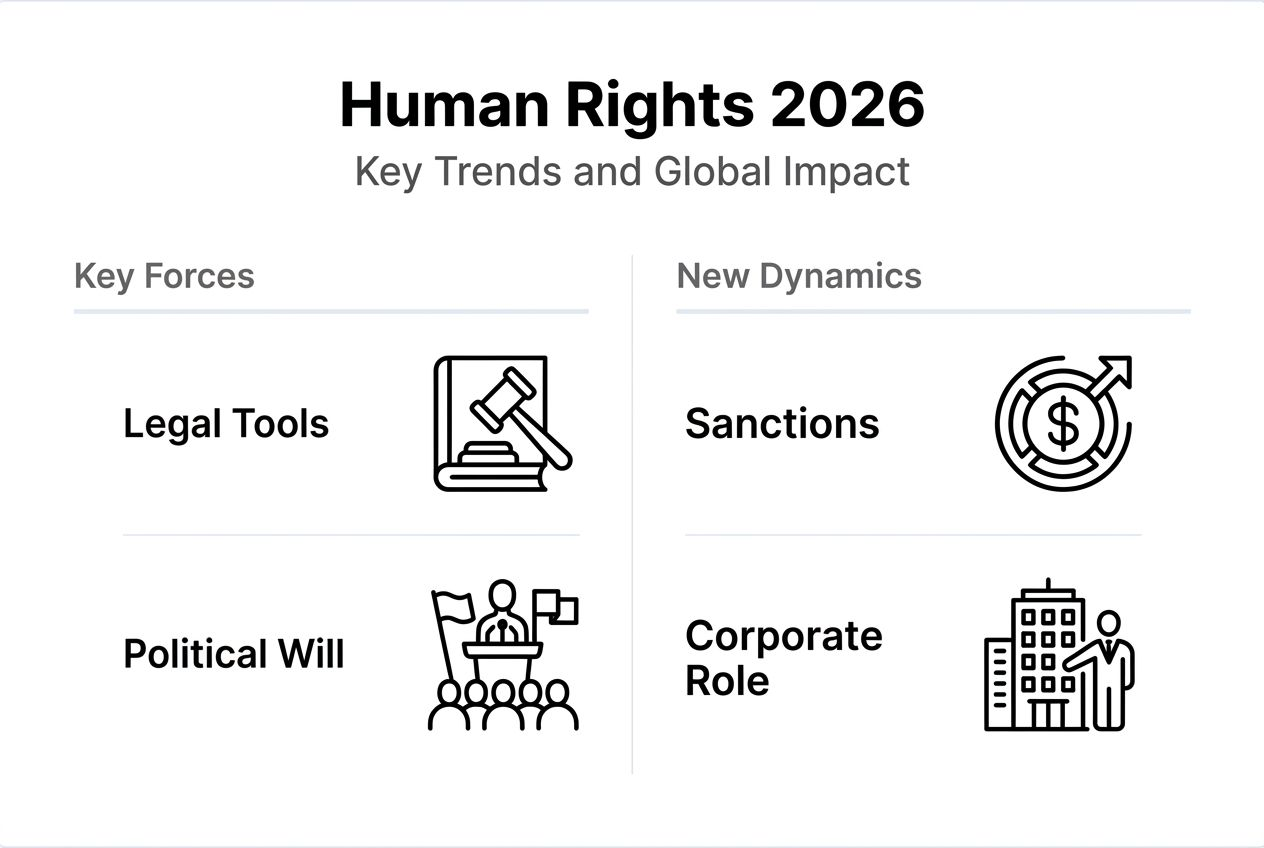
Human rights debates increasingly include critiques of Western dominance in shaping norms and enforcement priorities. Scholars and activists from the Global South argue for pluriversal perspectives that recognise diverse cultural contexts whilst maintaining universal dignity standards. This tension between universality and cultural specificity remains unresolved but productive.
Corporate human rights performance now affects financial and reputational outcomes significantly. Investors screen companies for labour practices, environmental impacts, and supply chain ethics. The UN Guiding Principles on Business and Human Rights create expectations for due diligence. This extends accountability beyond states to private actors wielding substantial power.
| Mechanism | Scope | Effectiveness |
|---|---|---|
| EU sanctions regime | Global individuals/entities | Moderate, depends on assets in EU |
| UN treaty bodies | State parties to specific treaties | Limited, relies on reporting |
| Regional courts | States within jurisdiction | High, for compliant members |
| Corporate accountability | Multinational businesses | Growing, driven by investors |
Geopolitical shifts create new challenges and opportunities. Rising authoritarianism in some regions coincides with strengthened civil society networks globally. Digital tools enable rapid documentation of abuses but also facilitate surveillance and repression. Climate change creates new human rights concerns around displacement and resource access.
Pro Tip: Follow developments in multiple regions and sectors to understand how human rights norms adapt to changing political and technological landscapes.
These evolving dynamics demonstrate that human rights remain deeply relevant in 2026. Rather than static principles, they constitute living frameworks that activists, policymakers, and institutions continually reshape through struggle and negotiation. Understanding this evolution helps you engage more effectively with contemporary debates.
Explore more human rights insights and resources
Now that you understand why human rights matter and how they function globally, you can deepen your knowledge through ongoing learning. TheDailyScrumNews.com provides current coverage of human rights developments, expert analyses, and practical resources for activists, students, educators, and policymakers.

Our platform tracks emerging issues, policy changes, and civil society responses across regions. Whether you’re researching specific violations, following international negotiations, or seeking background on contemporary debates, you’ll find balanced reporting that respects the complexity of these issues. Stay informed about the struggles and progress shaping human dignity worldwide.
FAQ
What are human rights?
Human rights are basic freedoms and protections entitled to all individuals by virtue of being human. They include rights like freedom of expression, equality before the law, and protection from torture or arbitrary detention.
Why is it difficult to enforce human rights internationally?
Enforcement relies heavily on state cooperation due to sovereignty principles that limit external intervention. Political resistance from powerful nations and the limited coercive powers of international institutions like the ICC hinder meaningful accountability for violators.
How do human rights protect individuals in democracies?
Human rights safeguard minority rights and prevent abuses by majority rule through constitutional protections. They ensure legal limits on governmental power and protect fundamental freedoms even when popular opinion might favour restrictions.
What role do sanctions play in promoting human rights?
Sanctions like the EU Global Human Rights Sanctions Regime target violators financially and politically through asset freezes and travel bans. They serve as non-coercive pressure mechanisms encouraging compliance and reform without military intervention.
Recommended
About The Author