Why Gold Still Haunts Global Power, No Matter How Digital the World Gets
- Naomi Dela Cruz
- Trending News
- Business
- December 18, 2025
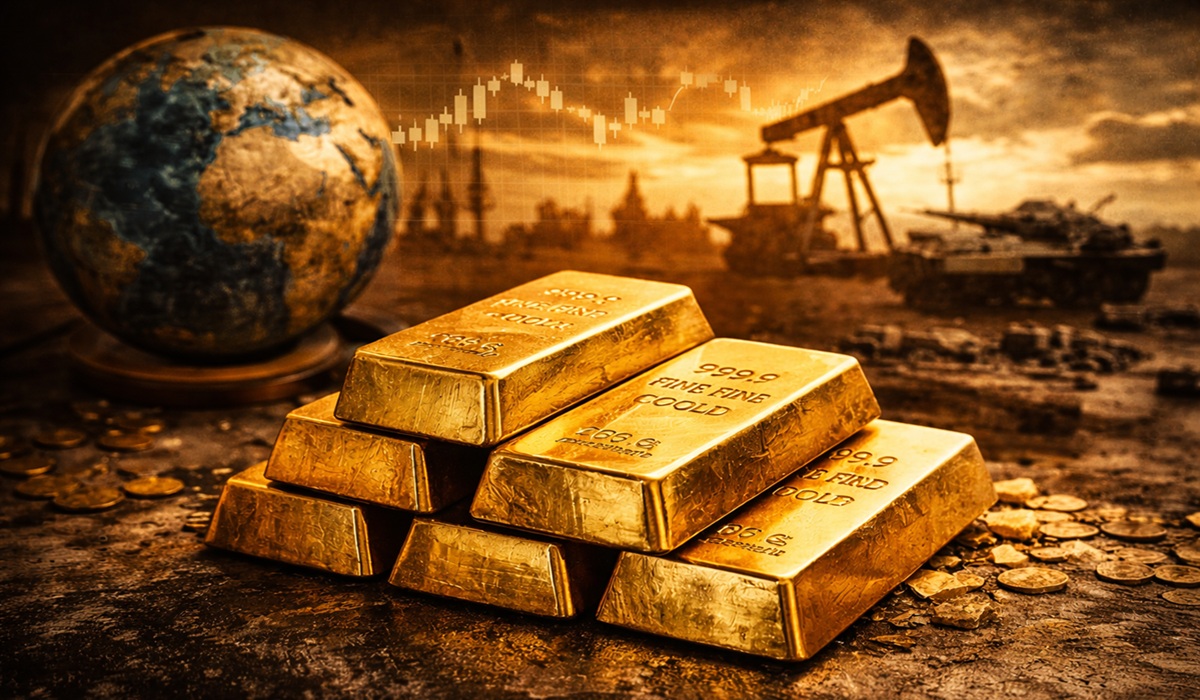
In an age of instant transactions, digital currencies, and algorithmic trading, gold feels almost anachronistic. It does not generate yield. It does not move at the speed of markets. It cannot be hacked or updated. And yet, when global tensions rise, when trust erodes, and when currencies wobble, gold reasserts itself with quiet authority.
The reason is simple and uncomfortable. Gold represents something most modern financial systems avoid admitting they rely on: trust without intermediaries. It does not depend on a central bank’s credibility, a government’s stability, or a payment network’s integrity. It exists outside promises. That is precisely why it continues to matter.
Throughout modern history, gold has surfaced most prominently during moments of geopolitical stress. When nations fear sanctions, asset freezes, or financial isolation, gold becomes insurance. It is portable, universally recognized, and politically neutral in a way no currency truly is. That neutrality is not symbolic. It is operational. Gold can be stored domestically, traded discreetly, and used to settle obligations when access to conventional systems is restricted.
This is why central banks continue to accumulate gold even as they publicly promote fiat systems. It is why countries seeking greater financial autonomy quietly expand their reserves. And it is why discussions about commodity-backed currencies never fully disappear, even when dismissed as impractical or regressive.
Gold also exposes a deeper truth about power. Control over financial systems is as influential as military strength. Sanctions work not because of bombs, but because access is denied. Payments are blocked. Reserves are frozen. Trade becomes conditional. In that environment, gold becomes a form of quiet resistance, not against markets, but against dependence.
This is also where resource politics enters the conversation. Nations rich in commodities often find themselves under disproportionate pressure when they attempt to leverage those resources outside established financial norms. Oil, gas, rare earths, and gold itself are rarely just economic assets. They are bargaining chips in a larger system of influence. When a country hints at backing trade with commodities rather than currency, it challenges not just pricing mechanisms but the hierarchy of control.
The narrative that gold is obsolete persists largely because modern economies want it to be true. Fiat systems function best when confidence is uninterrupted. Questioning the foundation introduces uncertainty. But history suggests that confidence is cyclical. When trust in institutions wanes, tangible assets regain relevance. Gold’s value spikes not because it changes, but because the world around it does.
For individuals, gold represents security. For states, it represents sovereignty. It is a hedge not just against inflation, but against exclusion. That is why debates about gold are rarely just about economics. They are about who sets the rules, who enforces them, and who has alternatives when those rules are weaponized.
As the world experiments with digital currencies, centralized ledgers, and programmable money, the paradox becomes clearer. The more abstract finance becomes, the more valuable something concrete feels. Gold’s endurance is not a failure of progress. It is a reminder that systems built on trust must always account for what happens when trust breaks.
Gold does not promise growth. It promises continuity. And in a world increasingly defined by volatility, that promise remains quietly powerful.
About The Author