When Ambition Outsruns Judgment: María Corina Machado and the Cost of Outsourcing Sovereignty
- TDS News
- Trending News
- January 7, 2026
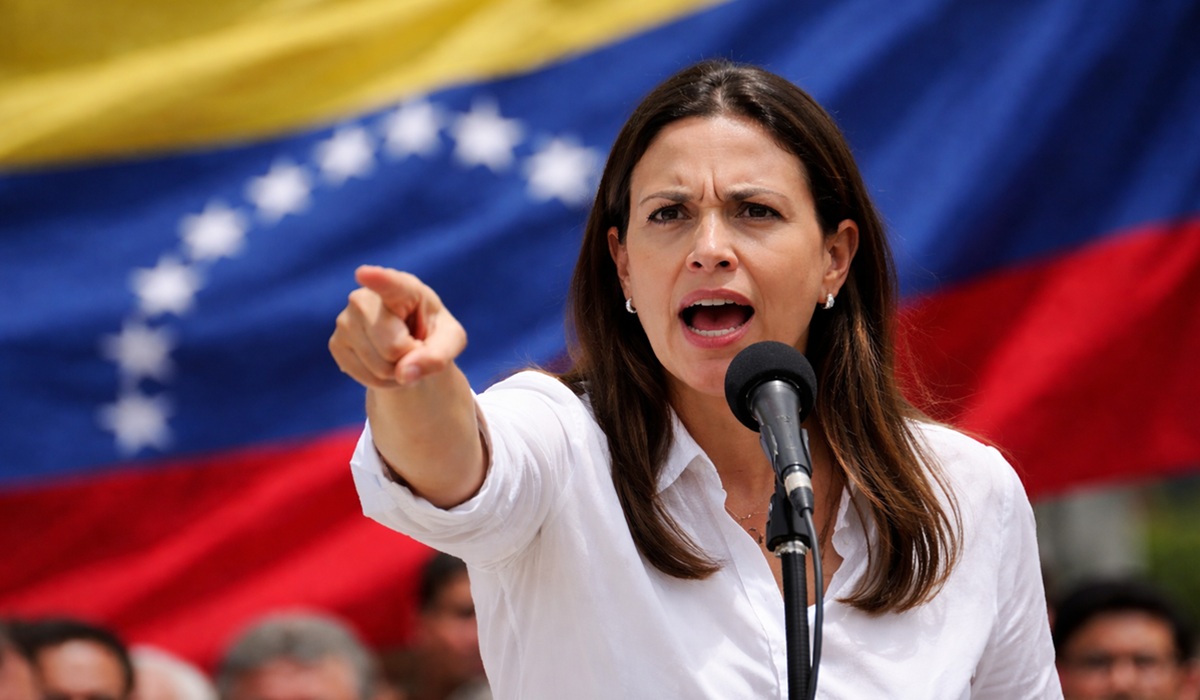
By: Donovan Martin Sr, Editor in Chief
María Corina Machado has spent years cultivating an image of moral clarity: the uncompromising opposition figure, the voice of conscience standing against authoritarian rule, the face that foreign capitals could point to when explaining why Venezuela needed to be “saved.” It is a powerful narrative. It is also, on closer inspection, deeply flawed.
Machado is not a political novice. She is a long-time figure in Venezuelan opposition politics, educated, articulate, and adept at navigating international media. Her appeal abroad has never been accidental. From Washington to Brussels, she has positioned herself as a reliable partner for governments eager to see Caracas realigned. That positioning, however, comes with a cost — one she appears either unwilling or unable to acknowledge.
Leadership is not tested in speeches or awards ceremonies. It is tested in judgment. And over time, Machado’s judgment has revealed a troubling pattern: an eagerness to trade sovereignty for support, and a willingness to invite force where patience, legitimacy, and internal consensus were required.
The most glaring example is her open advocacy for foreign military intervention. This was not coded language or reluctant acceptance of reality. It was explicit. At various moments, she welcomed the idea that the world’s most powerful military should play a decisive role in Venezuela’s political future. That position alone should have disqualified her from any serious claim to national leadership.
No leader who truly understands history could arrive at that conclusion in good faith. The record is not ambiguous. Countries subjected to U.S.-led military interventions under the language of freedom and liberation do not emerge whole. Iraq did not regain stability; it fractured. Libya did not transition into democracy; it collapsed into militia rule and human trafficking. Afghanistan absorbed trillions of dollars and two decades of occupation only to be handed back to chaos. Syria, Haiti, and large swaths of Africa bear similar scars. These were not accidents. They were consequences.
To look at that record and believe Venezuela would somehow be different is either willful ignorance or a breathtaking gamble with other people’s lives. Either way, it speaks volumes.
What makes this even more disqualifying is that Machado did not simply tolerate foreign involvement as an unfortunate reality. She embraced it. She framed it as necessary, even righteous. In doing so, she crossed an invisible but critical line — the line that separates opposition politics from collaboration with external power at the expense of national agency.
That line became unmistakable when talk emerged about reshaping Venezuela’s foreign policy not through public debate or constitutional process, but through gestures clearly aimed at pleasing foreign leaders. The suggestion that Venezuela’s diplomatic posture could be radically altered — including talk of relocating an embassy tied to Israel — came without context, mandate, or relevance to the daily suffering of Venezuelans. It did not read as policy. It read as performance. A signal sent outward, not a solution grounded at home.
This is where the image carefully crafted for international audiences begins to collide with the reality inside the country. Venezuela is not suffering from a lack of symbolic alignment with global powers. It is suffering from institutional collapse, poverty, displacement, and exhaustion. Grand geopolitical gestures do nothing for a mother standing in line for food or a family deciding which member must leave the country to survive.
Machado’s defenders often argue that desperation justifies extreme measures. But desperation does not excuse abandoning democratic principles. It does not excuse inviting a foreign military to decide a nation’s leadership. And it certainly does not excuse the casual willingness to place the country’s most valuable assets — its oil and natural resources — under external control.
Venezuela’s resources have always attracted foreign interest. Every Venezuelan leader, regardless of ideology, has understood the danger inherent in that attention. To hear an opposition figure speak as if foreign oversight or control of those resources were a reasonable price for political change should alarm anyone who believes the country belongs to its people. Sovereignty is not preserved by outsourcing it.
The events following the removal of Nicolás Maduro should have been clarifying. With the head of state gone, the country entered one of its most fragile moments. In any system that still claims to respect law, constitutional succession exists precisely to prevent chaos during such transitions. Yet there was a clear expectation — never formally stated but widely understood — that Machado would be elevated above that process.
That expectation was detached from reality. No functioning democracy bypasses constitutional order to install an opposition figure simply because foreign allies prefer them. When that did not happen, the reaction was telling. Instead of acknowledging the limits of external backing, there was visible frustration, as if legitimacy had been unfairly withheld rather than never truly earned.
The disappointment revealed a deeper issue: a belief that international recognition could substitute for domestic consent. It cannot. It never has.
Her inability to run in the 2024 election is often cited as proof of injustice, and there is no denying that Venezuela’s electoral environment has been deeply compromised for years. But context matters. Her disqualification did not emerge in a vacuum. It followed years of confrontations with state institutions, legal disputes, and sanctions-related rulings. Rather than building a broad-based movement capable of overwhelming those barriers through participation and pressure, the strategy increasingly shifted outward. The audience became foreign governments and international bodies, not Venezuelan voters.
That shift culminated in global accolades that did little to move the needle at home. The Nobel Peace Prize, in particular, was less a reflection of conditions on the ground than of how neatly her narrative fit Western expectations. Peace, in this case, was defined abstractly, detached from the material consequences of the policies she supported. When a prize meant to honor reconciliation and restraint is awarded to someone who openly advocates military force, it invites serious questions about the standards being applied.
Awards do not confer legitimacy. They do not grant consent. They do not replace elections.
The most damaging consequence of Machado’s approach is not that it failed to deliver power, but that it eroded trust. A leader who appears willing to do anything to obtain office — including endorsing actions that would inevitably harm civilians — cannot credibly claim to act in the people’s interest. Trust is fragile. Once broken, it is not repaired by speeches or medals.
Venezuela does not lack voices calling for change. It lacks leaders capable of channeling that desire without sacrificing the country’s autonomy in the process. The future will require figures who can confront past abuses without repeating historical mistakes, who understand that foreign powers act in their own interests, not out of charity, and who recognize that legitimacy flows upward from the people, not downward from embassies.
There will be elections again. When they come, Venezuelans will face a familiar choice: between leaders who see the country as a prize to be delivered, and those who see it as a responsibility to be protected. The difference matters.
María Corina Machado has made her case to the world. What remains uncertain is whether she has made it to her own people — not as a symbol, not as a recipient of international approval, but as a leader who understands that power gained without consent is not leadership at all.
About The Author