What Canada Can Control: Trade Diversification, Strategic Realism, and the End of Comfortable Assumptions
- Naomi Dela Cruz
- Trending News
- January 12, 2026
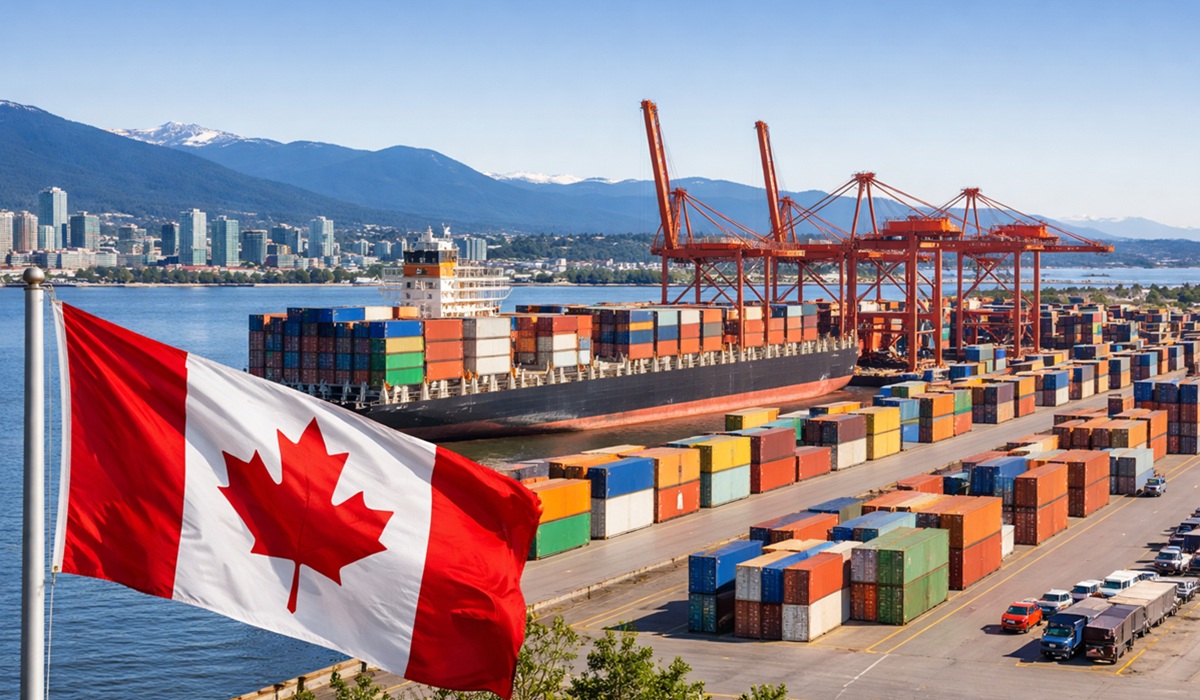
In a shifting global trade landscape, Canada’s new government is increasingly framing its economic strategy around a simple but overdue idea: control what can be controlled. After decades of deep, sometimes complacent reliance on the United States as Canada’s dominant trading partner, Prime Minister Mark Carney’s government is signaling a decisive pivot. The goal is ambitious and unmistakable — to double non-U.S. exports over the next decade, expand market access across Asia, Europe, and the Global South, and create tens of thousands of new careers for Canadian workers in the process.
Carney’s upcoming trip to China, framed as an effort to mend and stabilize relations, underscores the seriousness of that pivot. For years, Canada’s relationship with Beijing has been defined more by rupture than strategy. Diplomatic freezes, retaliatory trade measures, and domestic political anxiety left Canadian exporters exposed and uncertain. Yet China remains one of the world’s largest consumer markets, a critical node in global supply chains, and an unavoidable economic reality. Re-engagement is not about endorsement; it is about leverage, access, and realism.
The trade logic is hard to dispute. Over 70 percent of Canadian exports still flow south to the U.S., a concentration risk that would alarm any serious portfolio manager. Political volatility in Washington, shifting tariff regimes, and the increasing use of trade as a weapon rather than a tool have exposed the fragility of that dependence. The Trump era made that painfully clear, but its lessons were never fully absorbed. Today, with Donald Trump again dominating U.S. political discourse and openly questioning alliances, borders, and long-standing norms, those risks are no longer hypothetical.
Carney’s framing — focusing on what Canada can control — reflects a quiet but profound shift in national posture. Canada cannot dictate U.S. politics. It cannot insulate itself entirely from American economic gravity. But it can broaden its trade lanes, deepen commercial ties with Europe and Asia, and ensure that Canadian businesses are not hostage to the mood swings of any single capital.
This strategy also reframes sovereignty in practical terms. Economic independence is not isolation; it is optionality. By expanding exports to the European Union, deepening engagement with Indo-Pacific markets, and restoring functional ties with China, Canada gains bargaining power. Diversification becomes a form of insurance — not against cooperation with the U.S., but against over-exposure to it.
Critically, this is also about jobs, not abstractions. Non-U.S. export growth tends to be more value-added, more innovation-driven, and more geographically dispersed across the country. Advanced manufacturing, agri-food processing, clean technology, aerospace, and professional services all stand to benefit. That translates into careers rather than short-term booms, and resilience rather than dependency.
There is, of course, risk. China is a complex partner. Europe is navigating its own internal fractures. Global trade itself is becoming more regional, more securitized, and less predictable. But the greater risk lies in inertia — in assuming yesterday’s trade architecture will protect tomorrow’s economy.
Canada’s response, under Carney, is not loud or ideological. It is structural. Diversify. De-risk. Engage widely. Build capacity at home. In a world defined by uncertainty, control may be limited — but it still matters where it exists.
About The Author