Venezuela Shaken to Its Core: A Nation Faces Tragedy After Devastating Back-to-Back Earthquakes
- Naomi Dela Cruz
- Latin
- Breaking News
- June 25, 2026
Venezuela, For generations, Venezuela has endured hardships that would have broken many nations. Economic collapse, political turmoil, shortages, migration, and social unrest have tested the resilience of its people time and time again. Yet even in a country accustomed to adversity, the events of June 24, 2026, represent a tragedy of a different scale. Within seconds, the earth beneath millions of Venezuelans turned violent, unleashing two massive earthquakes that sent buildings crashing to the ground and families fleeing into the streets in terror.
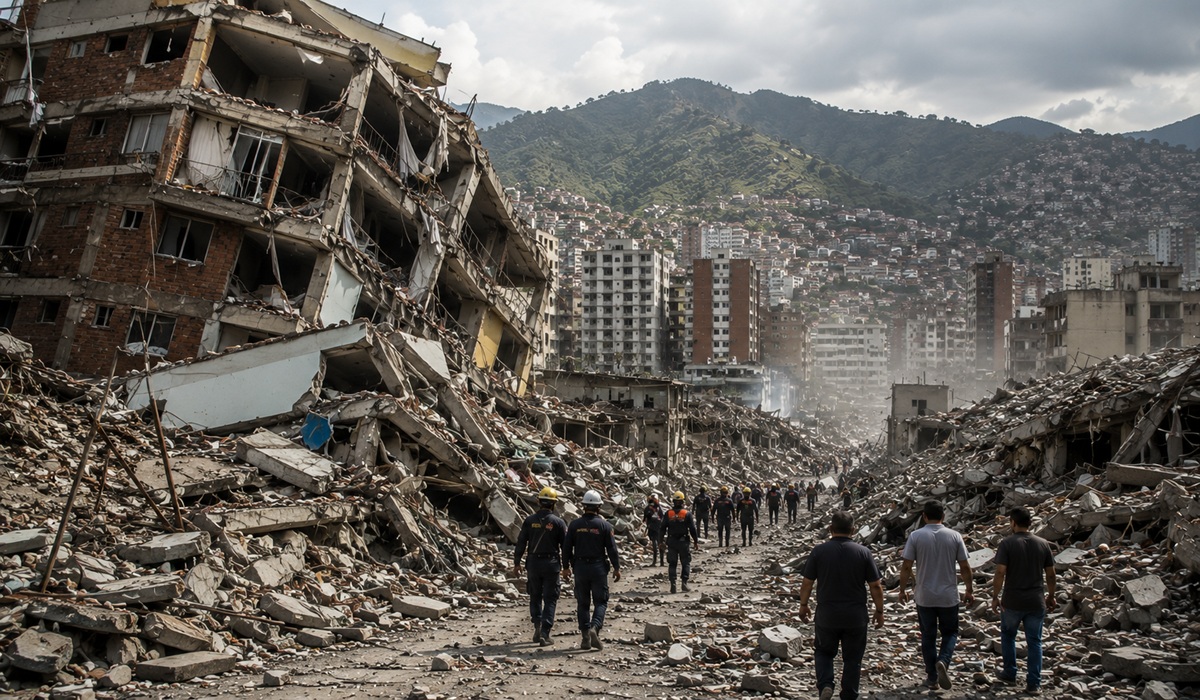
The first earthquake, measuring 7.2 in magnitude, struck western Venezuela during the evening. Less than a minute later, before many people could even process what was happening, a second and more powerful 7.5-magnitude quake followed. The violent shaking rippled across large portions of the country, reaching the capital city of Caracas and causing scenes of chaos, panic, and destruction. Initial reports described collapsed structures, damaged roads, overwhelmed emergency services, and countless people trapped beneath debris.
In Caracas, residents poured out of homes, apartments, offices, and businesses as buildings swayed violently. Witnesses described hearing what sounded like explosions as concrete cracked and walls gave way. Some families became separated in the confusion while others searched desperately for loved ones. Streets that only moments earlier were filled with ordinary daily life quickly became gathering points for frightened residents unsure whether it was safe to return indoors.
The horror was magnified by the unusual nature of the disaster. Earthquakes of this magnitude are devastating on their own. Experiencing two major seismic events only seconds apart created a nightmare scenario for emergency responders and civilians alike. Structures weakened by the first shock were further damaged by the second. People attempting to evacuate during the initial tremor found themselves caught in even more violent shaking moments later.
As darkness settled across affected regions, rescue operations began almost immediately. Firefighters, police officers, medical personnel, and volunteers rushed toward danger while many residents were still running away from it. Across damaged neighborhoods, ordinary Venezuelans formed human chains to move rubble, search for survivors, and provide assistance to those who had lost everything. In many places, neighbours became first responders long before official crews could arrive.
Hospitals quickly faced mounting pressure as the injured began arriving in large numbers. Doctors and nurses worked through the night treating fractures, crush injuries, lacerations, and trauma-related emergencies. Medical facilities already operating under difficult circumstances suddenly found themselves confronting a crisis measured not in dozens of patients but potentially in thousands. Every available bed, hallway, and treatment area became critical.
The human toll remains uncertain as rescue teams continue searching collapsed structures. Seismic experts have warned that earthquakes of this magnitude in populated regions often result in significant casualties. While officials continue assessing the damage, the full extent of the disaster may not be known for days or even weeks. Every hour that passes becomes a race against time for those still trapped beneath the rubble.
For many Venezuelans, the disaster has reopened painful memories of previous natural catastrophes that have shaped the country’s history. Venezuela sits along a seismically active region where tectonic forces constantly exert pressure beneath the surface. Throughout its history, the country has experienced powerful earthquakes, including the devastating 1812 earthquake that destroyed large portions of Caracas and claimed thousands of lives. The latest disaster serves as a grim reminder that the forces of nature remain capable of reshaping entire communities in mere moments.
The destruction extends beyond collapsed buildings. Major earthquakes often damage water systems, electrical grids, transportation infrastructure, and communications networks. Reports emerging from affected areas suggest widespread disruptions to essential services. For families already struggling with economic uncertainty, the loss of housing, employment, and access to basic necessities adds another layer of hardship to an already overwhelming crisis.
Yet amid the devastation, stories of courage continue to emerge. Residents have been seen digging through debris with their bare hands in an effort to reach trapped survivors. Strangers have opened their homes to displaced families. Community organizations have mobilized to distribute food, water, blankets, and emergency supplies. In moments when institutions are stretched to their limits, ordinary people have stepped forward to help one another.
Across Latin America and beyond, messages of solidarity have begun pouring in. Governments, humanitarian organizations, and aid groups are monitoring developments and preparing assistance. Natural disasters often reveal the best and worst of circumstances simultaneously. They expose vulnerabilities, but they also reveal the remarkable capacity of human beings to unite during moments of profound suffering.
For the children who experienced the earthquakes, the emotional scars may linger long after the physical damage is repaired. Many witnessed buildings collapse, heard the screams of frightened adults, or spent hours wondering whether missing family members would be found. Mental health experts frequently note that disasters of this scale leave invisible wounds that can take years to heal. Recovery therefore involves far more than rebuilding roads and buildings; it also requires helping communities recover emotionally and psychologically.
The economic consequences could also be substantial. Rebuilding damaged infrastructure, housing, businesses, and public facilities will require enormous resources. For a country already facing significant financial challenges, reconstruction efforts may prove to be one of the largest recovery projects in recent history. The costs will be measured not only in dollars but also in years of work needed to restore affected communities.
Despite the uncertainty, one reality remains clear. Venezuela has entered another defining chapter in its modern history. The images emerging from the disaster zone are heartbreaking: collapsed apartment buildings, shattered streets, anxious families waiting for news, and exhausted rescue workers continuing their search through the night. Every photograph tells the story of lives abruptly changed by forces beyond human control.
The coming days will reveal more about the true scale of the catastrophe. Casualty figures will become clearer. Damage assessments will be completed. Questions will be asked about infrastructure, preparedness, and emergency response. For now, however, the focus remains on saving lives and supporting those who have lost loved ones, homes, and livelihoods.
The story of Venezuela has often been one of endurance. Time and again, its people have faced challenges that seemed insurmountable. Today, as rescue crews continue their work beneath damaged buildings and families pray for good news, that spirit of resilience is once again being tested. The earthquakes may have shaken the nation to its core, but they have also revealed something equally powerful: a determination among Venezuelans to stand together, help one another, and begin the difficult road toward recovery.
Recent reports indicate rescue efforts are ongoing, multiple buildings have collapsed, and authorities are warning that casualties could be significant as search teams continue working through damaged areas.
About The Author