Vacant, and Burning: Did City Hall Create the Conditions It Now Scrambles to Contain?
- Don Woodstock
- Trending News
- January 16, 2026
Winnipeg is not experiencing a rash of bad luck. It is experiencing a pattern so consistent, so visible, and so repetitive that calling it a series of isolated incidents is no longer credible.
The city is burning—literally. Not all at once, not in one dramatic blaze, but steadily, relentlessly, one vacant building at a time. Fire crews roll out daily to structures everyone already knew were empty, unsafe, and deteriorating. These fires are not shocking anymore. They are expected.
That is the most damning detail of all.
The sequence is now familiar. A building loses its occupancy permit. Repairs stall. Ownership disputes drag on. The structure sits vacant, unsecured, and decaying. Weeks turn into months. Months into years. Then it burns. Sometimes accidentally. Sometimes deliberately. Sometimes because someone was trying to survive the cold.
The cause varies.
The outcome does not.
No one is accusing City Hall of lighting fires. But at this point, it is no longer reasonable to describe the city as merely responding to unforeseen events. When outcomes are this predictable, responsibility shifts from circumstance to systems.
Many of Winnipeg’s vacant buildings were once occupied and functional. Their decline is not mysterious. In many cases, it is publicly documented through years of maintenance orders, unresolved safety violations, and administrative deadlock. When the city determines a building is unsafe, denying occupancy is the correct decision. Public safety demands it.
The breakdown occurs immediately after.
Once occupancy is denied, far too many buildings are left in a policy vacuum. Owners who lack the capacity or incentive to rehabilitate them do nothing. Financing disappears. Insurance becomes complex. Enforcement timelines stretch. The structure remains empty—open to intrusion, decay, and ignition.
This is not a blind spot.
It is a known risk phase.
Vacant buildings are among the highest-risk structures in any city. They attract squatting, vandalism, theft, and fire. This is not speculation. It is operational reality for emergency services. Treating vacancy as a passive condition rather than an active hazard is a failure of governance.
In December, council approved a Vacancy to Vitality plan that raised vacant building fees, shortened timelines to seize properties with unpaid taxes, and formalized a process allowing owners to surrender distressed residential properties to the city. The plan acknowledges the issue—but acknowledgment is not intervention.
Increasing vacancy fees does not secure buildings. It does not eliminate risk. It does not prevent fires.
If owners are already struggling to maintain, insure, or rehabilitate a property, escalating fines does not produce compliance—it produces insolvency. Unpaid fees accumulate. Enforcement drags on. And the building remains vacant, dangerous, and unchanged.
This is where the logic collapses.
You cannot fine your way out of a public safety crisis.
You cannot invoice a building back into compliance.
At this point, repeating the same approach while expecting a different outcome meets the most basic test of dysfunction. When a city responds to the same conditions with the same tools—and gets the same result—again and again, the issue is no longer bad actors or bad luck. It is bad policy.
Recently, the mayor appeared on social media by video addressing the situation. The tone was urgent. Rushed. Almost staged in its immediacy. It carried the unmistakable energy of a five-alarm political moment—an effort to get ahead of a crisis that had already reached public visibility.
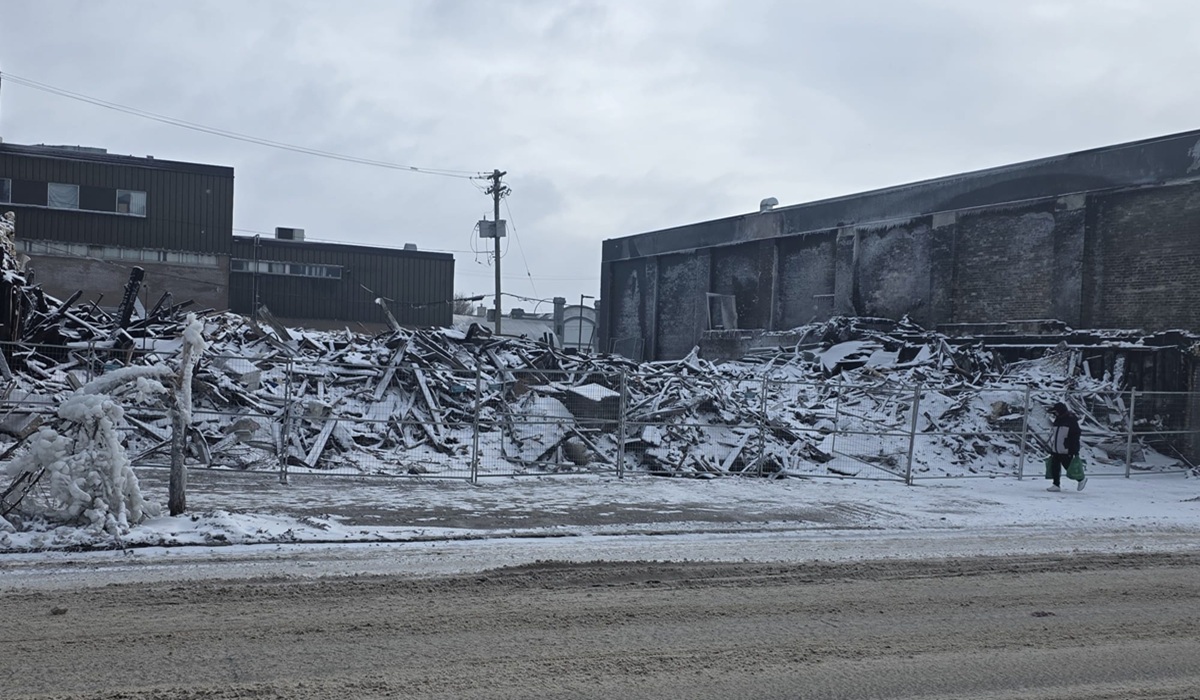
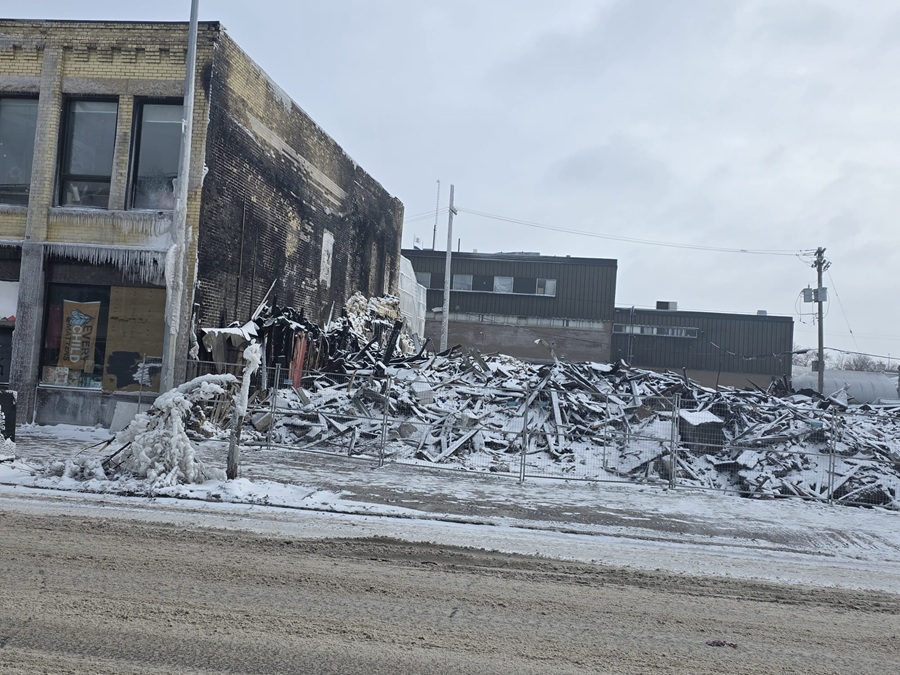
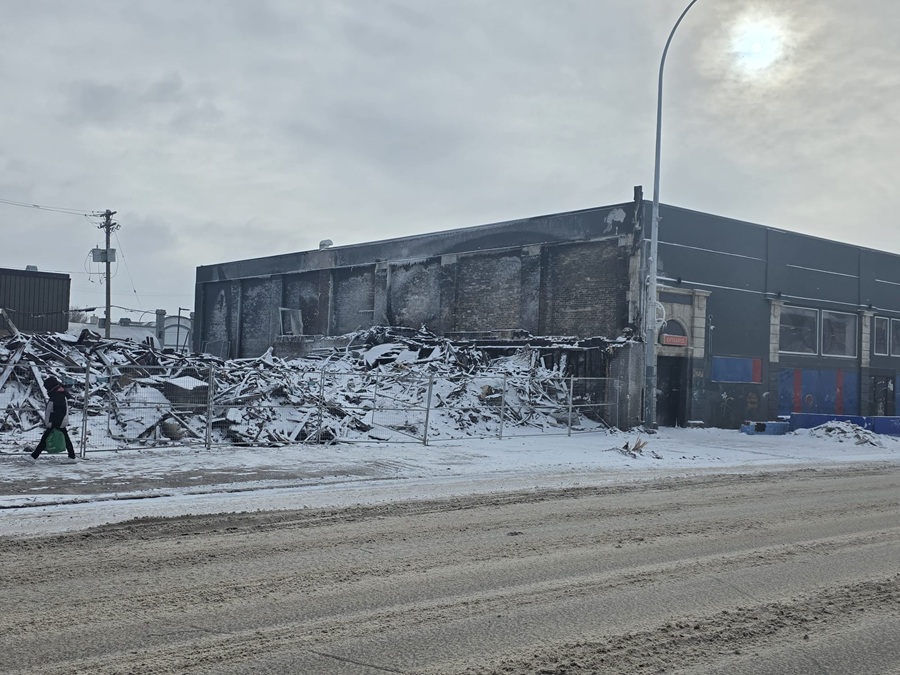
As part of that response, the city moved quickly toward demolition of the Manwin Hotel following a major fire.
The urgency was real.
So was the contradiction.
The city knew the condition of that building long before it burned. It was known to be vacant. The risks were known. Yet decisive action only arrived after flames forced the issue.
To make matters worse, demolition was halted due to asbestos—an entirely foreseeable reality in a building of that age and type. Ordering immediate action without accounting for known hazards is not decisive leadership. It is reactive damage control.
Now the consequences multiply in real time. A fire-damaged, asbestos-contaminated structure remains. Streets are closed. Traffic is disrupted. Emergency services are diverted. Residents and businesses—many already operating under strain—are impacted. This is unfolding in neighbourhoods already carrying the weight of poverty, homelessness, and limited access to support.
And while this is being discussed, another vacant building is waiting.
Another response truck will roll.
Another emergency will be framed as unavoidable.
Which brings the conversation back to the most basic question: who pays?
Fire suppression. Emergency response. Environmental mitigation. Traffic control. Health risks. Business interruption. These costs are not abstract. When owners cannot absorb them—and logic suggests many cannot—the burden lands where it always does: on taxpayers.
If a building has been vacant for years, it is not unreasonable to question whether the financial capacity exists to absorb millions in emergency and remediation costs. That is not an accusation. It is common sense.
This is precisely why prevention must replace reaction.
Going forward, all commercial buildings in the City of Winnipeg—residential and non-residential alike—should be required, as a standard condition of ownership, to name the City of Winnipeg as an additional insured on their insurance policies.
This is not novel. It is routine risk management.
Lenders require it every day. Banks protect their interests by ensuring they are named on insurance policies tied to financed assets. The city, which ultimately bears public risk when things go wrong, should do the same.
The cost to property owners is zero.
Adding the city as an additional insured does not increase premiums. It simply ensures that when a fire or major loss occurs, public costs are covered through insurance—not transferred to taxpayers after the fact.
In addition, all commercial property owners should be required to maintain a bond in the name of the City of Winnipeg as a proactive, standard requirement—not triggered by vacancy, not imposed after disaster, but in place from the start.
A bond ensures immediate access to funds for cleanup, remediation, or demolition when a building becomes unsafe. It removes delay. It removes uncertainty. And it removes the assumption that the public will absorb preventable losses.
The cost of maintaining such a bond is manageable—often comparable to a few trips to the grocery store or a month’s rent for a commercial property. It is not punitive. It is stewardship.
At this stage, it is time for a formal motion to be put before the City Council to debate and vote on adopting these policies that protect the tax payers of the city of Winnipeg through the bonds and insurance policies in place by the building owners. This is not about ideology or blame—it is about putting clear, preventative tools on the table and deciding, publicly, whether the city is prepared to change course.
Implementing such policies also requires a shift in posture. The city does not need a combative relationship with property owners to achieve accountability. A more collaborative approach—one that sets clear expectations while offering predictable rules and pathways forward—would serve both public safety and long-term revitalization far better than prolonged standoffs and reactive enforcement.
Together, insurance and bonding do what vacancy fees do not: they shift risk away from taxpayers and back where it belongs—onto the asset and its owner—before disaster strikes.
Firefighters will continue to respond with professionalism and courage. But they should not be repeatedly deployed to known hazards created by policy inertia. Every response to a vacant building is a response diverted from medical emergencies, traffic collisions, and residential calls elsewhere in the city.
This is no longer just a safety issue.
It is a resource drain.
It is a governance failure.
This cycle—vacancy, fire, emergency response, public cost—has repeated too often to be dismissed as coincidence. Other cities have acted upstream, using structured acquisition, expedited remediation, demolition, or rapid resale to developers prepared to act immediately.
Winnipeg has the tools.
What it has lacked is the willingness to use them before catastrophe forces the decision.
This is not a personal attack.
It is an accountability test.
Municipal governments are expected to anticipate risk, not scramble in front of cameras after it ignites. When the same outcomes occur again and again, the question is no longer whether the city understands the problem—but whether it is prepared to stop managing the optics and start ending the crisis.
Because if vacant buildings are burning every day, the issue is no longer why the fires keep happening.
If the city continues down this path, vacant buildings and fires are inevitable.
About The Author